The Grip Gear That Earns Its Place on Set
What changes between indie and industry sets.
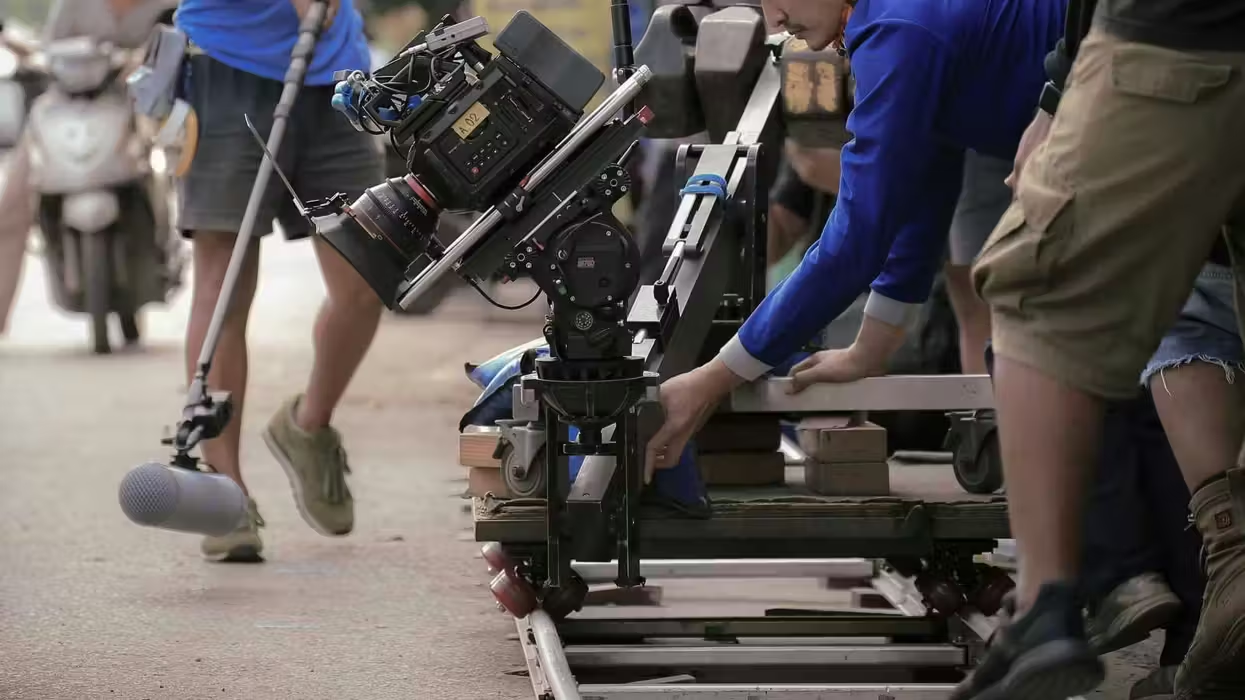
On a film set, the grips are the reason the world goes around.
A grip in film is a crew member responsible for setting up, adjusting, and maintaining all non-electrical gear on set. They’re the reason a camera can float, glide, creep, or crane without anyone noticing the machinery.
Grip gear is what makes camera movement safe and repeatable, whether you’re working with a crane or a simple tripod. Most of us are probably working at the indie level, but the grip package scales enormously with your budget.
If you’re just building out your grip van or want a simple primer, In Depth Cine walks through a typical grip package at two levels (a lean indie shoot and a full industry crew). Here's what carries over between them, and what you can skip until you're renting a truck.
- YouTubewww.youtube.com
Start with Your Sticks
One of the first decisions a cinematographer makes is when to go handheld and when to use a tripod. Tripods are chosen mostly by payload, or how heavy your camera and lens are.
On an indie shooting on a Sony FX6 or smaller, a 100mm bowl kit like the Cartoni Focus 12, rated for around 12 kilograms, covers most of it. You level it fast by adjusting the round bowl, and a hi-hat plus a steadybag get you inches off the ground for low angles.
Industry cameras and cinema zooms are heavier, so they ride on something like the O'Connor 2575 fluid head (built for payloads north of 40 kilograms) bolted to heavy aluminum legs in short and tall sizes. You level those legs one by one until the horizon sits flat, which is slower and more cumbersome than the indie bowl.
If any of these terms are fuzzy, our movie-set tool glossary is a good place to start.
Dollies—Budget vs. the Real Thing
For smooth horizontal moves, the budget entry point is the Dana Dolly, and it’s the tool you’ll see most often on smaller productions. Clamps grip two poles, a wheeled platform for your camera rides on top, and you have the flexibility to set the whole rig at a variety of angles and heights. It can go low on apple boxes, across a car or table, or you can use lowboy stands for a higher view.
It lets the camera glide nicely, but be warned that combining a slide with a pan or tilt requires a delicate touch. And on push-pull moves, the track can sometimes sneak into frame. So if you’re doing that, shorten your poles or try a longer lens.
Full production dollies from J.L. Fisher or Chapman/Leonard are a different animal entirely. You can't buy them. You rent them through houses like Panavision or ARRI, and they need trained grips to run. What you get is buttery movement at any height, an operator who can sit and pan with precision, and a hydraulic arm that booms the camera up and down on a knob.
If both of these are out of reach, we've shown how to build a usable dolly for about $50.
Sliders Are a Middle Ground
A slider splits the difference between a locked-off tripod and a full dolly. A slider is like a compact dolly with a self-contained track system, especially for smaller, lighter cameras.
In Depth Cine says he keeps two on hand. There’s a three-foot rig that can live right on the dolly for small moves without laying track, and a six-foot for tight spaces where a track won't fit or when time restrictions won't allow a full build.
Sliders have replaced dollies for a lot of small-space work because they pack down and set up fast. For most filmmakers, that makes a slider the natural first movement tool to add after a solid tripod. If you're shopping, our rundown of the best camera sliders for creators breaks down payloads and features.
Gimbals
The gimbal is the run-and-gun workhorse. On the indie end, a DJI Ronin RS4 easily carries a mirrorless body like an FX3. If you move up to cinema camera payloads, you're probably looking at a Ronin 2 or MoVI Pro, with the MoVI XL for heavier zoom setups.
The payload keeps climbing with your bigger rigs, so match the model to your camera build. Don’t just buy the biggest one. You can operate them by remote (panning, tilting, and rolling on toggles) or with master wheels for finer control. You can rig one as a stabilized remote head on a crane, a car, or even a dolly.
For ideas, here are cinematic moves you can pull off with a gimbal.
The Boring, Essential Stuff for the Grip Van
A lot of the grip department's value hides in unglamorous rigging. Apple boxes at full, half, and quarter sizes raise actors and objects, prop up a slider, or give the operator somewhere to sit. Wedges and pags (Paganini) level everything, usually a dolly track. A Jonesy deck raises a person or gear off the ground (and can move), and a base jack or polecat can be used between two walls to hang overhead lights.
Add clamps, ratchet straps, tools for digging and staking, and suction mounts for car rigs, and you can solve almost any on-set problem.
The Specialty Stuff You Rent
The rest is niche gear DPs call in for specific shots. A car-rig (or "hostess tray") kit mounts the camera to the side of a vehicle. A ladderpod is a very tall tripod built from three ladders for high angles, while a camera rickshaw (a steerable, sit-on dolly) is made for walk-and-talks that track backward over rough ground. Jib arms float the camera up, down, or along an axis and pair with a remote head like a Libra.
At the top end sit the cranes. For example, a Technocrane adds a telescoping arm that extends mid-shot, with specialist crew to match. We've broken down how these grip rigs unlock cinematic movement if you want to see them working.
Most of this you'll never own, and that's okay. Decide on the gear based on the move the scene needs, rent up when the shot demands it, and lean on the grips who know these tools.
- What Are All The Tools You'll Find on a Movie Set? ›
- The Gaffer's Dictionary: A Glossary of Lighting & Grip Equipment ›
- The Must-Have Gear List for Any Indie Gaffer, Grip, or Electric ›
- 10 Essential Things All Grips Should Have on Set ›
- Lowepro Announces New Fastpack IV Collection of Fast Access Travel Backpacks ›