Famously, Anthony Hopkins won an Oscar for Best Actor for 1991’s The Silence of the Lambs, thanks to his villain Hannibal Lecter being categorized as a leading role in spite of the fact that he is only on-screen for 16 of the film’s 118 minutes. While this might seem like a case of blatant category fraud, Dr. Lecter is a lead in the movie, which adapts the Thomas Harris novel of the same name. His presence permeates almost every frame in spite of the fact that he is rarely on-screen, and his iconic introductory scene is one of the key reasons why. Let’s break down how the scene works, allowing the character to loom so large over the rest of the proceedings.
Hannibal Stands Out Among the Crowd
One of the most important elements in any villain introduction is the build-up to the first moment that they actually appear on-screen, and Hannibal’s build-up is unparalleled. It actually starts long before the scene where FBI trainee Clarice Starling (Jodie Foster) goes to visit him at the Baltimore State Hospital for the Criminally Insane. Starling has already heard tell of this cannibal psychiatrist before seeking his advice while hunting down the serial killer Buffalo Bill (Ted Levine), and the revulsion with which other people speak his name indicates that his crimes were truly, desperately evil.
The build-up continues as Clarice enters the hospital and learns about all the strict security measures in place to prevent Lecter from escaping. The chair in which she will be sitting is placed at the end of a long hallway, so the scene’s staging allows tension to mount even more as she slowly approaches Lecter’s cell. The state of the other prisoners on the block allows both her and the audience to extrapolate, imagining what Lecter might be like. Will he be a leering menace like the first prisoner? Will he be catatonic like the second? Or will he be more like the third, Miggs (Stuart Rudin): hyperactive and talking about her private parts in a harsh whisper?
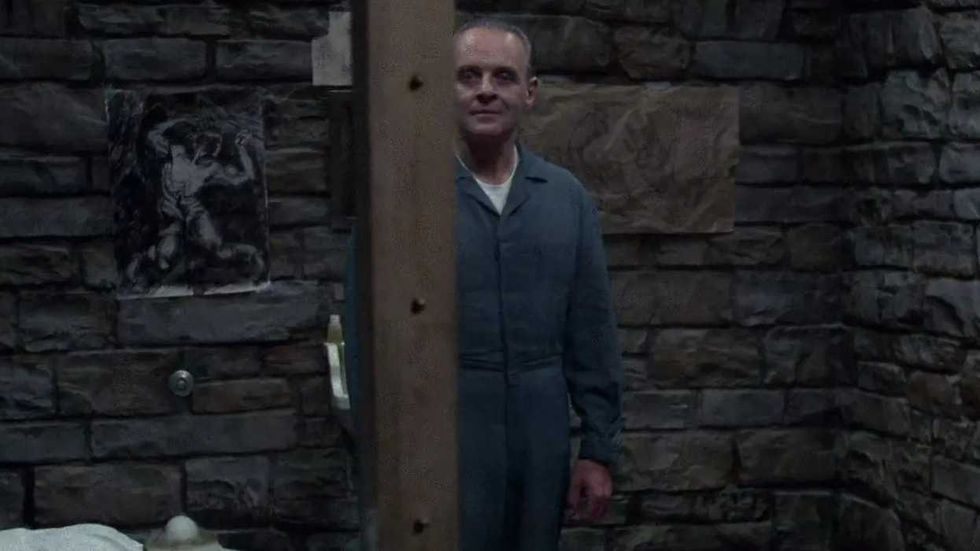
The staging of Lecter’s ultimate reveal is also exquisite. First, we see the glass wall of his cage, which is designed to prevent any physical contact between him and his visitors. The other inmates’ cells don’t have this level of security, so this amplifies the feeling of dread, as does the fact that the camera keeps him at arm’s length. At first, Lecter is both distant from the lens and occasionally blocked by foreground elements, as if the camera itself is afraid to get a full look at him.
 ‘The Silence of the Lambs’ (1991)Credit: Orion Pictures
After the frenzied speculation of the long walk down the hall, Hannibal Lecter defies expectations by standing politely in his cell, waiting for Clarice with an almost preternatural calm. In this way, he stands out from the rest of the inmates. It highlights that, while he may have been determined to be criminally insane, this is a man who is in full control of his faculties. This is a character who can manipulate people and pull strings, without ever resorting to the visceral violence that he is also demonstrably capable of. He is like a coiled snake, patiently waiting for his moment to strike.
Once He’s Allowed In, Lecter Dominates the Frame
The sense of coiled menace that the beginning of this scene delivers is propelled by both Foster and Hopkins’ performances. They instantly fall into a tête-à-tête where Lecter challenges the visibly shaken Clarice, using his quiet, sibilant voice to suggest a certain softness and approachability that becomes weaponized when his reasonable request (to see Clarice’s FBI credentials) turns on a dime and becomes a command (“Closer!”).
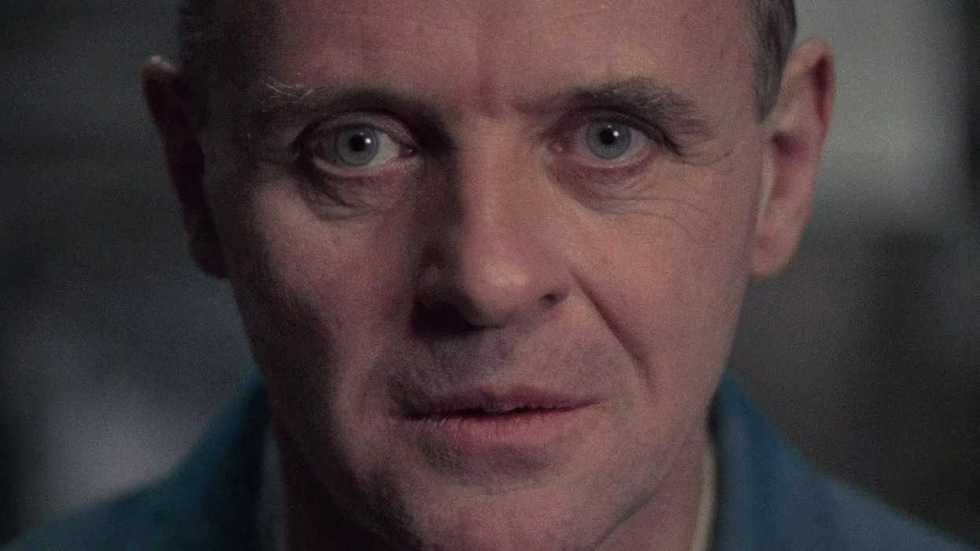
After this moment, Lecter steps forward to read her credentials, which is the first time that he is shown in close-up, in full light. As it turns out, the camera was right to try to keep him at bay for as long as possible.
The following conversation between Clarice and Lecter is cleverly staged by director Jonathan Demme to maximize the sense of Lecter as a powerful, almost irresistible force of evil. Once he gains control over the camera, he doesn’t let it go.
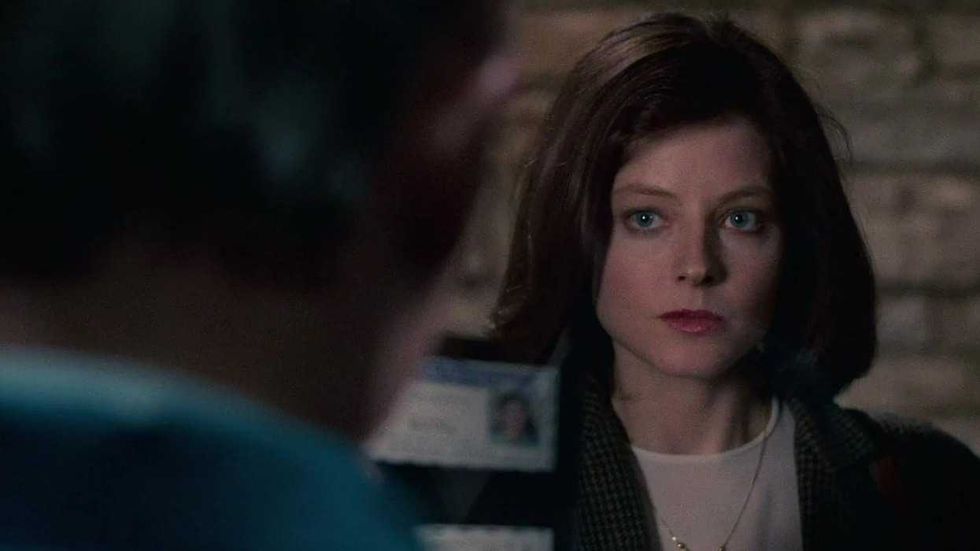
Although there are a variety of shot types used throughout the scene, in the beginning, Clarice is mostly shown with a traditional over-the-shoulder shot, with Lecter’s body in the foreground. Lecter, however, is mostly shown in full close-up, giving viewers no way of escaping the menacing aura of his performance or the sinister implications of his dialogue.
 ‘The Silence of the Lambs’ (1991)Credit: Orion Pictures
As the conversation progresses, the camera slowly draws closer to Clarice, giving the scene a sense of encroaching, predatory menace. One result of this is that she is shown in close-up more often, rather than in over-the-shoulder shots. However, the sense that Lecter is dominating both angles of the conversation remains.
This is due to a clever, almost imperceptible trick with the actors’ eyelines. While Lecter is looking straight at the camera (and thus straight at the audience), Clarice’s eyes are looking slightly to the side. This puts the audience in Clarice’s shoes. They feel Lecter’s implacable stare with the same potency as the lead character.
This scene would be terrifying even on mute, visually telling the story about a young woman who is in over her head while dealing with one of the most dangerous men alive. However, the sharp dialogue provides an extra punch, simultaneously driving the story and establishing the character dynamic that will last throughout the remainder of the film, with Clarice using every tool at her disposal to match wits with someone who is either friend, foe, or something in between, and is almost impossible to read from moment to moment.
The sheer, chilling power of this introductory scene has a ripple effect, allowing Lecter to cast a shadow on the entire proceedings, even though he is rarely on-screen after his first appearance. After this moment, every scene in which he doesn’t appear is colored by the way that first encounter has affected Clarice, and that is completely legible thanks to the expert filmmaking that brought the sequence to life in the first place.
There is plenty more to read about The Silence of the Lambs on No Film School, which features articles on the movie’s iconic quotes, 10 craft lessons it can teach the modern filmmaker, a breakdown of the story’s POV, and the hidden meaning behind Hannibal Lecter’s final line.