How ‘Avatar’ Redefined Motion Capture and Set The Stage For a New Era of Filmmaking
James Cameron turned motion capture into cinema.
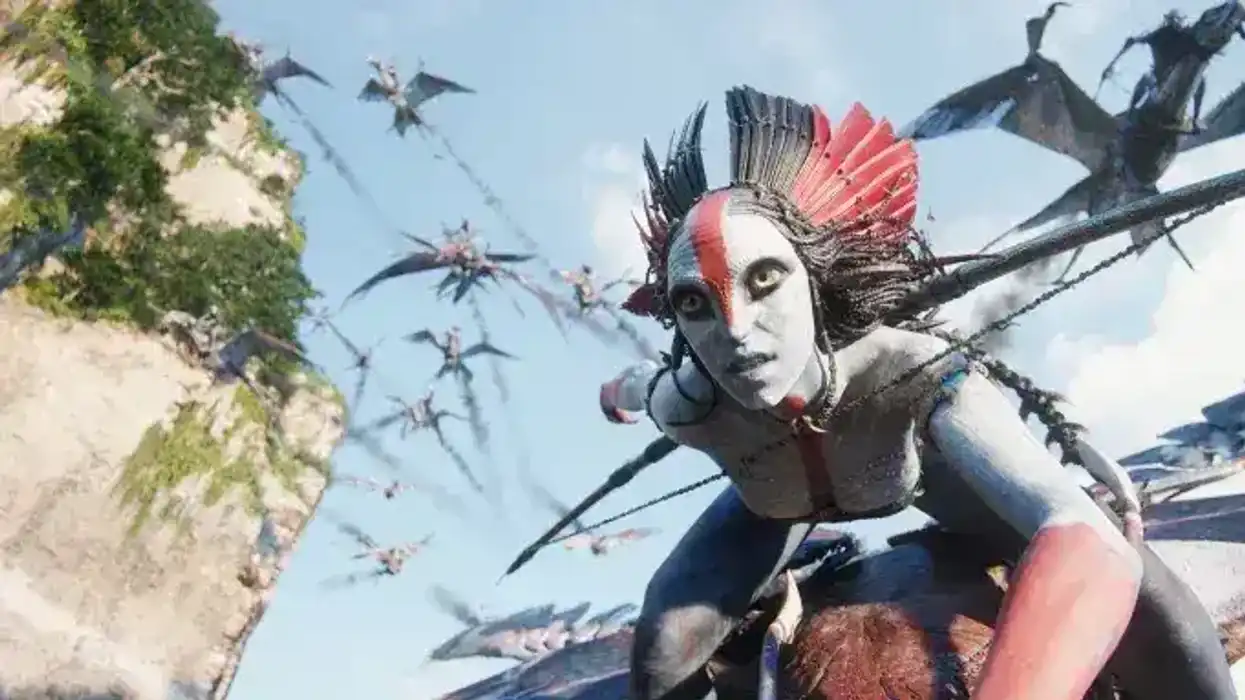
Avatar: Fire And Ash (2025)
It’s difficult to explain just how awe-inspiring it was to watch Avatar on the big screen, for the first time, back in 2009. The film didn’t just transport audiences to Pandora; it leveraged the finest digital technological advancements to rewrite the rules of traditional storytelling.
By spearheading performance capture (a term that better defines the kind of motion capture Avatar movies use), Director James Cameron maintained the emotional depth of his actors’ performances while also building a stunningly unfamiliar and enchanting cinematic world.
Cameron didn’t use digital tools to replace his actors; he used them as extensions to elevate their performances and blend them into the world of Pandora.
What makes Avatar’s use of motion capture special? How did Cameron maintain acting depth and intensity?
Let’s jump right in.
Maintaining Performance Integrity
One of James Cameron’s finest achievements with the Avatar films is how the large-scale use of digitization does not damage performance integrity. In fact, with the help of a vast array of tools, Cameron creates a new acting language where fine nuances of an actor's movement blend into their character.
Advanced facial rigs with head-mounted cameras capture subtle muscular movements in real time, conveying raw authenticity through characters who are unrecognizable in the natural world. This brings an emotional and artistic depth to the performance, a quality that the actors in every Avatar film so far try to create behind the scenes.
Audiences have come a long way since they’ve experienced the familiar vocals of actors being portrayed by ‘not real’ characters. Avatar’s intricate blend of the real and the unreal took filmmaking to a different level. Viewers can not only follow a character’s voice and recognize them, but they can also do so through the minutiae of their performances, which is an undeniably crucial element of filmmaking.
By having tighter control over the performances through the use of this technology, Cameron successfully brings emotional intensity to his Avatar films. As imaginative as the world of Pandora is, through its truthful performance integrity, the emotions between the Na’vi characters come through empathetically. The effectiveness of this technology serves as a reminder of just how important muscle tension, eye movement, and subtle shifts in expressions are to actor performances. Quite often, as audiences, we take these visual elements for granted simply because of their commonality.
The Avatar films make us look deeper and, quite literally, increase our admiration for the art of acting.
Why Facial Performances Remain The Real Breakthrough Even Today
As important as body movements are, the true revolution of Avatar lies in its mastery of capturing facial expressions, many of which are micro-expressions. Sudden eye darts, lip quivers, and subtle movement of the facial muscles create a sense of realism in an intricately fictional world.
Motion capture films that preceded Avatar rarely managed to capture facial expressions with the keen detail seen in Cameron’s films, which embodied a sense of ruthless precision. In all three films, the actors’ emotions were captured organically, without ignoring nuances.
The Na’vi characters' emotions are communicated effortlessly, primarily through the accuracy of facial expressions captured through this technology. Similar to a film without overwhelming visual effects, characters in the Avatar movies convey hesitation, vulnerability, anger, pride, happiness, and suffering without needing words to accompany their emotions.
Facial expressions are a big reason why audiences find authenticity and honesty in the Avatar films. This wouldn’t be possible without James Cameron’s bold efforts at leveraging inventive, path-breaking technology to invite us into his mystical, alluring world.
What Is The Difference Between Motion Capture And Performance Capture?
You’ve probably heard both these terms tossed around, sometimes used interchangeably, sometimes separately. Here are four key differences between motion capture and performance capture:
The Scope
While motion capture primarily focuses on recording full-body movements using markers and cameras to track movement, performance capture extends this technology to a deeper, more sophisticated level. It includes the recording of intricate details of facial expressions and vocal nuances to capture a more holistic and complete acting performance. It goes without saying that performance capture is a far more complicated process, but it is also more truthful and rewarding if carried out well.
The Tech
Motion capture typically relies on body suits, markers, and other technical additions without the necessity for head-mounted cameras. Performance capture, on the other hand, requires head-mounted cameras and high-fidelity facial data that captures micro-expressions and facial nuances, which aren’t a concern for motion capture.
The Role Of The Actor
Traditionally, for motion capture, acting performances are typically interpreted after the principal recording of their movements. ‘Interpreted’ is the keyword here. In performance capture, the actor’s timing, precision of their movements, and intricacies of their facial expressions are captured with keen detail. This data makes up the performance DNA of the character on screen, whose slightest, most basic movements are captured by actors themselves.
Emotional Resonance
This is perhaps the most defining differentiator between motion and performance capture. Motion capture does well to record physical realism, but is limited to that. Subtle emotional nuances such as eye movement, cheek twitching, or the slightest movement of an actor’s eyebrows are recorded through performance capture. This difference is monumental. Performance capture is capable of depicting emotional honesty that is outside the limitations of motion capture.
Final Thoughts
Avatar’s audacious legacy of using technological advancements to push the boundaries of storytelling continues through James Cameron’s recent Avatar films. Cameron didn’t, at any point, attempt to replace acting or actors. He proved that technology could be used to enhance actor performance, not disregard it. Worldwide, audiences went in large numbers to watch each of the Avatar films, reminding us that digital advancements and the movie theater experience do not have to replace each other; they can coexist.
What moment in any of the Avatar films, according to you, used motion or performance capture in the best way possible? Tell us in the comments.- James Cameron on Why 'Avatar' Has a Simple Plot: "Layers" ›
- Peek Behind the Camera With James Cameron Explaining How He Shot ‘Avatar: Fire and Ash’ ›
- Here's What We Know about the Super-Secret Tech Behind 'Avatar 2' ›
- What We Can Learn From the Immense Post-Production Pipeline of 'Avatar: The Way of Water’ ›
- What's the Truth About That One Shot From 'Avatar: The Way of Water' ›
- What's the Legacy of 'Avatar' According to James Cameron? ›
- Guillermo Del Toro Calls All Avatar Films “Masterpieces” — Here’s Why ›