How ‘Cat People’ Created the First Jump Scare Without Ever Showing a Monster
When the “Lewton bus” sequence in Cat People (1942) startled the audience, it also created a horror technique that still defines the genre today.
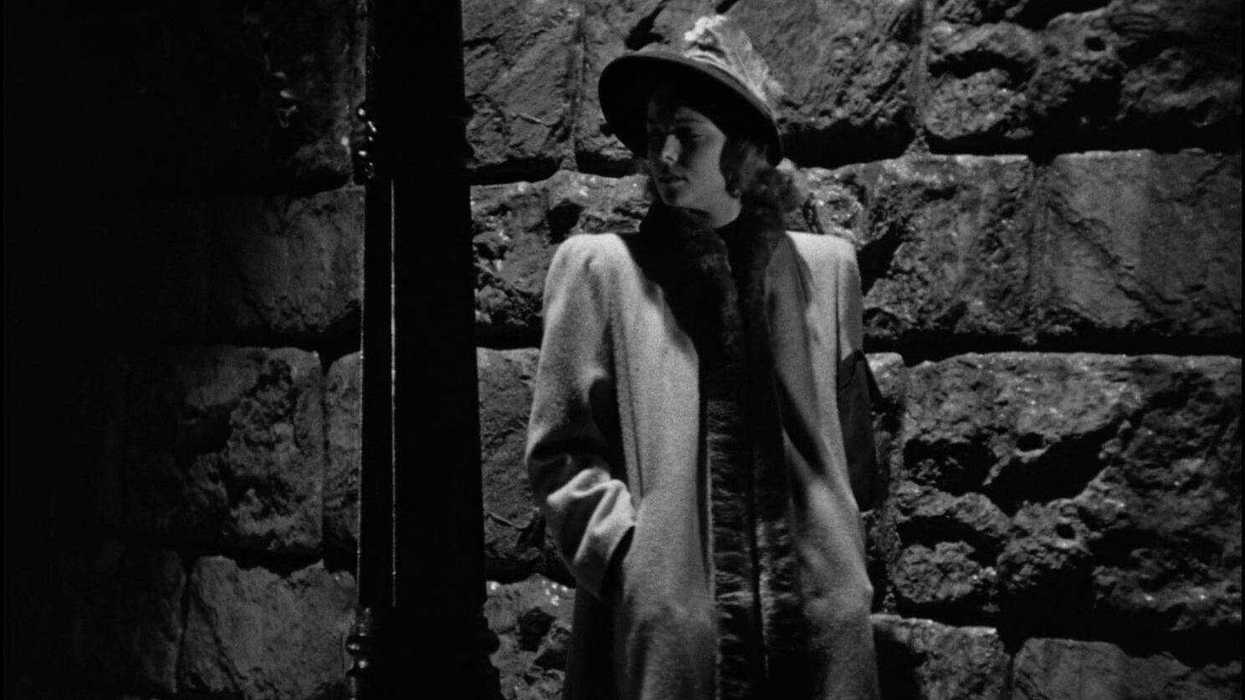
'Cat People' (1942)
How many times has this happened to you—you are watching a horror flick, something unexpected happens, and you jump in your seat, showering yourself and your buddy with cheesy popcorn? Yeah, yeah, I know, the popcorn bit happens only in the movies, but you get my point.
“Jump scare,” as we call it, has become synonymous with horror movies. In fact, a horror movie is not a horror movie unless you, at least once, jump in your seat like a spooked cat. Well, like everything else, this phenomenon, too, has a genesis story, and it starts with a hissing bus.
Today, you may not know exactly when a jump scare is gonna come, but you do know that it’s going to. Back in 1942, when the audience walked into the screening of Cat People, they walked in pretty naive, untouched by the jump scare. Back then, the directors didn’t have to “lull” the audience into a false sense of security; they came lulled and stayed that way. So, when the (quite masterfully executed) jump scare came, people indeed jumped in fear. It was a bit embarrassing, actually. Nothing had really happened. No ghost came, nor a murderer. Nothing scary. They thought it happened by chance, unintentionally. And yet, they jumped stupidly. They felt silly.
What they didn’t know was that the cinema was moving on from letting only the spectacle do all the work, and now it was intentionally trying to scare you by attacking your instincts, or the lack thereof.
And the horror cinema has been doing that ever since: turning us into jumpy, spooked “Cat People."
The Scene
The movie follows Irena Dubrovna (Simone Simon), a Serbian woman who thinks she would turn into a panther if sexually aroused. She meets a marine engineer, Oliver Reed (Kent Smith), and confides in him about her belief. He thinks she is delusional, but still marries her. Irena avoids getting intimate with Oliver, fearing she would become a panther and most likely cause carnage.
Meanwhile, Oliver starts getting closer to his assistant, Alice Moore (Jane Randolph). One day, Irena spots Oliver and Alice at a restaurant, sitting together quite comfortably. Later, when Alice leaves, she follows her. Alice has a feeling someone is following her but can’t find anyone.
This scene is very quiet. You hear nothing but footsteps. It’s only at the end that there is a brief, half-second moment when you hear a muffled but aggressive hissing. Suddenly, just when you think it’s the panther, that muffled hiss turns into a loud screech—except, instead of a panther, it’s a bus pulling over, coming to a grinding halt.
The “Lewton Bus” Effect
It was the film’s editor, Mark Robson, who came up with the idea to use this approach and create a dramatic, startling moment. The film’s producer, Val Lewton, liked the effect so much that he started using it in most of his subsequent films. Thus, the name.
Lewton championed this style of psychological horror, but it was Robson who created the specific editing and sound design device for this scene. I think it would be fair to call it a “Robson Effect,” but what do I know?
Sound: A Weapon
Earlier, I mentioned creating a false sense of security and slamming a shocking moment just when the audience is least expecting it. This idea is rooted in Robson’s understanding that silence is a setup for a punchline. When he took away the background music and dialogue, what remained was only one diegetic sound: the footsteps. That created a sense of uncertainty, and the audience subconsciously leaned in closer. This almost pin-drop silent moment is unexpectedly broken by a “supersonic explosion” of the hissing of the bus’s air brakes. This is how Robson experimented and proved that sound can be just as terrifying as visual gore, if not more so.
Psychological Warfare Over Visual Gore
The Power of Suggestion
A run-of-the-mill horror might depend on showing too much. It doesn’t encourage mental involvement from the audience. There is no scope for the viewer’s imagination. And that’s exactly what the director Jacques Tourneur avoided. He let the film thrive by showing almost nothing. Since the “monster” remained in the shadows, the audience did the heavy lifting through their imagination.
Today, this technique is common knowledge and is widely used, but back then, it was not only a novelty but was revolutionary, because it underscored one essential fact: personal imagined fears are always more intense than a gory spectacle.
Conclusion
Until this time, in horror films, a scare meant a monster (or anything bad) appearing on screen. The fear factor was rooted in the display. You got scared of what you saw. Simple.
This was the first time a movie introduced a “fake” scare. The threat turns out to be harmless, but it leaves your heart racing anyway. Until the tragedy or something horrific happens, the fear of it, its anticipation, is quite distressing. Perhaps more distressing than the actual event. And that’s exactly what works here. This “jump scare” created a new kind of psychological play: it takes you off your guard and leaves you hanging, expecting the worst.
- The Difference Between (Dead) Cats and Dogs in Film | No Film School ›
- Forget the 'Cat Lady' Archetype: Good Art Works Harder in 'Samantha’s Amazing Acrocats' | No Film School ›
- Defining the "Cat and Mouse" Genre in Movies and TV Shows ›
- The New 'Cats' Trailer Is Still Just As Horrifying As the Last One | No Film School ›
- What is the Save the Cat Beat Sheet and Why is it Popular? ›
- The Godfather’s Cat: A Furry Accident That Made Film History ›
- The Problem with TV, the Cat People's Narrative, and a Tool That Finally Crosses the Streams | No Film School ›