How ‘Ghostbusters’ Was Written in Weeks: From Cosmic Chaos to Comedy Gold
Behind the scenes of the intense, collaborative marathon that redefined the 1984 blockbuster under extreme pressure.
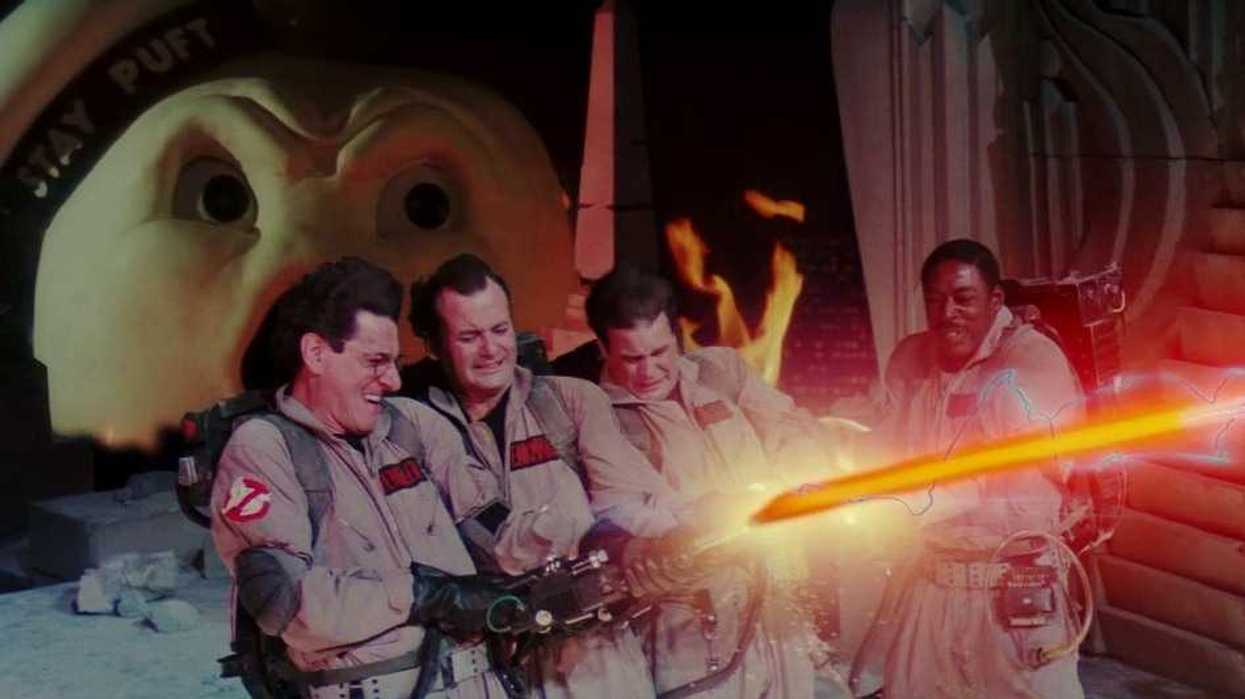
Ghostbusters (1984)
What’s common between films, such as Gangs of New York (2002) and Mad Max: Fury Road (2015)? Development hell that lasted around 30 years.
And what about John Carter (2012) and Frozen (2013)? Development hell spanning 80 and 70 years, respectively. (John Carter especially stings. The longest development hell plus the biggest box office bomb, ever.)
Anyway. On one side, we have these movies, where the development went on and on and on; on the other side, we have Ghostbusters (1984), which might as well have been made alongside a stopwatch.
The writing (and the subsequent production) for the movie was practically a caffeine-fueled, high-stakes marathon—a literal race against time. It involved comedy powerhouses locking themselves away, writing, rewriting, trimming away the fat, and (believe it or not) changing the idea from a serious horror to a comedy that we know.
This is the fast-paced story of finding the heart of a beloved classic.
The Ideation and the Prospect
A Movie Idea: Too Big to Contain
Dan Aykroyd comes from a family of ghost believers. In 1981, he came across an article on quantum physics and parapsychology, which gave him the idea of “trapping ghosts.” He developed the idea and a 70-80 page-long script treatment, planning to involve his friend, Eddie Murphy, and his SNL co-star, John Belushi. After Belushi’s sudden death, he involved Bill Murray in his place.
At this point, the treatment involved the idea of several “intergalactic” ghostbusters working together and the events taking place across the interplanetary setting. The production scope was far wider than the film that we know, and the tone was more serious. In short, the film was more akin to The Conjuring (2013).
After Ivan Reitman (the director) came on board, he explained to Aykroyd that the film would be impossible to make without a massive production budget, which wasn’t feasible. So, they worked out a different strategy: condensing the whole setting entirely on Earth and making the paranormal elements funny. The logic was that creating eccentric ghosts and spirits would be less expensive than making the realistic ones. This effectively changed the serious horror movie into a horror comedy.
The Pitch
In March 1983, they took the treatment to Columbia Pictures, where the executives liked the idea but were apprehensive thinking it would require a huge production budget against its limited box office potential. Reitman offered to make it work with $25-30 million.
The negotiations and discussions went on for two more months before the studio green-lit the project, but on one condition: the movie must be released by June 1984.
The Writing Marathon
The Magic on Martha’s Vineyard
Being left with just a little over a year to “release” the film, the writers didn’t have much time to spare on writing. Imagine the panic! Aykroyd, Reitman, and Harold Ramis—Reitman’s former collaborator, who he thought would better execute the tone he wanted for the film—moved to Aykroyd’s home on Martha’s Vineyard. For the next 15 days, the trio worked on the script.
Considering the (very) limited time, they needed a process that would create prolific results within a short time window. So, they decided to alternate between writing each scene separately and then rewriting each other's scenes. This allowed them to have three versions of each scene and choose the best one, or the best possible combination. This went on for 15 days, and they had their first draft ready. They took 15 days more to rework the initial draft, at the end of which they had the third (and the final) draft ready.
The Ramis Effect
Aykroyd’s ideas had soul and eccentricity. Ramis gave them a logical structure. He focused on each of the characters’ distinct personalities. This is when Peter Venkman became the mouth of the gang, Ray Stanz, the heart, and Egon Spengler, the brains. Coupled with the trio’s collaborative chemistry, they churned out page after page at a breakneck speed while not losing the comedic spirit.
The Studio Deadline
The studio deal was done. Money was already spent on marketing. Theater slots were booked. Columbia Pictures was putting pressure. There was absolutely no place for luxuries, such as “writer’s block” and “creative ego.” The team worked long hours (duh!), often writing and rewriting simultaneously.
The fun thing is that this frenzied, desperate energy trickled down into the characters they wrote and the situations they created. It created a “fun mess.” It also made the film’s comedy sharper and edgier, in addition to removing any possibility of accidental fillers that would slow the film’s pace.
Believe it or not, the narrow deadline made the film funnier and speedier.
Final Revisions and Last Minute Magic
Even though the working script was ready and locked, it continued to evolve through its production. The writers had left some gaps in the screenplay where the actors could improvise. It helped contribute to a sense of surprise and authenticity. The writers wouldn’t have done it if they had no confidence that their script was solid.
Even though the science behind the ghostbusting technology and equipment was dense, they managed to simplify complex paranormal theories into “Don’t cross the streams.”
This streamlined approach ensured that the audiences stayed engaged with the comedy rather than getting lost in the complicated pseudo-science.
Conclusion
We often hear people say, “I work better under pressure.” Well, this example is a testament to that claim. Usually, if a writer is given a four-week deadline to write a possible blockbuster, it wouldn’t be surprising for him or her to crumble under pressure. But the tale of Ghostbusters proves that if you are driven and determined, you can use that urgency to strip away clutter, improve pacing, and create a twitchier humor.
The ruthlessness of studios is usually frowned upon, but seeing this case, I think sometimes—and within reason—it can help turn a bloated space epic into a lean, mean, witty masterpiece.
- 9 Movies That Reinvented Their Franchise | No Film School ›
- 13 Film Nerds Who Became Screen Icons ›
- This is How You Don't Get a Job as an Assistant on 'Ghostbusters' | No Film School ›
- Dan Aykroyd and Bill Murray Shot a Short to Convince Theaters to Show 'Ghostbusters' | No Film School ›
- Sony Testing Real-Time Cameraless Production for New Ghostbuster Movie | No Film School ›
- 'Ghostbusters' Featurette Explains the Science Behind Proton Packs | No Film School ›
- 11 Best Bill Murray Quotes That Still Hit ›
- Before You Write the Script, Ask Yourself This Question | No Film School ›