Shot-listing. Is it annoying? Yes. Is it necessary? Very much yes.
It's nice to have on a short, but absolutely vital on a feature. You want to have an idea of how many shots your project runs in total, so you can then think about scheduling and timing, and also track your progress. What you do not want to do is show up and just wing it. Making up shots on the day wastes everyone's time, especially since each shot requires a different setup, which requires time.
It's a familiar directing conundrum. You can keep shooting angles, or you can move on. Extra setups protect you in the edit, but they cost hours, money, and actor energy. On the opposite end, if you have too few setups, the editor has nothing to work with. Sure, maybe you can get everything in one wide, but wouldn't it be nice to have actor reactions, too? Sometimes it's a hard choice to make at the end of a long day.
And what about those specialty shots? You need to plan for them, too.
Coverage is a creative choice. It shouldn't be a safety net. You should know the main approaches to coverage, what each one does to a scene, and how to pick your coverage. Check out StudioBinder's video below for more.
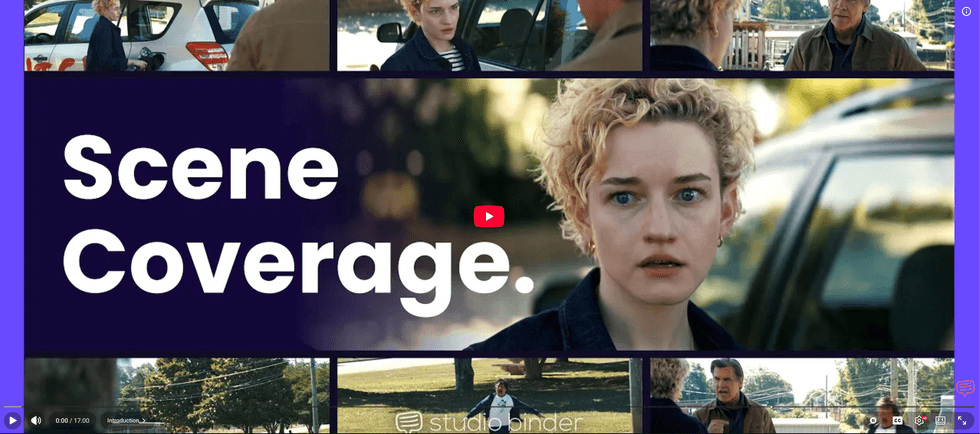
Coverage Is an On-Set Editing Choice
Coverage doesn't mean multiple takes. Coverage means how you shoot characters in a scene. Imagine a group scene with four characters. You might start in a wide, then get closer for a two-shot of each half of the group, then get a single for a character or two. That's four setups and a whole lot of work, because each setup might need a handful of takes.
As StudioBinder points out, "Coverage exists on a spectrum. It may be simply one shot, or it may be dozens. Coverage is inextricably linked to editing."
If you're directing or DPing on a set, you need to think about the product you hope to create in the end with your creative team. What angles or versions of coverage will tell the story most effectively? How will they cut together? What does the editor actually need? (If possible, it's valuable experience to have edited something yourself to help your planning.)
The example is Point Break. Kathryn Bigelow could have played the whole conversation in the opening two-shot. She also shot over-the-shoulders and close-ups so she could control the pacing in post. All that is important, but as we've mentioned, setups eat the schedule, and low-budget shoots often can't afford shots they might not use. So you have to decide sometimes on the day to cut things to keep you on time.
Zero Shots, or Just One
At the dramatic end of your options, there's no coverage at all. What can that look like? The Zone of Interest opens on black, forcing the audience to listen first. Zero Dark Thirty starts with 9/11 audio over black. Derek Jarman's Blue runs its whole length on a single blue frame.
So it's possible to have no coverage, but you're probably not relying on that for your entire runtime because you're probably not making an art film.
One step up is a single shot that never moves. Now the editor has no choices, so blocking and composition have to do all the work.
Again, a locked-off frame can work, but it's not always the most cinematic choice, and making an entire movie this way can be a challenge. These shots make you feel time passing, and that can read as either meditative or chilly.
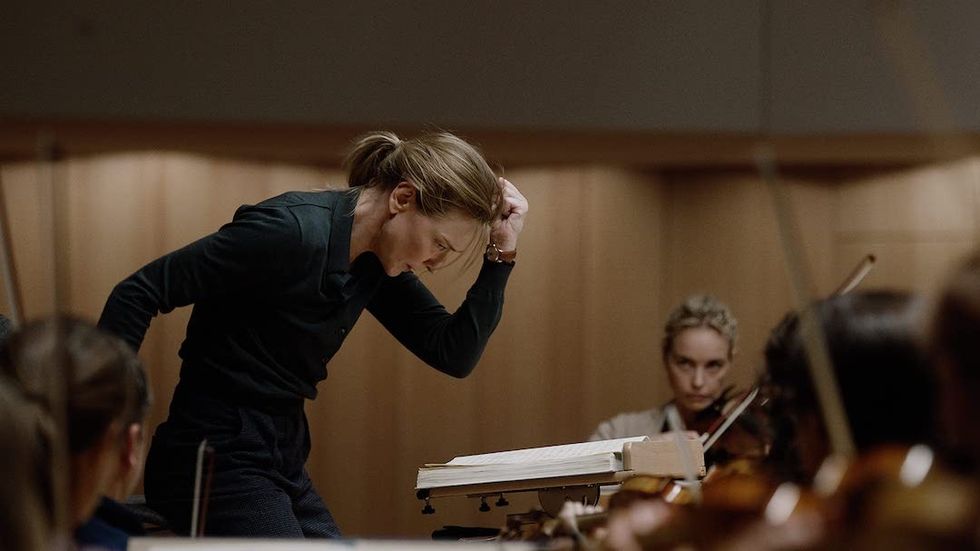 'Tár' CREDIT: Focus Features
One Shot That Moves
A moving camera can do those edits live, and it usually feels a bit more cinematic. You can carry the camera from the wide to a close-up, and maybe even switch sides of a conversation. (Be mindful of the line.) The catch is that one mistake sends you back to the top. Oners, man!
The video's example is the Juilliard classroom scene in Tár, which is about 10 minutes in a single take. The camera follows Lydia as she circles the room.
In Filmmaker Magazine, cinematographer Florian Hoffmeister said the goal wasn't just to "show off."
"Todd [Field] had been adamant from the start that he thought this should be a oner. On a superficial level, truthfully, I was excited about it, because we’d just had these sequences that were people sitting and we’ve got our rules of holding the camera back. So, I was excited to unleash the camera and follow Cate through that journey in the classroom, but it was not just about making it a oner to show off. It was more of a philosophical debate about capturing what we wanted to capture. We had about 35 angles that we felt would’ve been worth covering: You see the reactions. You go wide, then you want to be tight. Now they’re at the piano."
It took a lot of work to get. In a DGA Q&A, Field said he and Cate Blanchett blocked the scene alone for two days. They had the first take until the operator panned the wrong way at the very end, then spent two more days trying to get it.
These kinds of shots are a huge challenge for actors. They usually like to be challenged, but you are also probably going to run into a lot of exasperation if you ask them to do it 20 times.
Minimal to Standard Coverage
You're probably not doing all oners, because you don't want to go crazy. So you have to think about cutting.
Minimal coverage gets just enough to give the editor room. Sometimes the edits are subtle, moving between a wide and a medium or two. It depends on how still a director wants a scene to be.
As we already mentioned, standard coverage is a wide master to set up the space, then mediums, then close-ups on each actor. The camera moves in as the conversation gets tense.
One Scene Might Need Hundreds of Shots
On the other end of the spectrum, you might have nothing but specials or action shots, resulting in hours and hours of fast-paced footage. Mad Max: Fury Road is the obvious example. Editor Margaret Sixel spent three years cutting almost 500 hours of footage down to a two-hour film.
Extra coverage can also be subtle. In Zodiac's interrogation scene, David Fincher cuts between more than a dozen setups to keep things tense, even though the angle changes are barely perceptible at times. (Fincher also loves insert shots, which chew up time but look so good.) Fincher, however, has the freedom to do dozens of takes, while you might not have those resources.
Just remember, more coverage doesn't mean better. If the writing is bad, or the acting is strained, you can't edit your way out of that, no matter how many angles you have.