The Most Devastating Line in ‘Schindler’s List’
Why Oskar Schindler’s quiet collapse defines Spielberg’s Holocaust masterpiece.
Schindler’s List (1993)
Some emotional scenes make you cry, but the one in the context here doesn’t let you off the hook so easily. It makes you reckon with the devastating impact of one of the cruelest human deeds in history.
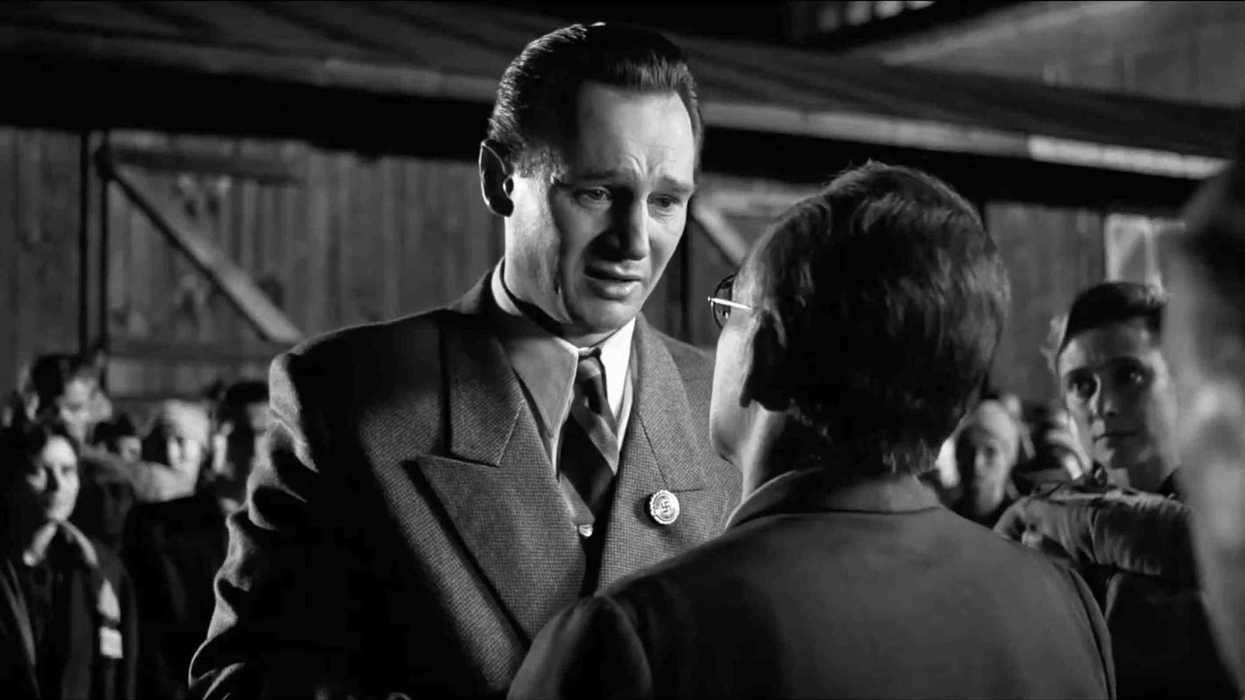
The vessel of this moral reckoning is Oskar Schindler (Liam Neeson), the story’s hero. He is introduced as a social climber whose only goals are profits and good times. By the time the movie ends, he achieves something wildly incomparable to his previous goals, and yet what we see is a broken man. A broken man who realizes the luxury he chased all his life was nothing but the currency for human souls, and that he didn’t spend it enough.
A genuine “I could have done more” sentiment is priceless, and that’s the one we see here. The actual Oskar Schindler’s experiences and Liam Neeson’s portrayal bring us this emotional collapse, and in the final moments of the movie, it suddenly changes the entire vibe. A historical drama turns into a raw, very personal confession.
This scene tells us what it means to be a true hero in a world that’s falling apart.
The Moment That Stops the Film Cold
The Context of Schindler’s Breakdown
To understand the scene and the emotional weight of the line, we must first understand where Oskar Schindler’s journey starts.
A German industrialist by occupation, Schindler was initially aligned with the Nazi cause. He was even a registered member of the Nazi Party. His involvement with the party was primarily based on opportunism and war profiteering. Yet, he was capable of soul-searching, which led him to finance his humanitarian effort that we now know as Schindlerjuden, German for “Schindler Jews.”
In 1944, Brünnlitz Labor Camp, a German forced labor camp, was set up as an armaments factory. Schindler operated it as a front for his cause, where he employed Jewish workers from the concentration camps, falsely claiming they were “essential to the war effort.”
With the help of his accountant, Itzhak Stern (Ben Kingsley), and other Jewish prisoners, he created fake production figures to deceive the Nazi officials and justify the existence of the factory. Meanwhile, he operated a sub-camp within the factory where the Jews were relatively well-fed and were protected from random violence.
The Moment of Moral Reckoning
At this point in the movie (May 1945), Schindler has spent nearly 30 to 36 months trying to keep up appearances and bribing the Nazi officials. His entire fortune is exhausted. The Soviet Army is approaching, and as a Nazi member, Schindler can be arrested and tried as a war criminal. He is planning to flee to the U.S. and surrender.
This is when the Jews he saved give him a letter attesting to his benevolent efforts in saving their lives. When Stern points out that he managed to save over 1100 Jews, suddenly, the magnitude of the Holocaust dawns upon him.
He is suddenly haunted by his past when nothing else mattered to him except profits and good times. He remembers how mindlessly he spent money on things that absolutely didn’t matter. The businessman in him starts putting things in perspective—“This car could have saved 10 more lives,” “This gold (Nazi Party) pin would have saved two more.”
This is the moment when a businessman’s transformation into a human is fully complete.
Performance and Direction Working in Sync
Liam Neeson
This is a cathartic moment for Schindler. The happy realization that this horrid nightmare is finally coming to an end is coupled with the awareness of the entirety of the loss. He realizes that a few more saved lives could have made this moment even happier. Every small and single happiness is priceless in this situation. And this splinters his mind into a painful mess.
Such nuanced moments of emotional collapse can be tricky to perform, as they can quickly turn into a melodrama. But Neeson displays a strong hold over his bearing. There is not a single sob or a wince that feels undue or misplaced. You can practically see him implode as he spirals into his breakdown. Every emotion leaks in fragments. He portrays the tremendous devastation perfectly without overselling it.
Steven Spielberg
Spielberg matches Neeson’s performance with a similar restraint. He keeps the camera close without being indulgent. The music lingers in the background without absorbing the emotion. The moment stretches a little longer than typically expected, but that works because the gravity of the moment demands it. He doesn’t end the scene on Schindler’s catharsis, choosing instead to end it on the audience’s awareness.
Conclusion
The scene could have ended on a happier note, but that would have felt like a mockery of the true events. Even though the war and the Holocaust ended, it was never a happy ending. It can never be a happy ending. And this line, “I didn’t do enough,” addresses that sentiment and keeps the movie grounded in that grim reality.
It also reminds us of what true heroism is like. It’s not in rejoicing in your victory; it’s in reflecting on the losses of others. Schindler’s achievement feels truly earned because he focuses on what truly matters in dark times—every single sliver of innocent life.
By carrying a heavy sense of regret, the scene reveals the true cost of finally being able to see clearly.
- Spielberg's Table Scenes Are a Masterclass in Clever Filmmaking ›
- Are These the 30 Shots that Define Steven Spielberg? ›
- When Spielberg Dominated Hollywood in One Epic Year ›
- What Does the Girl in the Red Coat Mean in 'Schindler's List'? ›
- How Did Steven Spielberg's 'Schindler's List' Change World History? ›
- 9 Best Movie Characters Driven by a Strict Moral Code ›