10 Iconic Movie Roles That Were Almost Played by Different Actors
A look at the casting near-misses behind unforgettable roles.
'Raiders of the Lost Ark'
Movie history whirls around the axis made of some key filmmaking decisions. One of the most important ones is casting.
What we see on the screen is the end product, a finished, polished performance. But there is a lot that goes on behind it: boardroom pitches, market appeal, fan base, budget, auditions, every key person having different preferences, anxious studio debates, actors’ creative interpretations and expectations; the list will stretch as long as you want.
After all this chaos, sometimes the right actor immediately gets the job; sometimes that doesn’t happen. Then different players come into the picture. That sometimes changes the whole equation. What “could have been” comes across as something very different. Sometimes it’s for the better, sometimes not.
But here, we are going to discuss only those 10 movie roles that have become iconic. We have no reason to wish they were played by someone else. Quite a lot of them have actually won major awards for these performances. But before they were cast, there was quite a bit of drama; the makers were on the fence about the casting choices, and everybody had a different opinion. Some interesting options came quite close to being finalised, only to be replaced by someone else at the last moment.
10 Iconic Roles Almost Played by Someone Else
1. Scarlett O’Hara (Gone With the Wind, 1939)
Written by: Sidney Howard | Directed by: Victor Fleming
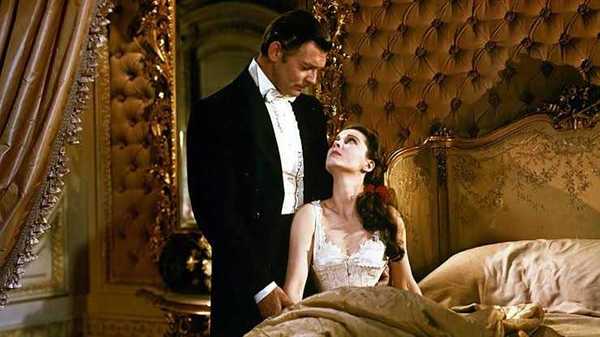
The hunt for Scarlett O’Hara was practically a national event. About 1400 actresses were interviewed. Many established names wanted in, including Mae West, Katherine Hepburn, and Bette Davis. But the strongest contender was Paulette Goddard. She was a practical choice: familiar, dependable, and she had the look and the fire. David O. Selznick, however, was concerned about the bad press surrounding Goddard’s controversial marriage to a much older Charlie Chaplin. So, keeping her as the top choice, he kept looking for a safer (and possibly better) option. He found one in Vivian Leigh.
While Goddard would have delivered a more straightforward, charming Scarlett, Leigh brought a nuanced character. Leigh’s Scarlett was volatile, she had edges, and she was unpredictable and even abrasive. With her interpretation, Leigh gave us Scarlett, not as a traditional romantic heroine, but a study in survival, ambition, and moral elasticity.
2. Holly Golightly (Breakfast at Tiffany’s, 1961)
Written by: George Axelrod | Directed by: Blake Edwards
Truman Capote, on whose namesake play the movie is based, often mentioned that his inspiration for the character was Marilyn Monroe. When the movie went into production, he vehemently pushed for Monroe’s casting. The studio, at first, considered Monroe, but soon her image, reliability, and tonal fit became issues. On Monroe’s part, Lee Strasberg advised her that playing the “lady of the evening” might not be the best thing for her image. So, she chose to do Misfits (1961) instead, and Audrey Hepburn was cast.
It’s a no-brainer to guess Monroe’s Holly would have probably leaned into sexuality and volatility. Hepburn’s portrayal brought her restraint and vulnerability. This was instrumental in shaping Holly as lonely from within, which became the movie’s rhythm. Hepburn’s Holly became the figure of longing rather than provocation.
3. James Bond (Dr. No, 1962)
Written by: Richard Maibaum | Directed by: Terence Young
When the character is a refined, suave man’s man with uncanny charisma, it doesn’t take much to think of someone who was literally made in the same mold. Cary Grant, the quintessential dashing debonair and a huge box office draw, was the first choice to play James Bond. Cary Grant agreed too. The problem arose when Grant refused to commit to more than just one film. It was a non-starter for the producers, who were looking for a franchise and a dependable face that would stay with the character for at least a few films. Well, that’s how Sean Connery came into the picture.
While Connery’s (now iconic) Bond is tough around the edges, has a physical edge, and thrives on sexual bravado, Grant’s Bond would definitely be more polished with urbane confidence. Connery’s irreverent Scottish charisma felt dangerous, and it also defined the franchise’s identity.
4. Michael Corleone (The Godfather, 1972)
Written by: Mario Puzo, Francis Ford Coppola | Directed by: Francis Ford Coppola
Paramount didn’t see The Godfather as a project with timeless classic potential. For them, it was a contemporary gangster film with more action and less character development. So their choice of bankable stars, such as Warren Beatty and Robert Redford, was understandable. Coppola’s uncompromising artistic mind saw the perfect Michael in, then relatively unknown, Al Pacino. Two weeks into the shooting, the studio executives interpreted Pacino’s quiet intensity as a lifeless, mumbling performance. They contacted Redford for recasting. However, Coppola stood his ground and, well, the rest is history.
Michael goes from withdrawn and nervous to observant and ruthlessly strategic. Pacino delivered THAT Michael. Beatty and Redford’s Michael would probably not have seemed melancholic or vulnerable at all. Their big star equations would have gone into the portrayal, and eventually Michael would have been more Michael Beatty or Michael Redford rather than Michael Corleone.
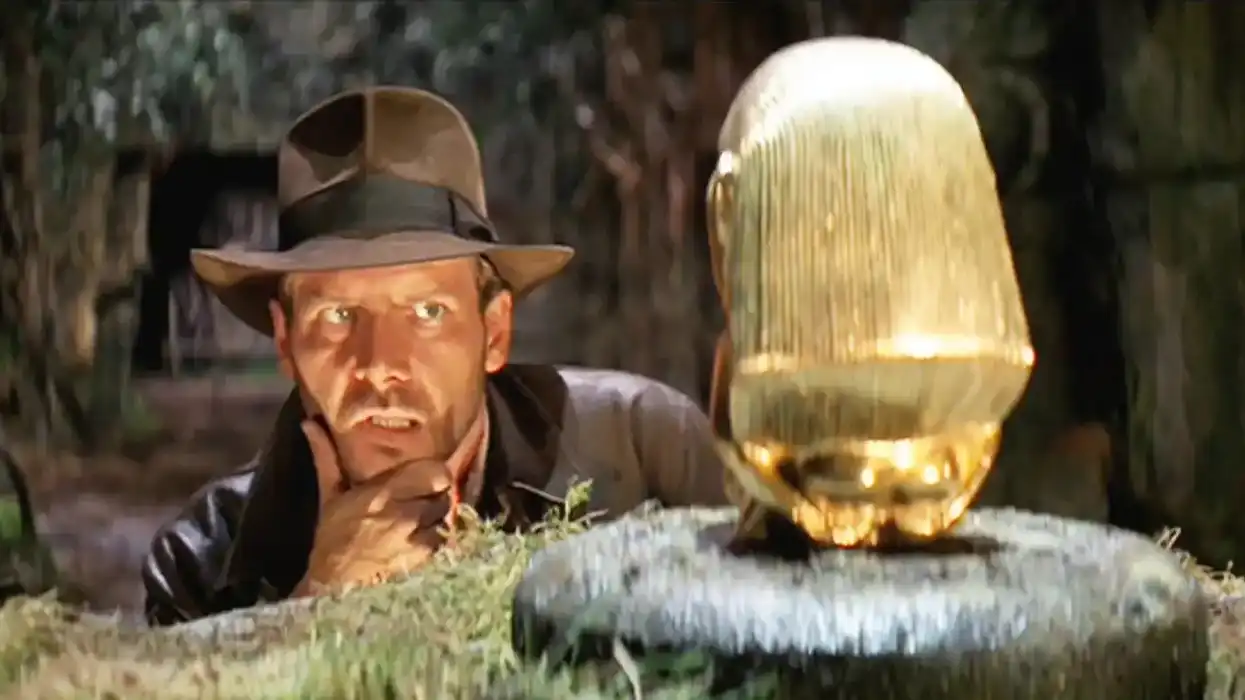
5. Indiana Jones (Raiders of the Lost Ark, 1981)
Written by: Lawrence Kasdan | Directed by: Steven Spielberg
This is perhaps the most famous casting “oops” in history. I mean, you have to agree, Tom Selleck is basically how we would have easily pictured Indiana Jones. What didn’t Selleck have that Indy needed? The looks, personality, the agile physique, the smooth charm; the moustache would have been an interesting addition. Well, he didn’t have the freedom from contractual obligation to make a TV series, Magnum, P.I., with CBS. When Spielberg requested CBS to release Selleck, what they heard was that “Selleck was in demand,” and instead greenlit Magnum, P.I., causing Selleck to drop out.
Selleck’s Indy would probably be more classic and would move around with more ease. Ford made Indy a hero with flaws. Fun flaws. Also, his Indy threw shade, easily got frustrated, and even got exhausted. These grounding qualities put a leash on spectacle and gave us an action hero who was very much a human.
6. Vivian Ward (Pretty Woman, 1990)
Written by: J.F. Lawton | Directed by: Garry Marshall
Marshall originally envisioned Karen Allen for the role, but she declined. He then approached the 80s teen queen, Molly Ringwald. Ringwald read the script and thought it was “icky,” the whole prostitution and “renting for a week” kinda thing. Then the studio’s top choice was Meg Ryan, who was still basking in the glory of When Harry Met Sally (1989). She wasn’t willing to compromise with her newly established “America’s Sweetheart” image by playing a prostitute. Diane Lane came closest to being cast; she even did the costume fittings. After they hit a dead-end, they settled for a mostly unknown 21-year-old Julia Roberts.
While an actress like Ringwald would have brought an awkward charm to Vivian’s character, Roberts opened her up. Her Vivian was candid, witty, and emotionally transparent. Her portrayal didn’t idealize her circumstances, and yet, it humanized her. This balance helped handle the risky premise and turn it into a cultural landmark.
7. Clarice Starling (The Silence of the Lambs, 1991)
Written by: Ted Tally | Directed by: Jonathan Demme
Director Jonathan Demme wanted Michelle Pfeiffer for the role. He thought she could bring the required fragility to the character. Pfeiffer, on the other hand, was too fragile for the gruesome, violent subject matter of the story and, without any second thought, bowed out. Jodie Foster, on the other hand, proactively and aggressively lobbied for the role. Foster’s commitment and preparation gave the makers an idea: Clarice needed resolve rather than emotional fragility. This locked Foster into the role.
As the director wanted, Michelle Pfeiffer would have brought the required fragility. She would have even made it more defined under pressure. That’s still a curious what-if. What we got instead was Foster’s Clarice, who was alert, composed, and intellectually driven. She resisted sensationalism and rooted the film’s conflict and tension in observation and empathy. Foster’s Clarice was an active participant, not a reactive victim.
8. Forrest Gump (Forrest Gump, 1994)
Written by: Eric Roth | Directed by: Robert Zemeckis
This is kind of a brain-twister, if you ask me. I mean, isn’t it strange to imagine John Travolta sitting on a bench and explaining life’s philosophy through a box of chocolates? And yet, for some reason, he was the top pick for this role. He read the script, but (thankfully) didn’t understand the tone. So he passed it and instead chose to do Pulp Fiction (1994)—awesome movie, dude! The role went to (already eager) Tom Hanks, who worked closely with Zemeckis to shape Forrest’s voice, physicality, temperament, and everything that makes Forrest, Forrest.
If I know Travolta correctly, I think his Forrest would have had some performative quirks. Also, for a smooth dancer like him, it would have been tricky to bring out the fumbling and tumbling Forrest that we know and love. Hanks opted for sincerity and minimalism. He avoided deliberate irony and instead let the emotions surface naturally. This constant restraint was one of the things that made the film’s episodic structure feel cohesive. It also allows the audience to connect with Forrest without sentimentality.
9. Neo (The Matrix, 1999)
Written by: Lana Wachowski, Lilly Wachowski | Directed by: Lana Wachowski, Lilly Wachowski
With The Fresh Prince of Bel-Air (1990-1996), Independence Day (1996), and Men in Black (1997), Will Smith was practically the biggest rising (or already risen) star on the planet. So, no wonder the Wachowskis wanted him to play Neo. Smith, however, couldn’t be further away from the world of The Matrix. He didn’t understand the “bullet time” and was skeptical of how much the film’s special FX depended on it. So he passed it over in favor of Wild Wild West (1999). Gigantic mistake—which he agrees, by the way.
Keanu Reeves may not be Laurence Olivier or Marlon Brando, but his strength lies in earnestness. (No wonder he is one of the rare nice people in Hollywood). The moment he took the role, he committed fully to the philosophical and physical demands of the film. As an added plus, his casting perfectly aligned with the filmmakers’ vision of controlled minimalism. Will Smith would have brought charisma and humor, but Reeves delivered stillness and focus. His lack of overpowering performance allowed the film’s ideas to dominate without distraction. Reeves’ Neo became the conduit of the story rather than its loudest voice.
10. Barbie (Barbie, 2023)
Written by: Greta Gerwig, Noah Baumbach | Directed by: Greta Gerwig
In 2016, long before Greta Gerwig came on board to direct the film, Amy Schumer was cast as Barbie. Back then, it was more about a fish-out-of-water story where an inventor gets kicked out of Barbieland. After being involved in the project for only three months, Schumer exited the project due to creative differences. Anne Hathaway was involved with the project for a while before exiting. The project was left in limbo until Margot Robbie was associated as a star as well as a producer.
Amy Schumer is a legit comedian, so there is a valid scope to assume her portrayal would have leaned harder into over-satire. Robbie, on the other hand, balanced irony with emotional grounding. Her performance allowed humor as well as vulnerability to coexist, giving the film credibility beyond parody.
- Should Casting Directors Return To In-Person Auditions? This Actress Thinks They Should ›
- The Ross Brothers Throw Out Traditional Casting and It’s Genius ›
- 'AWOL': Why Deb Shoval Fought for Her Personal Casting Choice ›
- Breaking: Academy Awards Adding a "Casting" Category in 2026 ›
- What Does a Casting Director Do? Role, Salary & Career Guide ›
- 'Leave No Trace': The Secret Ingredient to Great Casting ›
- How Are the Coen Brothers So Good at Casting Against Type? ›
- 7 Greatest Al Pacino Quotes Of All Time - Ranked ›
- The Forgotten Action Stars of the VHS Era ›