Two Words That Still Define ‘The Lord Of The Rings Trilogy’ 20 Years Later
The heartbeat of an entire saga.
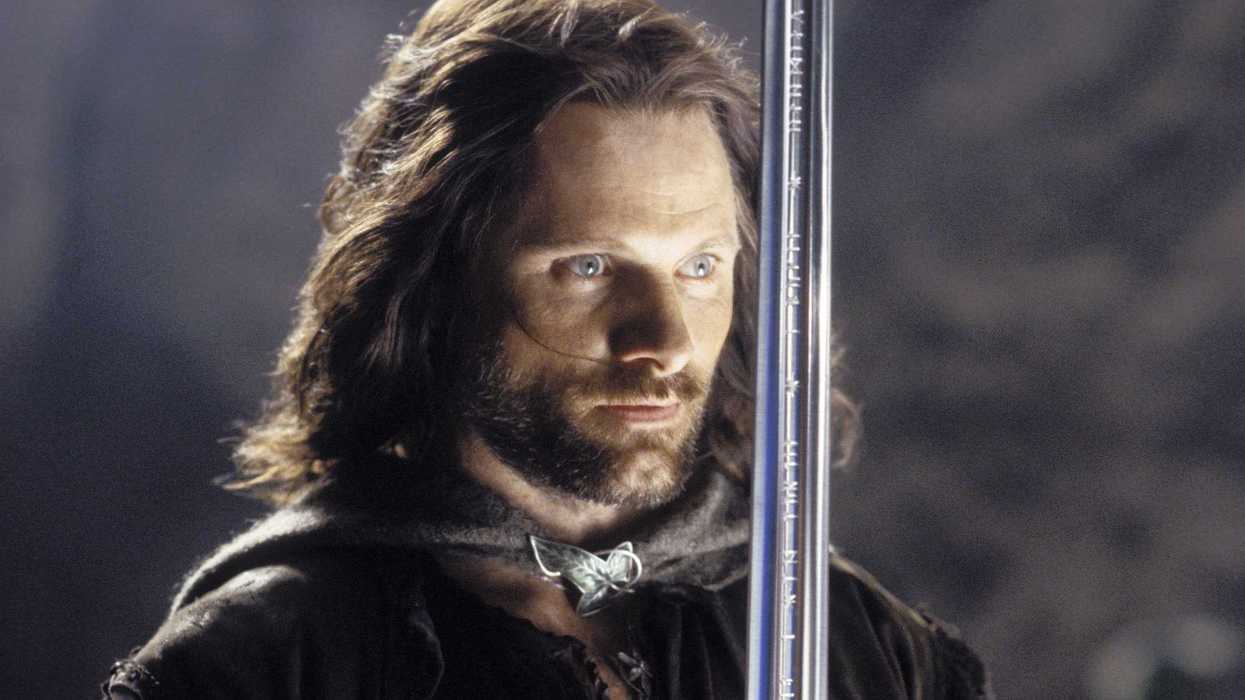
'The Lord of the Rings: The Return of the King' (2003)
Twenty long years after The Lord of the Rings: The Return of the King (2003) wrapped up Peter Jackson’s iconic trilogy, a quiet moment before an epic battle still echoes, reminding us of the strength of the Fellowship’s bond.
As the armies of Men stand on the brink of what would likely lead to annihilation at the Black Gate, Aragorn says two words, almost in a whisper.
“For Frodo” acts as a powerful unifying force that binds the Fellowship and the army into the trilogy’s most iconic battle. Two simple words ignite the Hobbits, the soldiers, and the last desperate hope for Middle-earth.
After an epic journey that brings the army of Men and the audience to the ultimate battle, the movie chooses a path of minimal dialogue and maximum emotion.
What makes this Lord of the Rings line so powerful? What can it teach us about writing minimal dialogue, even in the most epic moments?
Let’s jump right in and explore.
Two Words Instead Of A Speech
After a long, epic journey, the Fellowship embarks on in the first movie, Frodo (Elijah Wood) and Sam (Sean Astin) do not meet Aragorn (Viggo Mortensen) before the battle at the Black Gate. In the battle itself, Sauron’s forces vastly outnumber the army of Men, leaving little hope for a clear victory.
During a moment like this, before rallying his troops for the ultimate battle, Aragorn chooses two simple words that have not just gotten them to this point, but will rally them to fight a relentless force.
Aragorn says, “For Frodo,” after which the silence hangs heavy. He turns around and charges towards the enemy, and soon, Merry (Dominic Monaghan), Pippin (Billy Boyd), and the others follow him. The entire army of Men surges forward, and the last real words we are left with are Aragorn’s “For Frodo.”
In a genre known for elaborate speeches and rallying cries, specifically before large-scale battles begin, this quiet moment highlights the emotional core of the trilogy and the power of the Fellowship’s bond. While the nature of battle sequences typically hinges on something political, that element too is not left behind, even though Aragorn does not address it directly.
“For Frodo” are two words that essentially cover everything the army of Men needs to be reminded of, because they address Frodo’s tremendous sense of bravery in taking on a responsibility that others had failed to accept for centuries before him.
Instead of a long speech that would likely focus on battle tactics or strategy, the movie trusts the audience to understand the stakes. Frodo and Sam are alone in Mordor. Chances of victory are exceptionally low. However, the chances of a successful distraction that would give the Hobbits one last chance are a reason worth fighting for.
How The Words Capture The Fellowship’s Powerful Bond
“For Frodo” are two words that carry the emotional weight of the entire Fellowship. It is a reminder that even though they may be physically separated for a significant time in the trilogy, their bond remains unbreakable.
The timing of Aragorn’s words is just as important as the words themselves. He says, “For Frodo,” just before they go into a battle with extremely high stakes and slim probability of victory. It is precisely such emotional motivation that is required for an army that already knows it is outnumbered.
Without directly addressing the fact, it uses emotion over logic to rally the troops and the audience. As stated by Gandalf in another scene, the Fellowship’s hope for a victory was nothing but a “fool’s hope”. So, when Aragorn says, “For Frodo,” he isn’t speaking as a leader but as a friend honoring a promise the Fellowship made together.
Most importantly, Aragorn honors the quiet courage of the Ring-bearer, Frodo, who never asked for the quest but carried it anyway. Even when the Fellowship had not officially been formed, Frodo was fearless in his approach. Knowing full well that even the Fellowship had a slim chance themselves, he was not afraid of the idea of going to Mordor alone.
Aragorn’s “For Frodo” is a poetic ode to the many sacrifices made by the Hobbit and a reminder of how every effort on the battlefield must honor his fearless and unrelenting efforts at destroying the One Ring.
The Strength Of Minimal Dialogue
One of the most fascinating aspects of the line, “For Frodo,” is how minimal it is. While the trilogy does not shy away from such moments, this particular one stands out because it occurs at a time when, from a cinematic perspective, it is even braver to choose two words instead of a speech.
For writers, this moment is a precise lesson in the power of minimal dialogue writing. “For Frodo” works brilliantly, even in an epic moment, because it does not attempt to break the narrative or “pause” the moment for a predictable monologue. It trusts the audience to know the stakes and the purpose of the battle.
The two words are minimal but effortlessly strong in how they remind us of Frodo’s sacrifices and courage. “Saying less” in epic moments means trusting the audience to connect the dots subjectively. It avoids repetition and allows action and subtext to do the heavy lifting.
Summing It Up
“For Frodo” are two words from The Lord of the Rings: The Return of the King that continue to endure today as the saga’s emotional anchor. Before the trilogy’s most epic battle, Aragorn chooses to let emotions take charge and motivate his army in a manner that gives Frodo and Sam a chance, no matter how slim.
Which is your favorite Aragorn line? Tell us in the comments below.
- Who Are The Most Iconic Leading Ladies in Sci-Fi Cinema? | No Film School ›
- 6 Best Movie Adaptations of Sci-Fi Novels | No Film School ›
- Deconstructing the Science Fiction Genre in Movies and TV | No Film School ›
- The Best ‘The Lord of the Rings’ Theories and Hidden Details Explained ›
- The Line from 'LOTR' That Changed How We Think About Grief ›