9 Miniature Shots You Swear Were CGI
We break down how filmmakers used physical models to create scenes that looked entirely computer-generated.
Titanic (1997)
Before CGI became commonplace in the Special FX department, it was practical effects that led the charge. And one of its most reliable methods was miniature shots. These shots use intricately crafted miniature models and props in conjunction with clever lighting to create the illusion of enormity.
These cinematic sleights of hand are effective because they merge physical texture with the smoothness that people usually associate with CGI, and yet, hide in plain sight. If pulled off efficiently, they give the same effects that CGI produces, sans the unwanted digital look.
Let’s explore nine movie scenes where filmmakers (along with skilled artists and technicians) created entire worlds on workbenches, not on workstations.
9 Miniature Shots That Looked Like CGI
1. Spaceship docking sequence (2001: A Space Odyssey, 1968)
Directed by: Stanley Kubrick
This scene shows a spacecraft slowly rotating as it approaches the vast space station. For this, Kubrick used miniature models built with meticulous precision and mounted them on motion-controlled rigs. The spin of the spacecraft was manoeuvred remotely. Together with controlled lighting, it created a clean, bleak look that today is mostly achieved through CGI. It’s worth noting that despite the availability of advanced CGI, Christopher Nolan still resorted to using the same method for a similar shot in Interstellar (2014). That should make it clear that, when it comes to realism, such practical effects still outweigh CGI.
2. The mothership landing (Close Encounters of the Third Kind, 1977)
Directed by: Steven Spielberg
The scene is notable for its amazing scale. It shows the aliens’ mothership landing on Earth, right behind the Devil’s Tower. For this scene, a massive miniature, also called a bigature, of the mothership was created, which was filled with practical lights. When filmed on the darkened stage, coupled with layered passes, reflection tricks, and smoke elements, it truly looked like an actual gigantic spacecraft descending.
3. The Millennium Falcon asteroid field (The Empire Strikes Back, 1980)
Directed by: Irvin Kershner
As the Imperial forces chase the Falcon, it makes its way through a treacherously dense asteroid field. The special FX crew used physical miniature asteroids that were suspended from thin rods as well as mounted on rotating rigs. This combination created the effect of unpredictable asteroid movement. Even the Falcon that we see in the scene is a miniature model. With layered compositing, the effect turned out to be on a par with modern CGI.
4. Miniature New York (Ghostbusters, 1984)
Directed by: Ivan Reitman
The climax of the movie follows New York’s destruction as Stay Puft, the marshmallow man, rampages across the city. For this scene, the creators made New York with multiple independent structures. Thrown into the mix were forced perspective and certain atmospheric elements, and the destruction looked quite real, at least as if it were computer-generated. Especially, the crisp debris patterns led viewers to believe it was simulated digitally.
5. The exploding White House (Independence Day, 1996)
Directed by: Roland Emmerich
The scene shows the White House being destroyed by an alien beam. To achieve the realistic effect, the art team created a nuanced miniature model of the iconic building with layered sections that could be blown apart separately on cue. High-speed photography made it possible to capture every small fragment in great detail. The model’s scale and intricacy, high-resolution cinematography, and strategic lighting created a digital-like effect even though the entire affair was absolutely physical.
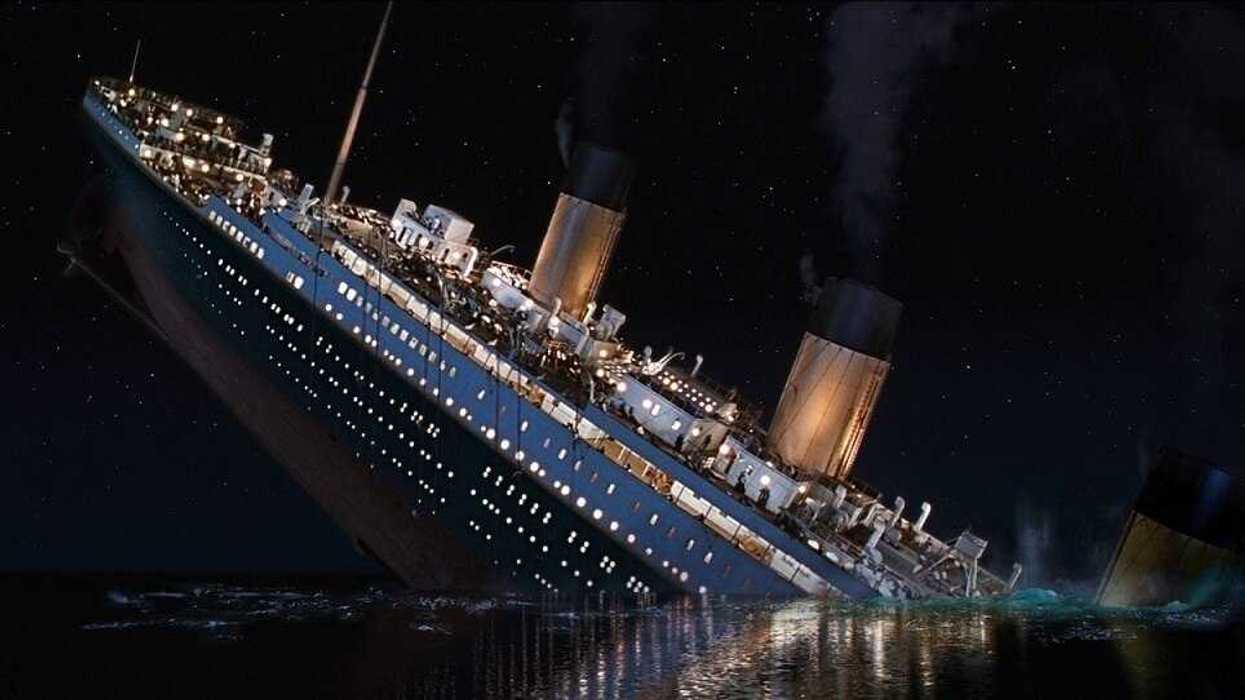
6. The final sinking of the ship and breaking of the hull (Titanic, 1997)
Directed by: James Cameron
This was an iconic climax of an iconic movie about an iconic ship; there was no reason why the effects shouldn’t have been iconic too. Just before the ship submerges, its bow rises, causing its hull to snap under its own weight. The film famously used large-scale miniatures in the controlled environment of water tanks. It was the hydraulic rigs that pulled the model apart while cameras captured the movement at a high frame rate. Its CGI-like quality can be attributed to the clean water movement and balanced lighting.
7. Hogwarts Castle exterior (Harry Potter and the Sorcerer’s Stone, 2001)
Directed by: Chris Columbus
Some of the most iconic images from the Harry Potter movies to imprint on our minds are the exterior shots of the magical school of Hogwarts. Perched on a cliff, Hogwarts meets us as the enigmatic living space for the magically gifted. Its mystifying appearance and strange realism confused audiences, with some convinced it was CGI and others searching online for the “real castle” used as the school. In reality, however, it was a huge miniature, infused with tiny lights and a detailed exterior. Digital enhancements were made, but they were minimal. It looks like a digital effect because of its crisp edges, mist, and sweeping flyovers.
8. The Shire (The Lord of the Rings: The Fellowship of the Ring, 2001)
Directed by: Peter Jackson
The trilogy opens with the idyllic shots of the Shire, the home of the hobbits. The early shots explore hobbit-holes carved into rolling hills, some other small homes, and winding paths. For this sequence, the team built an extensive miniature landscape, or let’s call it a miniature town. It had real foliage. Real soil was sculpted and shaped to look like the idiosyncratic terrain. It also had practical, life-size water bodies. All this made it look like a genuine village, but from a fantasy world. The camera passes are so smooth that many viewers still believe it was purely digital.
9. The collapsing Venetian palazzo (Casino Royale, 2006)
Directed by: Martin Campbell
In the film’s famous climactic sequence, James Bond (Daniel Craig) fights off the villains inside a Venetian villa that breaks apart and sinks in real time. For this scene, the team built a detailed bigature rigged with hydraulic pulls and controllable water flow. As did most filmmakers in such chaotic, fast-action sequences, high-speed cameras were used to capture every small movement of the collapse. Clean motion and sharpness of the debris visuals lead many viewers to think it’s computer-generated.
- Titanic's Most Famous Line Was Never in the Script | No Film School ›
- Movie Myth Monday: Did 'Titanic' Really Cost More Than the Actual ... ›
- How to Create Convincing Practical Effects for Your Indie: Creatures ... ›
- Christopher Nolan Reveals Some of the Practical Effects Used for ... ›
- Levitation & Alien Forces: How to Create Big Practical FX with Little ... ›
- Learn How to Create Practical Special Effects on a Budget with ... ›
- Learn How to Re-Create the 'Interstellar' Black Hole Using Practical ... ›
- Before CGI Took Over: Cinema's 8 Best Practical Effects ... ›
- Practical Effects vs. CGI: Why Your Brain Trusts a Puppet More Than ... ›
- How ‘Euphoria’ Built a Mini-LA for Cassie’s Viral 'Godzilla' Sequence ›