For a film fan, the ultimate vindication is catching every detail that makes a scene unforgettable.
And to me, films are just like human beings—they evolve and show new colors after every revisit. A particular scene might just whiz past you when you see a movie for the first time, but only by the second or third viewing do you realize that the sequence is loaded with visual implications and motifs that reveal themselves only to attentive viewers.
I take my film revisits a bit too seriously, like I’m taking a test, rewatching obsessively to decode every subtle detail or subtext that the filmmaker has carefully woven into every scene. Honestly, that’s my way of honoring the hard work of a fellow filmmaker.
In this article, we’ve compiled a list of the most iconic scenes that are loaded with sneaky clues, visual motifs, and subtext that only reveal themselves after multiple viewings.
Iconic Movie Scenes Bursting with Secrets You’ll Only Catch on a Rewatch
1. The Red Doorknob—The Sixth Sense
You catch on to M. Night Shyamalan’s intentional use of red in The Sixth Sense only after a couple of rewatches. Once you do, suddenly you’re introduced to a new layer in the story.
The moments where Malcom tries to interact with the doorknob are ultimate foreshadowings of the plot twist once you’re aware of the use of red in The Sixth Sense. His inability to interact with it, failing to ever open it, was symbolic of him being a spirit, with the red doorknob marking his transit to the other side—something he was clearly not ready to do.
In the end, Malcolm finds that the door had been blocked by a desk his wife, Anna, had set up all this time.
2. Kevin’s Ticket—Home Alone
I love hard-hitting irony in a film. It turns out, Kevin was not destined to go on his Christmas family vacation to Paris after all, even if the adults realized a little sooner that the kid was left behind at home.
How could he, considering his father chucked his tickets right into the trash? The evening before their trip, Kevin and his older brother Buzz get into a fight over pizza right in the middle of the kitchen, which leads to a total catastrophe, wrecking the entire kitchen after a container of milk spills all over the countertop, and that’s when his ticket gets thrown into the trash along with the napkins.
Maybe that’s why it was easier to miss that he was not in the group when the family headed to the airport?
3. The Spinning Top—Inception
Christopher Nolan’s Inception features some complicated sequences. Honestly, it’s one of those movies that might take you at least a couple of rewatches to even comprehend.
But the one scene that left everyone bewildered is the climactic scene where Dom Cobb’s spinning top continues to spin on the table. Cobb’s spinning top is a symbolic tool that he uses to determine whether he is in a dream or reality.
As the top continues to spin on the table, both Cobb and the viewers are left wondering if he ever left Robert Fischer’s dream. This one’s a tough nut to crack, even after multiple rewatches, because Nolan later revealed that the spinning top wasn’t keeping track of reality; it was Cobb’s father-in-law (Michael Caine) whose presence distinguishes reality from dream.
4. The Deer—Get Out
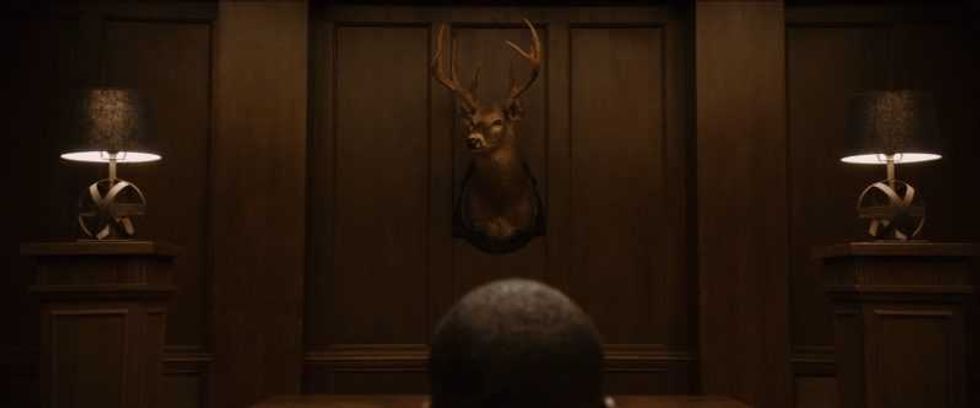 Get Out (2017)Source: Universal Pictures
Jordan Peele’s Get Out is saturated with symbolism and subtext. Have you noticed how Chris is surrounded by deer in his most vulnerable moments?
The Armitages discuss how deer take over everything and must therefore be killed. In the Sunken Place, Chris sees a stuffed deer on the wall.
My favorite scene with the deer? Early in the film, when Chris and Rose are driving to her parents' house, they hit a deer on the road.
All together, the deer symbolized Chris: helpless, vulnerable, and hunted.
5. No Incoming Calls Allowed—Fight Club
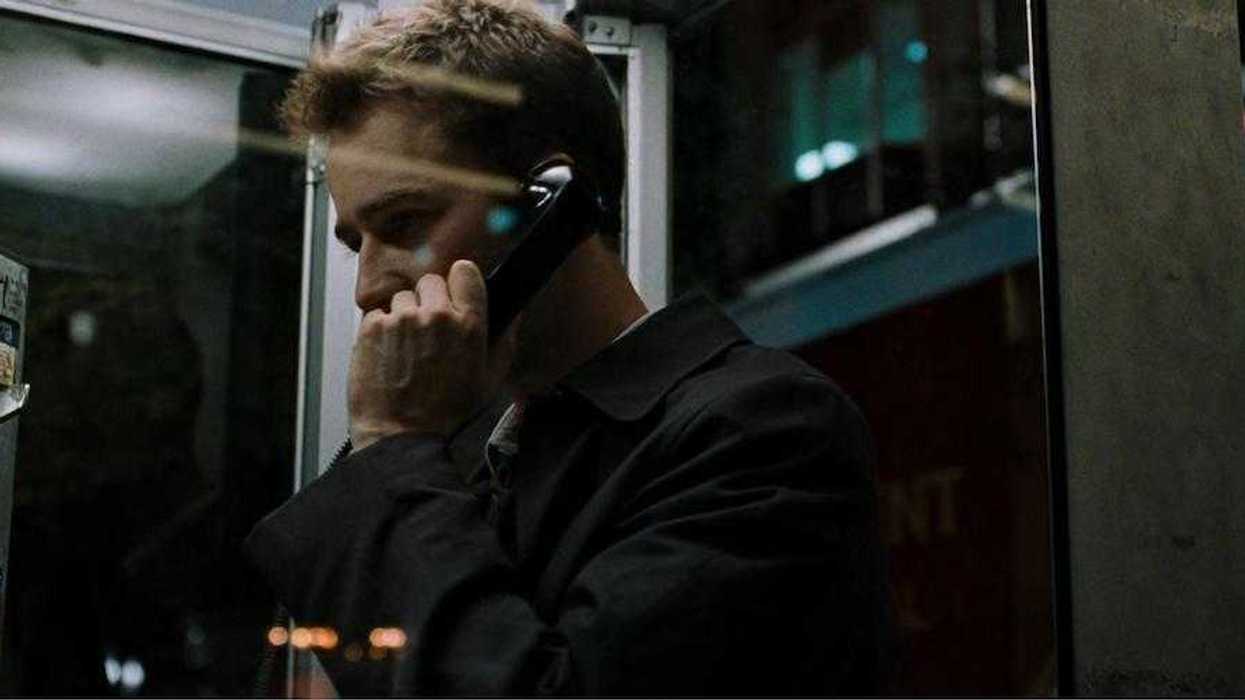
I love David Fincher because watching his films is like cardio for your brain. This particular detail took a little extra effort to spot (including an HD print of the movie).
If you look very closely, the payphone clearly says, “No incoming calls allowed.”
So technically, Tyler Durden couldn’t have called the Narrator back. Thus, it was the Narrator imagining the call (and Tyler) all along.
6. Look Out for Oranges—The Godfather
Who knew oranges could be the bearer of bad news? In The Godfather, the fruit orange foreshadows danger.
There are multiple instances in which oranges appear in perilous moments, such as the first time Vito is ambushed and shot while buying oranges. The fruit is surely a bad omen in the film, considering Vito Corleone dies in an orange grove, surrounded by oranges and orange shrubs, right after he cuts up an orange and puts a peel in his mouth.
It’s wild!
7. The Talking Stairs—Parasite
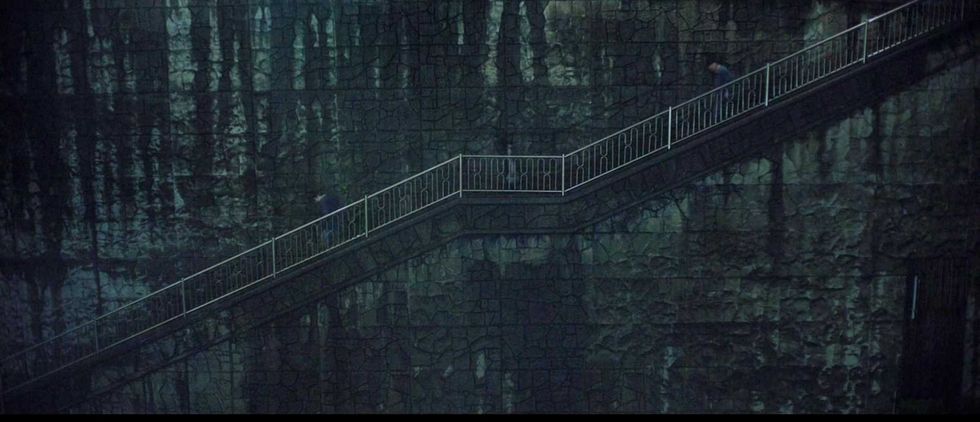 Parasite (2019)Source: CJENM, Neon, Camera Film
Bong Joon-ho uses staircases as a narrative tool to tell his story. The entire narrative is filled with staircases and changing elevations. Upon a rewatch, you’ll realize that the staircases are showing the levels of different characters in the film. Anytime the Kim family is making “progress” in life, they climb up flights of stairs, and anytime they’re in trouble, they’re seen running down a flight of stairs.
Remember how Ki-Woo climbs up a flight of stairs when he comes to meet the Parks for his interview as a tutor to their son? And when they nest in the Park mansion while the family is away for a camping trip, but the Parks return early due to bad weather? The Kim family rushed down endless flights of stairs to get to their home.
Let us know if you know of any other scenes loaded with narrative secrets!