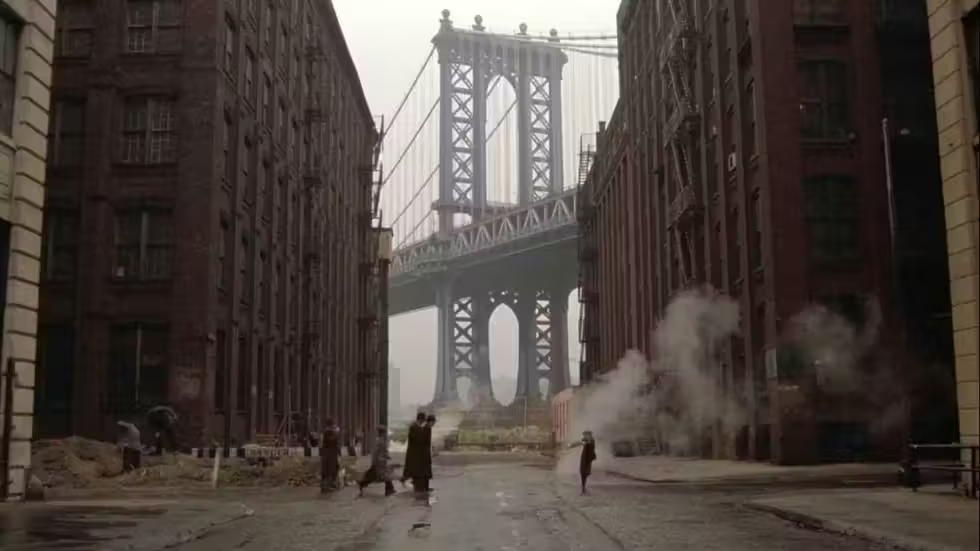
Maestro Sergio Leone’s final film, Once Upon a Time in America, was originally panned nearly into oblivion in 1984 upon its initial release. However, within the past fifteen years, it has been starkly re-evaluated and is now often cited as one of the greatest films of all time. Let’s talk about the long journey this film has been on, and why it’s much more complicated than your average gangster epic.
Pre-Release Sabotage
On May 20, 1984, the film premiered in its entirety at the Cannes Film Festival, where it received a 15-minute standing ovation. When it came time to test the film for American audiences, the film had to be slightly trimmed to secure an R-rating. 2 graphic scenes of assault had to be trimmed, and some miscellaneous moments of violence had to be cut to achieve this. This version of the film had mixed test audience reactions across North America.
In a panic, also citing the desire to show the film multiple times in one day, The Ladd Company, a producer of the film, cut over 90 minutes from the runtime and rearranged the structure into chronological order without consulting with, or even notifying Sergio Leone.
Upon release in American theaters, many critics were sympathetic to the situation Leone was facing, but still were not very kind to the cut of the film. Chicago film critic duo Roger Ebert and Siskel Ebert were particularly vocal in their disdain of the film, citing the incomprehensible changes to the structure, eventually calling it the worst movie of 1984. Leone sadly died five years later, before the film was to be given its proper flowers.
The 2012 Re-Release
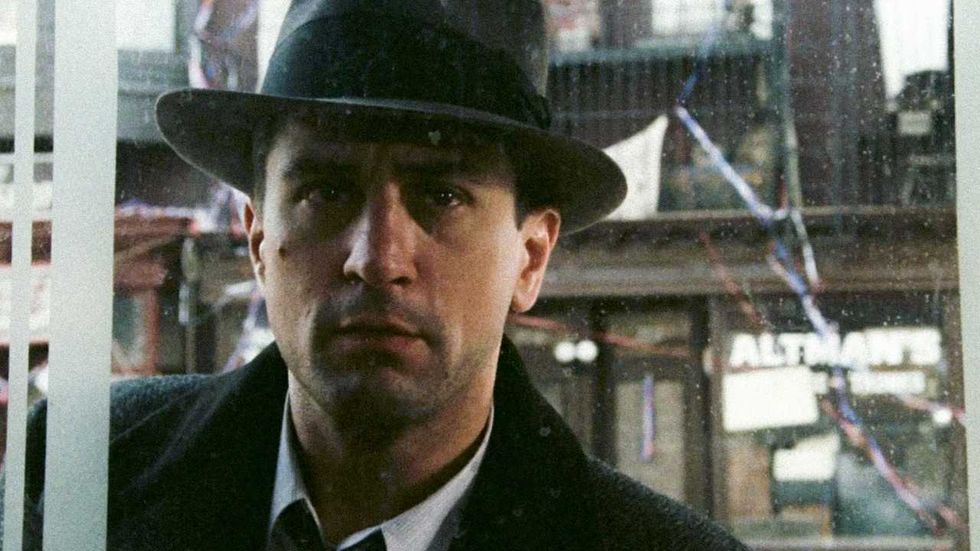 ‘Once Upon a Time in America’Credit: Warner Bros. Pictures
The 269-minute original cut was screened at the Cannes Film Festival in 2012, and was subsequently pulled for further restoration and rights work. In 2014, Warner Bros. released a Blu-ray of this cut, and while it remains difficult to find, it is respected as the definitive version of the film. The 229-minute cut is the one that is most readily available.
The reception to the restored versions is significantly more positive, with Siskel and Ebert’s opinion being the exact opposite of their original one. Both critics cite the film as one of the greatest films, not just of 1984, but of the 1980s period. The film placed ninth in Time Out’s Best Gangster Films of all Time selection in 2015, fourth in The Guardian’s in 2021, and seventh in 2023 with The A.V. Club.
What Sets the Film Apart From Other Gangster Epics
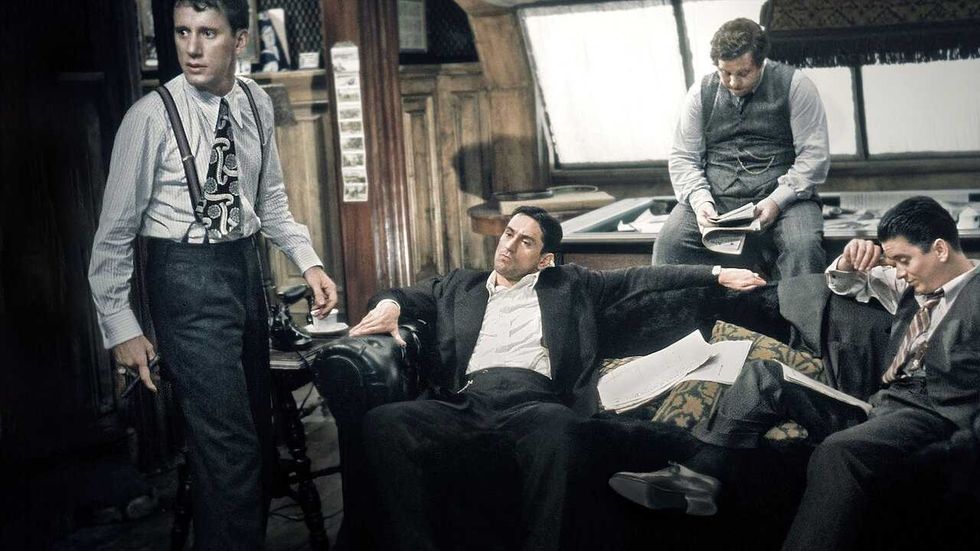 ‘Once Upon a Time in America’Credit: Warner Bros. Pictures
As mentioned, the easiest cut to get your hands on is available on most digital platforms and clocks in at a whopping 229 minutes, which is just under four hours long. That’s not entirely unheard of, as there are plenty of older, historical epics that even exceed that length when counting intermissions.
What makes that runtime especially tedious for many is the often obscenely graphic content at the center of the film. There are multiple lengthy sequences of graphic sexual assault; the physical violence characters inflict on each other is never cut away from, and is often lingered on for extended periods of time, and we often spend an uncomfortable amount of time with the characters in the silent moments directly after these encounters.
Where many gangster epics like Goodfellas, Casino, or even The Godfather films to a certain extent, lean into dark comedy throughout their runtimes to poke fun at the gangster lifestyle, there isn’t a moment of Once Upon a Time in America that eases its way into more lighthearted territory. If characters make jokes with one another, there is always a darker undertone to them. If characters are getting along with one another, even in childhood, it always comes crashing down due to selfishness or insecurity. The characters are miserable, deplorable, and irredeemable. Many, like myself, find the exploration of them in the film to still be fascinating. Many others, understandably, find the amount of time they’re forced to sit with them to be too difficult to stomach.
There’s also the conversation about the film’s ending. The final thirty minutes of the film, frankly, warrant their own article, which I’ll save the nitty-gritty of for a later time. But a lot of dream-like, surrealist, ambiguous stuff happens in the last thirty minutes that isn’t properly explained. The leading theory is that Robert DeNiro’s Noodles is experiencing some form of an opium-induced drug trip where he either misremembers or entirely imagines certain parts of his life to try and force himself to come to terms with the atrocities that he committed throughout his life.
This theory certainly makes sense for lots of reasons, as there are certain anachronisms present in the final hour that weren’t slipping through the cracks before, and also certain character arcs veer off into absurd directions with a nearly delusional level of confidence that places the viewer into a state of near-hypnosis. Even at its most confusing, the imagery and sound design is nothing short of intoxicating.
The ambiguity of the film certainly makes it one that will infect your mind for weeks, alongside the grotesque subject matter that comes along with it. Unlike many films of its type, it’s quiet, methodical, and often not that fun to watch, but at the end of the day, it remains a cornerstone of cinematic history whose journey remains fascinating to this day.