The Real Meaning Behind Gandalf’s “Never Late” Line in ‘The Lord Of The Rings’
This simple line carries a deeper truth about patience and destiny.
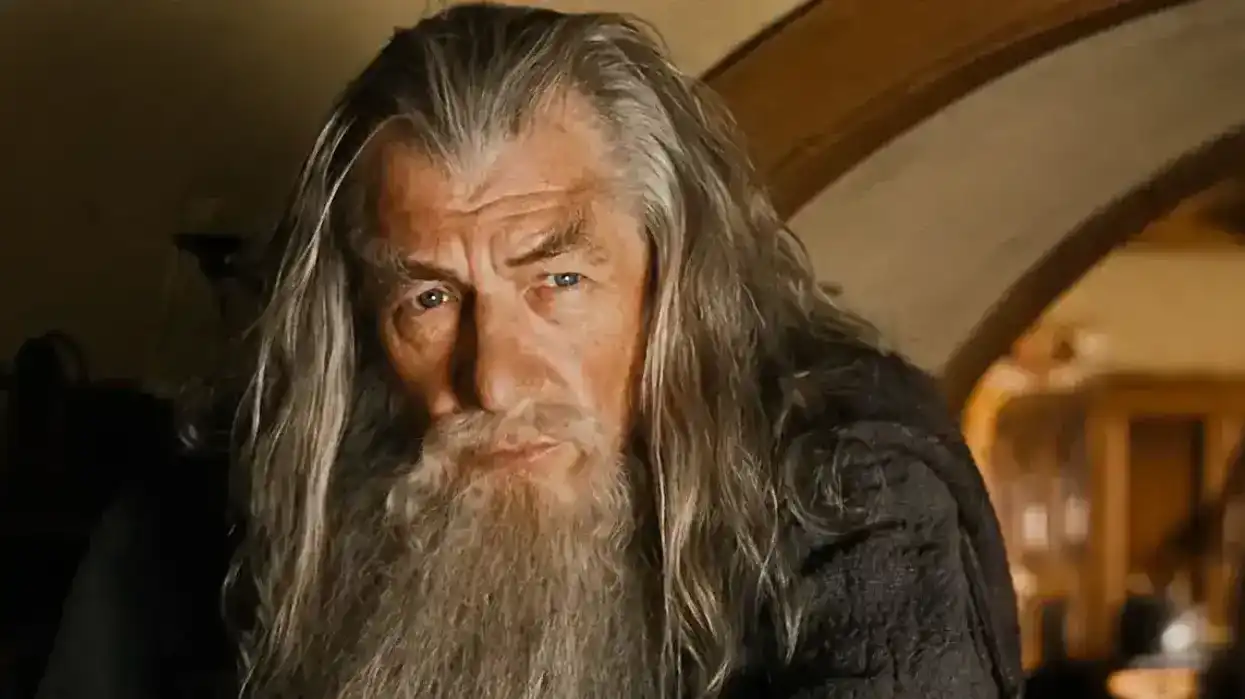
The Lord of the Rings: The Fellowship of the Ring (2001)
“A wizard is never late, nor is he early. He arrives precisely when he means to.”
Gandalf and Frodo Baggins’s first encounter in The Lord of the Rings: The Fellowship of the Ring is one of the most iconic scenes in the entire film. While the moment is charming and mildly comedic, as one would expect, there is a deeper meaning to Gandalf’s words.
Gandalf’s playful confidence and charisma are evident as soon as he says this line, which also perfectly establishes his relationship with Frodo Baggins. On the surface, this is a witty response to Frodo’s accusation that he is late. But when we peel back the layers, we can uncover profound truths about character and authority hidden deep within this line.
The moment iconically showcases Gandalf’s larger-than-life presence and sets the tone for how he operates outside of ordinary expectations.
What is the true philosophical meaning of this line? What can it teach writers about crafting an unforgettable character entrance?
Let’s jump right in and explore.
Punctuality vs. Character Authority
“A wizard is never late, nor is he early. He arrives precisely when he means to,” is a line said by Ian McKellen’s Gandalf in one of the earliest scenes in the first part of The Lord of the Rings trilogy. Gandalf’s words are a response to Frodo Baggins’s (Elijah Wood) accusation of the wizard being late.
Frodo’s understanding of “time” is objective. He assesses Gandalf’s delayed arrival based on punctuality as a social norm. While he may not have been wrong, Gandalf brilliantly uses the moment to establish his authority and larger-than-life presence.
Frodo’s “You’re late” reflects the hobbits’ grounded and schedule-driven world, which, in its own fantastical manner, mirrors that of our own to some extent. Gandalf, though, is not bound by typical moral conventions. As a wizard who is one of the Maiar, angelic beings sent to Middle-earth to oppose Sauron, Gandalf lightly reminds Frodo of his stature.
What’s most important here is that even though Gandalf holds a rather serious expression when he says it, the wizard has a peaceful exchange with Frodo. While the words could be presumed to be marginally arrogant, they don’t come across that way in the slightest.
Gandalf asserts quiet authority through this line. He subtly reminds us that true power often lies in knowing precisely what to do and when. It does not need to conform to someone else’s timeline. In fact, rushing to meet another person’s punctuality demands would be antithetical to the very nature of being a wizard.
Ian McKellen’s delivery and Peter Jackson’s decision to let the moment linger make the scene incredibly memorable, partly funny, and most importantly, wise and larger-than-life, which are consistent with how the audience perceives Gandalf and his actions.
Why This Line Is Comedic And Philosophical
This short exchange lands effortlessly because it manages to be comedic and deep in one breath. The humor comes from Gandalf’s retort to what is essentially a complaint. McKellen’s delivery is underscored by mild mischievousness and amusement, which ensures that the crux of his “lesson” is passed on, with a lighter and more graceful touch.
When you watch the scene again, you will notice that the comedic value of this line primarily comes from McKellen’s delivery. A varied tone could have taken a line like this in an entirely different direction. Frodo’s mock outrage and Gandalf’s gravitas, followed by his iconic grin, make the scene incredibly rewatchable.
McKellen brings a sense of playfulness to this scene, which elevates its emotional depth. However, the line itself remains powerful because of how it asserts Gandalf’s character authority without feeling the need to dominate.
Philosophically speaking, beyond the wizardry aspect of the line, it echoes ideas about intentional living. While Gandalf does use the “wizard reasoning” for being late, his words invite reflection on patience and trust in larger plans as opposed to the typical mundanity of being punctual.
What Writers Can Learn From Gandalf’s Entrance
There are plenty of lessons to be learned from Gandalf’s iconic entry in The Lord of the Rings: The Fellowship of the Ring. Here are three important takeaways.
Establish Tone
From a character perspective, this line brilliantly establishes the tone of Gandalf’s voice. While the words sound rather dominating and assertive, his delivery tells us about the wizard’s playfully charming nature. Both these aspects go on to define the legendary wizard throughout the saga, and this scene sets the tone for an entire epic.
Blend Personality With Worldview
Gandalf doesn’t just showcase the playfully assertive nature of being a wizard; he also lays out his worldview for us to understand. As we discussed, while this line remains true to Gandalf’s wizard lineage, it also establishes how he views the world. Gandalf’s comedic yet sharp rebuttal of societal norms is a huge part of who he is as a wizard and a mentor.
Humanizing Larger-Than-Life Figures
As the story progresses, we obviously learn more about Gandalf. But at this very moment, this single line does a lot of the heavy lifting in terms of character development. Most importantly, this is done by humanizing Gandalf as a larger-than-life figure. Through words alone, by establishing his sense of humor and worldview simultaneously, Gandalf becomes more accessible and friendly, yet remains staunchly in touch with his belief system.
Summing It Up
Writing a character entrance can be both incredibly fun and undeniably challenging. There’s so much you want to set up yet so much you don’t want to give away. Gandalf’s entrance in The Lord of the Rings is a fabulous example of setting a character’s tone, establishing his worldview and sense of humor, all in one breath.
Which is your favorite Gandalf moment of all time? Tell us in the comments below.
- Gandalf’s Famous Head Bump in ‘The Lord Of The Rings’: Was It Accidental Or Intentional? ›
- Gandalf’s “Fool’s Hope”: A Profound Truth in ‘The Lord of the Rings’ ›
- The Tiny Dialogue Change That Made Gandalf’s Line Into One of Cinema’s Greatest Moments ›
- Gandalf’s Final Goodbye Was One of the First Scenes Ian McKellen Shot for ‘The Lord of the Rings’ ›
- Loyalty Without Conditions: Why This Lord of the Rings Line Still Works ›
- Peter Jackson Erased Gandalf’s Most Important ‘The Lord Of The Rings’ Line ›
- What Gandalf Teaches Us About Choice In ‘The Lord Of The Rings’ ›
- The Wisdom Behind Gandalf’s Words On Life And Death ›
- Why Gandalf at Minas Tirith Is One of the Most Perfectly Composed Shots in The Lord of the Rings ›
- What is necessary is never unwise. ›