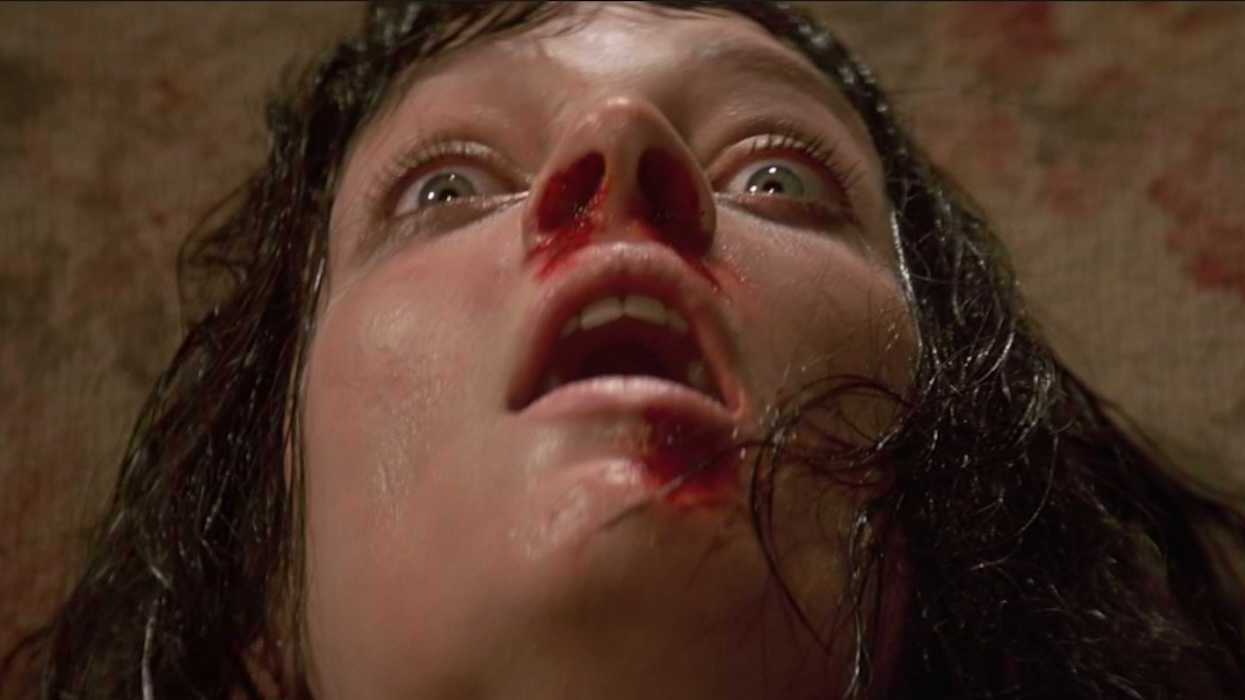
Be it the “ear-cutting” scene from ‘Reservoir Dogs (1992), “Crazy 88 massacre” in Kill Bill: Vol. 1 (2003), or the “Candyland shootout” from Django Unchained (2012), Quentin Tarantino is neither a stranger to pushing boundaries nor has he ever shied away from it. One such boundary-pushing example is the Pulp Fiction (1994) scene, in which Mia Wallace (Uma Thurman) ODs on heroin, and Vincent (John Travolta) has to “stab” an adrenaline injection into her “heart.”
As cringe-inducing as it is to describe it, it’s even cringier to watch. And that’s the thing. “Watching” this scene proved to be quite a task for someone, and that made Tarantino second-guess whether the scene should stay or should go chop-chop.
And, this wasn’t even a preview screening. It was one of the very first public screenings of the movie. And yet, this cinema hall incident sparked a “freaked out” debate behind the scenes.
But it finally survived, and tracing the path of how it happened, that’s what we are going to do.
 'Pulp Fiction'Credit: Miramax
When the Boys Freak Out
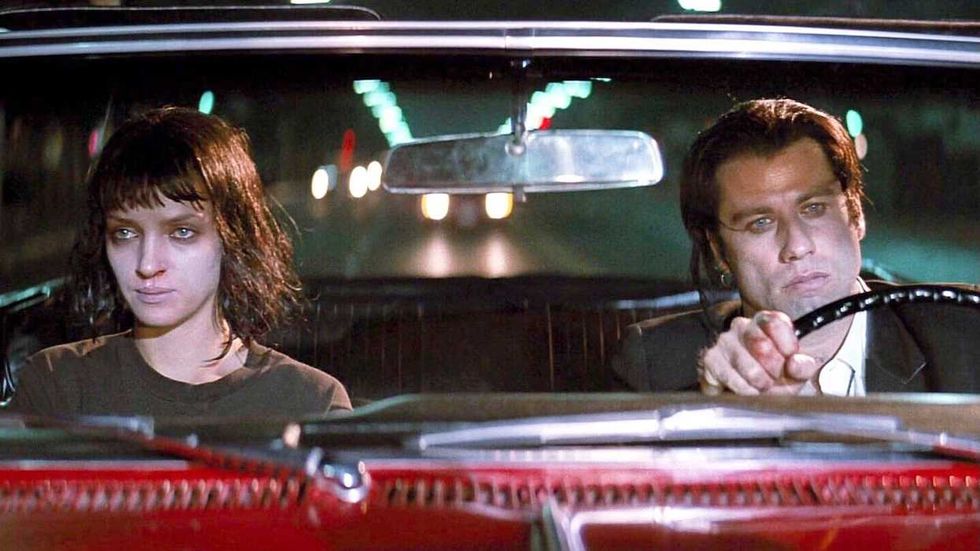
Vincent is one of the hitmen in the employ of Marsellus Wallace (Ving Rhames), an intimidating, violent crime boss. Marsellus tasks him with taking his wife, Mia, out for dinner. Before the dinner, Vincent buys heroin from his drug dealer, Lance (Eric Stoltz), shoots up, and goes out with Mia.
After returning home from dinner, while Vincent is in the bathroom, Mia finds his stash, mistakes it for cocaine, and snorts it. It causes an overdose, and she passes out. Scared for Mia’s life and Marsellus’ wrath, Vincent drives her to Lance’s house. Seeing the situation and understanding the high stakes involved, Lance also freaks out. For some reason, Lance’s wife, Jody (Rosanna Arquette), and her friend, Trudi (Bronagh Gallagher), are eerily chill.
After arguing over who will administer the adrenaline injection, the responsibility falls upon Vincent. Reluctant, he assumes the stabbing position, and one, two, three—SQUELCH!
Mia, with a violent jolt, comes back to life, and everyone is relieved—and the boys are saved.
A Fainting Fan and the Premiere Panic
A Literal Heart-Stopping Response
According to the film’s producer, Lawrence Bender, he and Harvey Weinstein were at Pulp Fiction’s premiere at the New York Film Festival. During this scene, a disquiet rose among the audience, followed by cries for medical assistance. Bender and Weinstein ran towards the chaos. One of the audience members had an “unkind” reaction to the sight of the violent injection-stabbing and passed out. It was some sort of sugar shock or a case of vasovagal syncope (blood draining from the head). The lights went up, and the screening was shut down. The man recovered after having some orange juice, and Weinstein escorted him home in his limousine so he could rest.
The Producers’ Cold Feet
Having witnessed the “more than flattering” reaction to the scene, which ideally should make a filmmaker fly, made Bender and Weinstein nervous. Their resolution on the spot was that the scene would be a big liability and that it would be best to cut it out from the film’s wider theatrical release. Medics making the rounds at your film’s screening—not a good look. The issue was taken up with the production and creative teams for further deliberation.
Why the Scene Works
The Magic of Practical Effects
Two primary things worked wonders for the scene. The first was the lack of any background music, which gave the whole situation a very “real” feel. It might as well be happening for real, next to you. The second thing was the “boss” performances by John Travolta and Eric Stoltz. They really slayed at freaking out.
But there was another thing that immensely contributed. A little bit of magic. Practical magic. The “stabbing” was actually filmed in reverse. Instead of stabbing, Travolta violently pulled the needle away from Thurman’s chest. When the footage was played backwards in post-production, it looked like horrendous needle-stabbing—violent and real.
 'Pulp Fiction'Credit: Miramax
Creating Tension Without the Gore
For all this hullabaloo, you don’t actually see the needle entering the skin. There is no drop of blood. The only red you see is the dot on Mia’s chest that Vincent puts there with a magic marker. All this dramatic tension, freak-out, cringe, and, in the poor premiere guy’s case, passing out, was built entirely on Vincent's and Lance’s panic. This is actually an extraordinary direction. The camera stays on the panicked boys and forces the audience to fill in the blanks with their own imagination. Now, as I look at this strategy, I think that’s what must have triggered such a strong physical reaction from the guy who fainted. It’s actually true what they say—the true horror is in what you don’t see.
The Scene Makes (Retains) the Final Cut
Turning a Scandal Into Hype
The fainting incident at the premiere got out (as such incidents always do), and instead of creating concern, it created excitement. Actually, I am not surprised. We, as human beings, “seek out” dangers in small installments to spice up our lives. That’s what we do. Speeding, trampolining, ice bathing, fooling around with tools—we have all been there. Watching horror or something morbid is just one among those “freaky” things that give us a high.
So, yeah, the fainting turned out to be an unexpected promotion. It created the buzz, and people expressed interest in watching a movie that was “too intense” for the New York elite. In fact, this scene was the genesis of Pulp Fiction’s must-see momentum.
Defining Moment for Tarantino
Cutting the scene out would not only be a wrong decision but a mediocre one. Pulp Fiction, like The Godfather (1972), has a lot in its arsenal, so nothing is dependent on one or two scenes. In fact, what makes them great is their near-flawless form and vibe. But still, without this scene, the film would have lost one of its most visceral, chaotic, and crazy moments.
Also, the scene’s inclusion proved that Tarantino wasn’t here to play it safe. I can totally imagine him saying, “I couldn’t give a flying f**k if it makes you uncomfortable. If it adds value to my film, it stays.” As an audience, we like such loudmouth directors—given they are talented, of course.
Conclusion
The whole movie is a wild ride of crazy, and this scene perfectly epitomizes that spirit. Also, the decision to keep it proves that sometimes an uncomfortably strong, even physical, reaction is far better than no reaction at all. But the initial doubt and discussion over removing the scene also highlights how fragile a great movie can be before it becomes untouchable.
Well, all’s well that ends well. The needle made it, and made it into the film’s nerve. Thank goodness!
- 10 Iconic Quotes from Quentin Tarantino Movies ›
- Unpacking the Dark Legacy Behind the Gold Watch in 'Pulp Fiction' ›
- The Meaning Behind Pulp Fiction’s “Royale with Cheese” ›
- Ezekiel 25:17: The Pulp Fiction Scene That Turned Samuel L. Jackson Into a Legend ›
- Everyone Misunderstands the Hand-Drawn Joke in 'Pulp Fiction' ›
- The Wolf’s Goodbye in 'Pulp Fiction': One of The Coolest Exits Ever Written ›
- The Story Behind “Alright, Alright, Alright”: Three Words That Made Matthew McConaughey Untouchable ›
- The Wallet Test: How the Final Scene of ‘Pulp Fiction’ Flipped the Script ›
- Pulp Fiction Frightening Answers ›