Rob Reiner Changed the Ending of 'When Harry Met Sally' Because He Fell in Love
The director revealed the romcom originally had a sad ending.
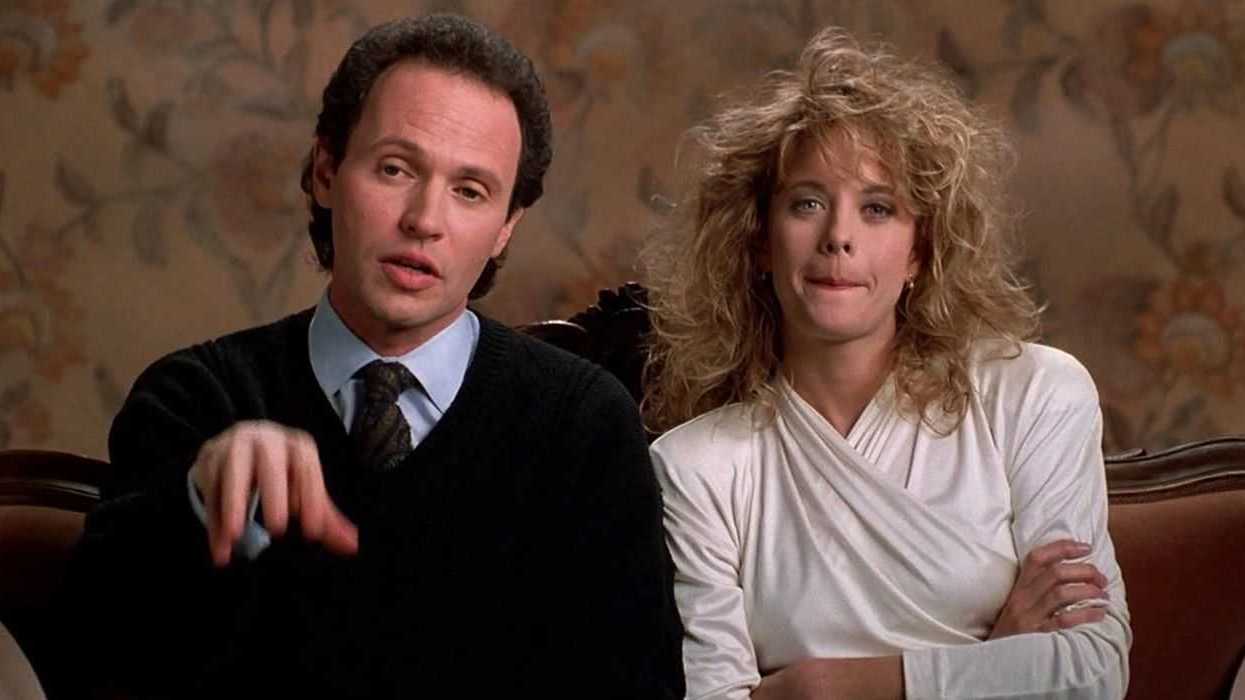
When Harry Met Sally
Legendary filmmaker Rob Reiner made probably the best romantic comedy film of all time in When Harry Met Sally, the ultimate enemies-to-friends-to-lovers tale.
Reiner and his wife, Michele Singer Reiner, were tragically found dead in their Brentwood home on Sunday, Dec. 15. We've been looking back at the director's work and how he approached filmmaking to remember his impact on film.
His 1989 film follows its titular characters (played by Billy Crystal and Meg Ryan) as they travel to New York together post-college, hating each other at first. But they stay in touch through the years and other relationships, their two best friends eventually marrying. Finally, after all this time, they sleep together. Sally realizes her feelings for him, while Harry initially resists, hurting her feelings.
The film ends with one of the all-time great romantic finales, Harry running through New York on New Year's Eve to get to Sally and confess his love.
It turns out, it wasn't supposed to end that way.
- YouTube www.youtube.com
The Original Ending to When Harry Met Sally
In a 2024 CNN interview (via The Hollywood Reporter), Reiner revealed that his iconic romcom was originally supposed to end without its now-legendary happy ending.
“It was going to be the two of them seeing each other after years, talking and then walking away from each other,” Reiner told CNN. “I had been married for 10 years. I’d been single for 10 years, and I couldn’t figure out how I was ever going to be with anybody, and that gave birth to When Harry Met Sally.”
Reiner had divorced fellow actor/director Penny Marshall before the film and was clearly feeling a bit cynical about love at the time.
“I met my wife Michele, who I’ve been married to now 35 years. I met her while we were making the film, and I changed the ending.”
When CNN asked if Michele was the reason for the famous last scene, Reiner said, “That’s right.”
That shift gave audiences one of cinema's most romantic speeches, in which Harry tells Sally the specific, mundane reasons he loves her before confessing that he wants the rest of his life to start as soon as possible.
"I love that you get cold when it's 71 degrees out. I love that it takes you an hour and a half to order a sandwich. I love that you get a little crinkle above your nose when you're looking at me like I'm nuts. I love that after I spend the day with you, I can still smell your perfume on my clothes, and I love that you are the last person I wanna talk to before I go to sleep at night. And it's not because I'm lonely, and it's not because it's New Year's Eve. I came here tonight because when you realize you want to spend the rest of your life with somebody you want the rest of your life to start as soon as possible."
When Harry Met Sally breaks genre conventions by having no external conflict keeping the couple apart, just their own stubbornness. It feels honest and not contrived, thanks to Nora Ephron's genius script.
Crystal said in a 2019 interview with The Hollywood Reporter that When Harry Met Sally has no traditional plot.
"The obstacle in this movie is themselves," he said.
It's all about the character-driven storytelling, baby. Understanding what makes romantic comedies work will help you see that internal conflict can carry an entire narrative.
Writers often pull from their own lives, but the best know when their perspective has shifted enough to require a different approach to the material. Don't be afraid to change your ending.
Reiner's five-film run from 1984 to 1992 (This Is Spinal Tap, Stand by Me, The Princess Bride, When Harry Met Sally, and A Few Good Men) remains unmatched. Each film defined its genre, and they're all still quotable decades later.
- Watch: How 'When Harry Met Sally' Teaches Us to Break Genre ... ›
- How the Four-Way Phone Call in 'When Harry Met Sally' Was Shot in ... ›
- 15 Great Nora Ephron Quotes to Inspire Your Filmmaking | No Film ... ›
- “I'll Have What She's Having”: The Story Behind That Iconic Deli ... ›
- Rob Reiner's Coming-of-Age Masterpiece Turned 40 Years Old This Month | No Film School ›