What “Run, Forrest Run” Really Means — It’s Deeper Than You Think
Jenny’s three words that hold the spirit of Forrest Gump!
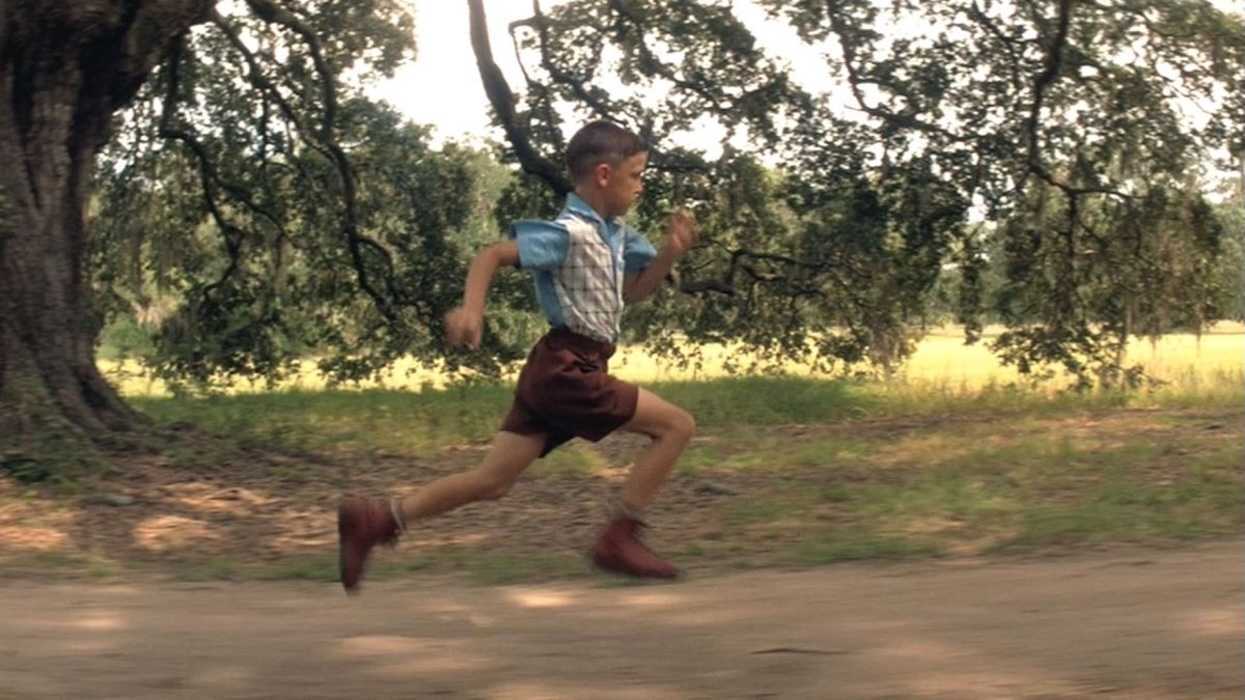
'Forrest Gump'
Forrest Gump’s Jenny is one of the most controversial characters in movie history, widely misunderstood for how she treated Forrest all her life. She embodies the loss of innocence and self-destruction in how she leads her life, digging her own grave, until finally she succumbs to the consequences of her choices.
Amidst her pool of mistakes, it’s easy to overlook how, after Mrs. Gump, it was she who instilled all the courage in the world into Forrest, emotionally protecting him in a way nobody ever protected her (except Forrest). It was the “Run, Forrest, run” moment in the film where it all began. However, it's interesting to analyze how “running” meant two completely different things for the two of them.
In this article, we’re exploring how the three words “Run, Forrest, run” have an overarching influence on the character arcs of the two leading characters of Forrest Gump.
To Give You A Little Context…
Raised in Alabama by a single mother, Forrest Gump (Tom Hanks) was born with a stunted mind and a set of disabled limbs. He lives alone with his mother, Mrs. Gump, who was raising him by running a boarding house out of their ancestral home. His differences rendered him isolated, and Jenny was his only friend. She was his neighbor, and the two went to the same school.
Jenny came from an extremely troubled family. Her childhood was scarred by her father, “a very loving man, always kissing and touching her and her sisters.” Forrest’s friendship was her only escape; the safest place she could ever be in.
The two grew up together, shielding each other from the darkness as much as they could.
Then life happened—they moved away, but continued to protect each other in spirit. Jenny may have never said it out loud explicitly, but for her, too, Forrest was the only light in all of her darkness.
The ‘Run, Forrest, Run’ Scene
As children, one day, Jenny and Forrest are walking back home from school, when three boys on their bicycles rush up to them. They throw their bikes on the ground and start stoning Forrest, calling him names. Forrest falls to the ground as they continue pelting. Jenny picks him up from the ground.
Outnumbered, Jenny nudges Forrest to make a run for it. Forrest, who is wearing braces on his legs, begins to stagger as he tries to get away from the bullies. Seeing him trying to escape, the boys get on their bicycles to follow him.
Forrest limps and staggers, but doesn’t quit on the run. As he drags his legs, a miracle happens.
His braces fall off, and suddenly his legs begin working close to normal. In a few more steps, Forrest begins running like any other child of his age, but for the first time in his life.
He runs like the wind, leaving behind the bullies on their bicycles, racing through meadows and markets, to reach home.
The Impact of That Moment In Forrest’s Life
That day, a miracle happened. Forrest, who was never supposed to walk on his own, ran. Cheered by his best friend, he did the impossible, the unnatural, and most importantly, something transformational for himself.
But that moment didn’t end there. As irony would have it, Forrest, a boy with walking disability, grows up to be a legend, shattering all his physical limitations. He grows up to be a very successful football player and a war veteran. Even in the end, when Jenny leaves, Forrest runs across the entire U.S. in an attempt to process his grief.
Jenny’s voice, cheering him on to run, stays with Forrest for the rest of his life.
“Run, Forrest, Run”: The Expression Of Duality
It is insane how two people interpret one single thing so differently.
Here’s how Jenny and Forrest believed in two completely different interpretations of “running”:
Forrest
Forrest is different from us because he takes everything in its most literal and simplest sense. But when Jenny asked him to run to safety that day, did he take it quite literally? I don’t think so.
Jenny asked him to run away from his problem, but in his head, he interpreted it as running towards the solution. To save himself from the bullies, all he had to do was reach his house before they caught up to him. So technically, he wasn't running from them; he was running towards something mightier than them. Running necessarily doesn’t always denote fear of confrontation, and Forrest proves it with his life.
All his life, he has never run from the problems. For him, running stands for bravery, self-belief, and love.
Jenny
Jenny is committed to running from her problems. Considering her past, we can’t really blame her. Coming from an abusive family, what were the possibilities for a young woman in 60s to escape her godforsaken life?
So, she makes a run for it, expecting it to all go away on its own. She even makes a run from all the good things in her life, including her best friend Forrest, who loved her unconditionally. But life doesn’t work like that, does it?
While Jenny seems to believe that running saved Forrest that day, she failed to realize that it all worked out for him because it was his way of putting up a fight and not surrendering to adversity. That day, Forrest ran in survival and not in fear. If he did the latter, soon those bullies would have caught up to him. After all, fear takes you nowhere.
Sadly, Jenny never quite realizes this about life. Every choice that she makes is marked by fear and surrender. For Jenny, running means to surrender, and somehow over time, she's gotten comfortable with it. Or rather, surrendered to that tendency of hers.
Come to think of it, the “Run, Forrest, run” scene is definitely an overarching metaphor in Forrest Gump.
What are your thoughts? Let us know in the comments below.
- We Rank the 17 Best Tom Hanks Films ›
- “Life Is Like a Box of Chocolates:” Still True, Still Timeless ›
- How Forrest Gump’s Production Designer Brought Vietnam to South Carolina ›
- Tom Hanks Paid for Some of 'Forrest Gump' Out of Pocket and it Paid Off ›
- What Does the Feather Mean in 'Forrest Gump'? ›
- John Lennon, JFK, and Ping Pong - ‘Forrest Gump’’s Hidden VFX ›