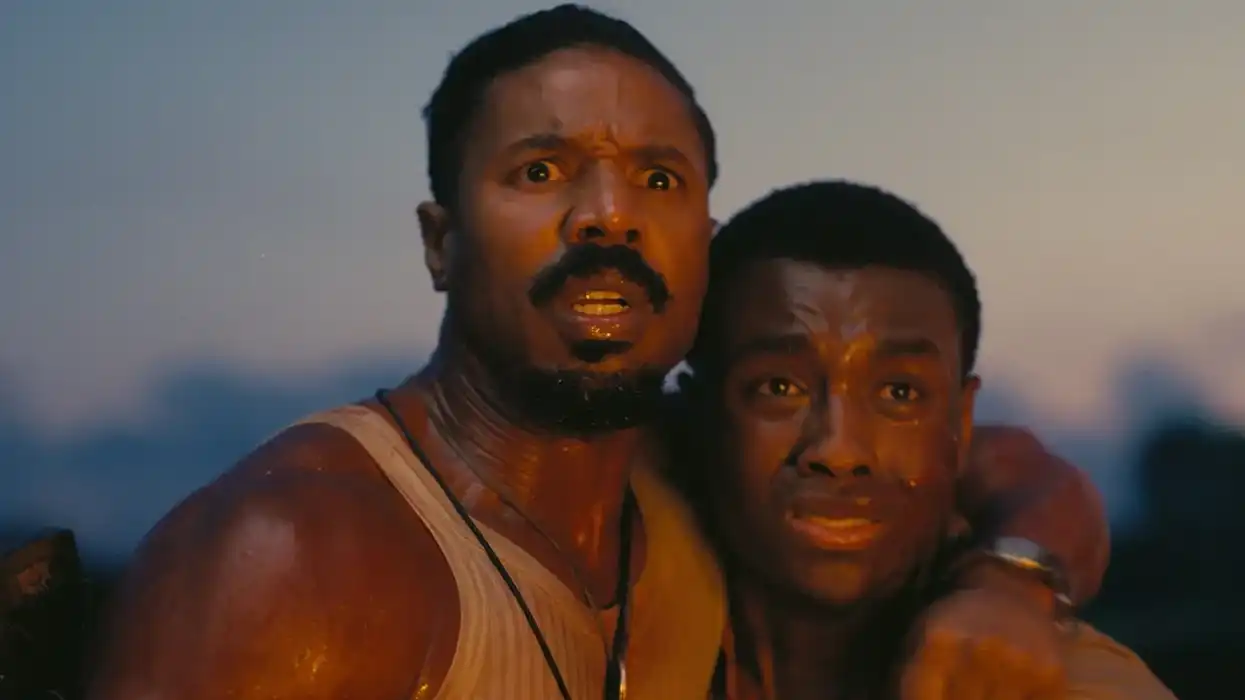
Ryan Coogler was a ruler at the box office last year with Sinners, a sleeper genre hit that's still sending echoes through the film industry.
Coogler sat down with BFI Film Academy students and alumni at BFI Southbank on Dec. 15 to discuss his path from a young college filmmaker to one of Hollywood's most successful directors.
The discussion, hosted by film programmer Wema Mumma, covered how Coogler shifted from sports and science into filmmaking, his journey from USC film school debt to directing tentpole studio projects, and some great practical advice. Check out the talk below, then get into our seven favorite tidbits.
- YouTube www.youtube.com
It Doesn't Matter How You Get into Film
Coogler's route into directing came via multiple unexpected turns.
At 19, he was playing college football on scholarship and majoring in chemistry. One of his creative writing teachers suggested he try screenwriting after reading his work. Eventually, he transferred and added a film minor.
"I was getting my ass kicked in chemistry class. It wasn't compatible with the football schedule," he said. "So I was looking to change majors anyway."
By his early 20s, finished with football, he'd gotten deeper into filmmaking.
"Every year that would pass, I would fall more and more in love with the idea of becoming a filmmaker," he said.
Your path doesn't have to make sense to anyone else. All of your experiences are useful and can go into a toolbox that you can pull from later—your route doesn't have to be linear or expected. If you want to be creative, all that matters is that you get there eventually.
Read more about ways of breaking into the film industry.
Pressure and Self-Doubt Are Normal
Coogler graduated from a Los Angeles film school with roughly $200,000 in debt, which created rapid pressure to make filmmaking work. Even now, he said that anxiety doesn't disappear with success.
"The fear is there, always, you know? It was there on my last project, right?" he said. "What if this thing is not good? Or what if people aren't interested, don't care, they don't show up to go watch?"
He frames this as a human condition rather than a personal failing.
"I think that that's like a part of being a person, you know what I mean? Having to work in the face of the possibility of failure or embarrassment. You've just got to get yourself used to it, I think," he said.
He said his background in high-pressure football situations helped. Playing receiver meant the ball was in the air, and he couldn't drop it, and that was connected to keeping his scholarship. Stakes like that trained him for the pressure of filmmaking, but it doesn't mean the fear ever diminishes. And that's normal.
We've got resources to help you face self-doubt and fear.
 Sinners Credit: Warner Bros.
Surround Yourself with Experienced Collaborators
When Coogler made Fruitvale Station, he had zero professional on-set experience. Forest Whitaker and Nina Yang Bongiovi produced it, bringing decades of knowledge. Octavia Spencer and Michael B. Jordan were already established actors.
"Each time, I had help. That's the other piece, too. Filmmaking is—by the time somebody greenlights one of these movies, it's usually a lot of experienced people in the mix, you know?" he said.
He points to cinematographer Autumn Durald Arkapaw as an example.
"She's shot more movies anamorphically than I have," he said. "So if I got questions about what an anamorphic lens is doing, she can say, 'Oh man, don't worry, it'll be like this, or it'll be like that.'"
Hire people who know more than you do in their specific areas, and don't be afraid to ask them questions. That's how you learn and grow, too.
Learn more about the power of collaboration as a director.
Mentorship Comes in Many Forms
Coogler listed multiple mentors who guided his career. Whitaker bet on him early, John Singleton gave him advice before he passed, and Spike Lee still talks with him regularly. Sylvester Stallone offered career and business insights during Creed. Disney executives Bob Iger, Alan Bergman, and Alan Horn became guides on the executive side.
"There isn't a blueprint," he said. "I have so many mentors and so much guidance that's available to me."
He also credits Tyler Perry, who let them shoot both Black Panther films at his Atlanta studios. "I don't know if there's like five filmmakers that are more financially successful than Tyler," he said.
What matters to him is the idea of community and his ability to help others in turn. That way, filmmakers can make collective headway. Don't limit yourself to one model or one type of guidance. Soak up knowledge and guidance from every side.
Check out our huge list that includes current mentorship programs.
Network Through Kindness and Presence
When asked about networking, Coogler admitted he gets anxiety, too. But he's learned that kindness matters more than technique.
"After almost a couple decades doing this sh*t, you'll be surprised how far just being kind to people and being present in those networking spaces, how far out that'll get you," he said.
He contrasts this with the uncomfortable interactions, like the people who look past you to see who else they should talk to, or say something "unkind or belittling."
"You remember that kind of sh*t too, right?" he said.
His advice is to be kind, be present, and understand that nobody stays in the same place. The person you meet today might greenlight your film in five years.
Here are six networking tips for people who hate networking.
 Sinners Credit: Warner Bros.
Build Your Creative Team at Your Level
Coogler said that finding people at your current stage or "class" (like in school) who can actually use your help, not just people you want something from, can help too.
"Find people that are at your level, who actually could use your help, you know? Not in a way where you're picking them up, which is nice, but in a way like, 'Hey, I'm shooting this weekend,' you know what I mean? Like, 'I'm trying to find somebody who can hold a boom,'" he said.
This creates reciprocal relationships. Someone might hold your boom, then you turn around and act as their producer.
"I actually don't know any filmmakers who didn't work with somebody whose relationship started like that," he said.
These collaborators can become invaluable later.
"You'll find that that actually protects you, down the road, when you get your first big job. And you've got somebody there who actually knew you before," he said.
Read tips for how to start a film collective.
Understand What Your Midpoint Is Really About
We always like to look at the screenwriting, too! Around his third movie, a producer asked Coogler what the midpoint of his script was.
"I was like, 'Man, what's the midpoint?'" he said. "I was a little embarrassed by it because I spent a lot of money on school, and I wrote a lot, and I didn't really know."
He was making midpoints without knowing what they were called. This is how it was explained to him: "The midpoint is where you tell the audience what the movie really is about."
However you approach it, the midpoint should reframe the first half of your movie. It's a turning point that flips your story upside-down.
"What that means is like, before, you're not telling them? Which is kind of crazy," he said with a laugh.
In Sinners, he used the midpoint to create a supernatural moment where characters from 1932 meet people outside that restrictive timeline. It was both structurally necessary and thematically meaningful.
If you don't know what a midpoint is, either, that's okay. Here are six ways your screenplay midpoint can save your story.
- Read and Download These Ryan Coogler Scripts ›
- Ryan Coogler on Why Movies Are Blue Collar Work ›
- Watch Interview with Writer/Director Ryan Coogler on Sundance-Winning 'Fruitvale Station' ›
- Why Ryan Coogler Wants to Focus on Original Ideas Right Now ›
- What You Can Learn from Ryan Coogler’s 4 Favorite Movies ›
- X-Files 65MM ›