‘The Breakfast Club’ and the Line That Says It All
One honest sentence captures the film’s core idea about identity, fear, and emotional armor.
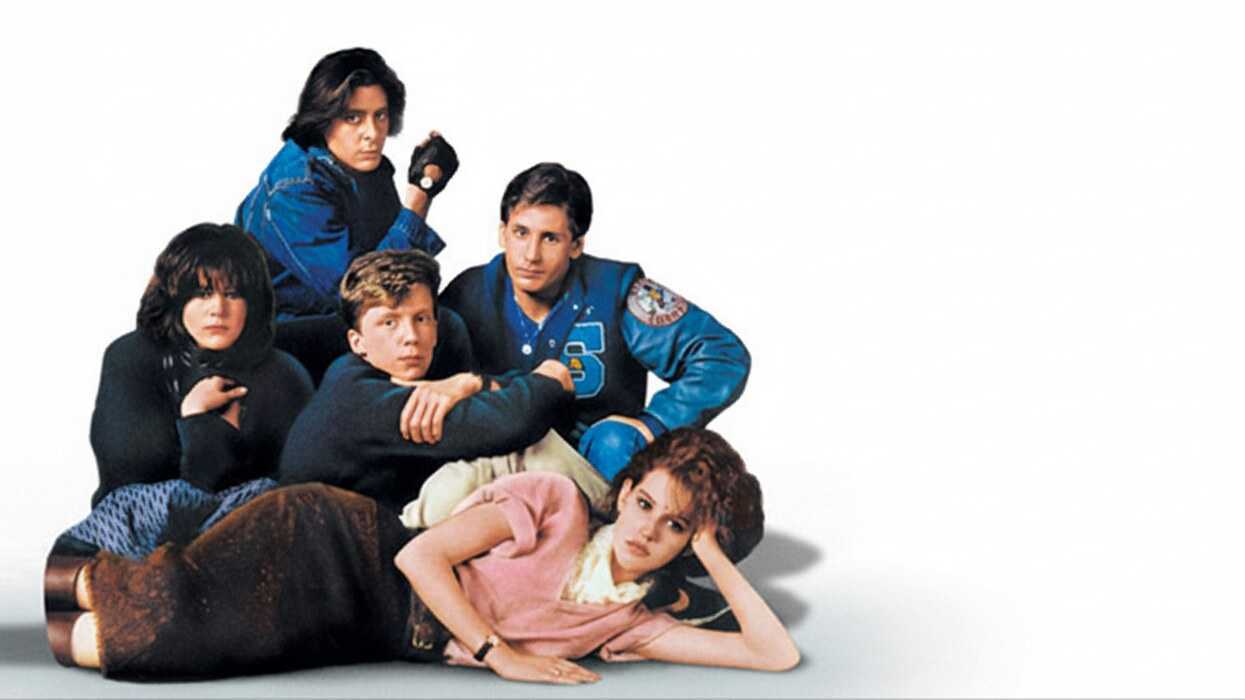
The Breakfast Club (1985)
If you have been through it, you might know what it’s like to be in an all-day detention at school on a Saturday. Unfair, ridiculous, and a total snooze-fest.
And that’s exactly the main premise of The Breakfast Club (1985). It features an eclectic lineup of stereotypically different high schoolers: Andrew (Emilio Estevez), a.k.a. the athlete; Brian (Anthony Michael Hall), a.k.a. the brain; Bender (Judd Nelson), a.k.a. the criminal; Claire (Molly Ringwald), a.k.a. the princess; and Allison (Ally Sheedy), a.k.a. the basket case.
They may be different, but, at the end of the day, they are just teenagers. They all feel awkward, insecure, and like a freak. The movie, while keeping this insecurity in the centre, casts off their shells and lets them bond, share vulnerabilities, and discover what they have in common.
At one point, when Claire expresses her insecurity, calling it bizarre, Andrew chimes in and says, “What’s bizarre? I mean, we’re all pretty bizarre! Some of us are just better at hiding it, that’s all.”
This line catches their struggle to “look normal” while feeling like a misfit. It keeps a finger on their need to wear masks to survive the hallway social wars. And just like that, it serves as the ultimate equalizer for five kids who thought they had nothing in common.
The Line in Context
The moment comes quite late, an hour into the film. By this time, the characters have dealt with each other using sarcasm, hostility, and role-playing. Their walls are cracked. Confessions are shared. Vulnerabilities are exposed.
Allison claims she is a nymphomaniac and has slept with her shrink multiple times. Claire is disgusted but gets dismissive when she is asked if she would do it (or has done it), not necessarily with a shrink, but with anyone. This trail of conversation finally leads to Allison revealing she is not a nymphomaniac but a compulsive liar, and Claire reveals she has never done it.
When Claire refers to “not having done it” as a bizarre thing, Andrew is quick to say, “What’s bizarre? I mean, we’re all pretty bizarre! Some of us are just better at hiding it, that’s all.”
Why the Line Comes From Andrew, Not Anyone Else
Among all five, Andrew is the one who should appear exempt from feeling insecure, awkward, or like a failure. Aside from being a popular jock and a wrestling athlete, he is confident, respected, and socially protected. He has status, approval, and a promising future. And that’s exactly why it makes tremendous sense for the line to come from him.
Immediately after this line, he reflects (in an emotional monologue) on the incident that caused his detention. He worries his demanding father thinks less of him for never having “cut loose on anyone.” So when he saw a skinny and frail student (Larry) in the locker room, all he could think of was how his dad despises weakness. He worked on that instinct and duct-taped Larry’s ass cheeks together, causing him substantial physical and mental distress.
Andrew confesses that the “bizarre” part of the prank was that he did it to impress his father. He breaks down, thinking how Larry must have felt, and has an epiphany that he has nothing in common with his father. This highlights shame, not rebellion. His insight comes from conformity cracking under pressure.
What’s “Bizarre” For Andrew
Whether it’s Allison’s compulsive lying or Claire’s virginity, they both perceive it as their bizarre sides. In Andrew’s case, however, his bizarreness has nothing to do with eccentricity. He confesses to doing something he doesn’t believe in to impress someone he doesn’t respect. For him, this moral confusion is the bizarre thing. As he confesses, he realizes how his actions have destabilized his identity.
Here, the word “bizarre” has nothing to do with being weird. The bizarreness Andrew refers to is the gap between who he is and who he is pretending to be.
Identity, Fear, and the Defence Mechanisms We Choose
Fear as a Social Barrier
The characters are moody and irritable. But it’s not for the aesthetic. They are genuinely scared. Andrew is worried he might disappoint his overbearing father, Brian fears academic failure, Bender thinks he may end up just like his alcoholic and abusive father, Claire stresses thinking her elite friends might reject her, and Allison is burdened by her parents’ soul-crushing indifference toward her.
Their fears have caused them to be defensive and secretive. Until this point, they have stayed quiet because each of them thought they were the only ones with “bizarre” sides. They only start talking once they realize everyone has a bizarre side, and they are also hiding it.
The Cost of the Mask
We all do it and never realize it: keeping up appearances doesn’t come cheap. And no, it’s not about spending money to look rich. I am talking about the psychological and emotional toll it can have on you. Claire’s mask has earned her the label of a “princess,” and Andrew is experiencing burnout from constantly being a “varsity” puppet. By the time they reach the end of detention, they realize that all the while they were hiding their true selves, they were not protecting themselves; they were making themselves lonely. What they thought was their defence mechanism was actually their prison.
Conclusion
Andrew’s line, in some ways, defines the spirit of The Breakfast Club. It points out that labels—“bizarre” in this case—are nothing but lazy shortcuts that people take so they won’t have to scrutinize themselves at any deeper level. Its purpose is not to solve their problems but to highlight the cost of pretending.
The line also brings out on the surface a fact about us. We spend so much time pretending to be someone else, constantly fearing that we might get caught being ourselves. The line is a clear directive to own your bizarreness. That’s the best way to handle it. “Who best hides their flaws” is not the competition you want to win. Because life is much more interesting when it is what it is.
- 10 Best Single Location Movies | No Film School ›
- 10 Best High School Movies Ever, Ranked ›
- 7 Best High School Movies of All Time | No Film School ›
- You Know You're a Writer If You're Scared of Writing | No Film School ›
- So, You Want to Make a Movie About Cheerleaders? - No Film School ›
- The 5 Best John Hughes Movies | No Film School ›
- There's a 4-Hour Version of 'The Breakfast Club' Out There ›