“Come Out to Play”: The Story Behind ‘The Warriors’ Most Famous Improvised Line
Learn the fascinating story of “Warriors, come out to play-ay!” from The Warriors (1979) and its soul-stirring legacy.
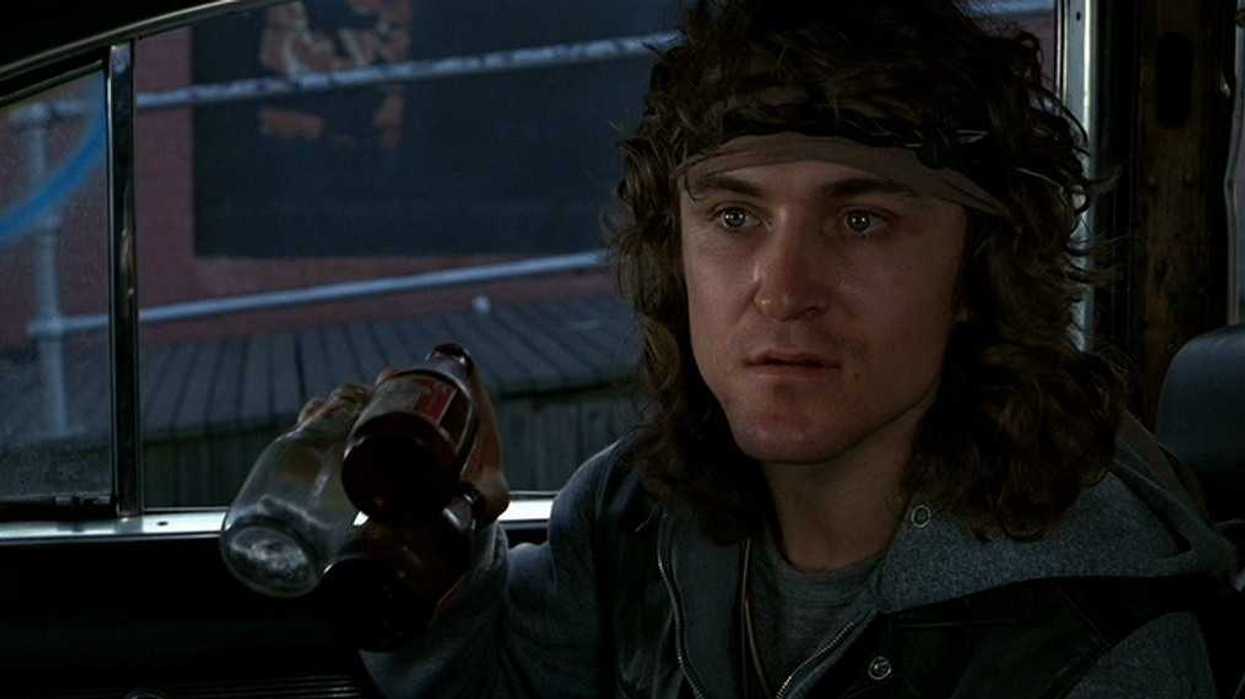
'The Warriors' (1979)
Imagine being on the run, hiding out in a derelict park, being accused of a crime you didn’t commit, and being pursued by the vengeful criminal gangs in the city. Suddenly, you hear an eerie sound, a rhythmic, metallic clinking.
And then, it’s followed by something totally deranged. You would expect a “tough guy” to show up and challenge you, perhaps in a deep, resonant, commanding voice. Instead, you hear a disturbing, melodic falsetto in a high-pitched, nasal voice. Despite the juvenile nature of the “singing,” the man (or the man-child), to whom this voice belongs, is an unstable, psychotic, and cowardly but highly manipulative criminal.
This is the iconic moment from the 1979 cult classic, The Warriors, and its unhinged nature has transformed the movie from a regular gang flick into a permanent silver-screen fever dream. Why is this moment so iconic? Let’s explore.
The Context
Among all the New York City gangs, the Riffs are the most powerful. Its leader, Cyrus (Roger Hill), summons the representatives of the city’s 100 most influential gangs and proposes they work together in harmony as a united alliance. He argues that it will not only increase their collective power, enabling them to control the city, but also that they will outnumber the police by three to one.
Everyone is on board, except Luther (David Patrick Kelly), the deranged, sadistic leader of the Rogues. While no one is watching, he shoots Cyrus dead but later realizes that Fox (Thomas G. Waites), the scout for a Coney Island gang called the Warriors, saw him do it. Before Fox could spread the information, he falsely accused the Warriors of killing Cyrus. The Riffs and every other gang turn on the Warriors, prompting them to go into hiding.
After a citywide pursuit and the loss of their leader, Cleon (Dorsey Wright), the Warriors finally manage to reach their stronghold, Coney Island. While they are hiding under the Coney Island boardwalk, Luther and the rest of the Rogues appear. Luther gets their attention by clinking bottles together. When they come out, he starts singing “Warriors, come out to play-ay!” in a nursery rhyme-like tune.
Swan (Michael Beck), the new leader of the Warriors, challenges him to a one-on-one combat, but when Luther instead aims his pistol at him, Swan disarms him with a switchblade. The Riffs, informed about Luther’s treachery, show up and let the Warriors go and proceed to, as implied, kill the Rogues.
The Art of the Unscripted Threat
From the Mind of David Patrick Kelly
Director Walter Hill wasn’t thrilled with the script version of the “taunting” scene. He did some brainstorming with Kelly to come up with better, more effective ways that could have Luther taunting the Warriors and also put his demented personality on full display. After a couple of unusable suggestions, Kelly improvised this act: clinking beer bottles while eerily singing, “Warriors, come out to play-ay!” Hill immediately felt the manic but lethal energy in the act and instructed him to deliver the line in a way that sounds totally bananas but also gives a terrible, unnerving feeling.
Why the Sing-Song Melody Works
The scene is marked by a gritty atmosphere. The Warriors are on the run, their members (Cleon and Fox) have been killed, and a major gang war is looming. The Warriors, even though they are essentially criminals, have the audience’s sympathy because, within the story arc, they are the “innocent” party. As the tension is rife, the villain appears: the mad, abhorrent Luther. And he completely changes the somber, anxious mood with his ludicrous and creepy behaviour. His child-like behaviour and tone for a murderous invitation trigger a deep sense of unease. This “cognitive cacophony” makes his threat appear unpredictable, and that’s why it’s more dangerous. Anyone who views violence as entertainment or recreation is bound to creep you out.
The Clink That Changes Everything
Three Bottles and the Sound Design
Those three bottles perched on Kelly’s fingers as if they became the extension of his crazed, out-of-control persona. Their clinking sound makes it even more menacing. This sound was actually boosted in post-production to ensure it felt sharp and intrusive, without any of the background noise bogging it down. Instead, it was made to pierce through the ambient noise and create a tempo for the dread.
Kelly, while he was deliberating, trying to come up with a pointier alternative to the script’s blunt version, found these bottles on the shooting lot. One idea led to another, and he tried this version. It worked. This is a perfect example of using a low-budget (or no-budget) prop to maximize the cinematic effect. For comparison, think of Marlon Brando stroking a cat in The Godfather (1972).
Why the Scene Still Haunts
Those madman expressions on Kelly’s face, that clinking of the bottles, and that disquieting, maniacal chant—all of this captures a raw, primal feeling of being hunted. This is that moment where the stakes become real. Of course, if you have followed the whole movie, the effect intensifies, but even if you haven’t, this standalone scene is enough to shake you up a little. It’s a typical “something bad is going to happen” moment, and it never goes out of fashion. Fear is constant. And therein lies its lasting power.
Conclusion
Simplicity packs in a lot of power, and in most areas of life (not just films), it’s the simplicity that brings most value. That’s true in this scene as well. The whole deal—the Cadillac hearse, the randomness of the clinking bottles, those childlike words, the silly tune, and Kelly’s unhinged expressions—it all comes together and creates an unforgettable moment. It doesn’t need any bravado or smart, wordy dialogue. Just a little playground invitation with a touch of crazy.
Once you hear it, you can’t unhear it.
- Watch: 3 Ways Filmmakers Make Gangsters Sympathetic | No Film School ›
- How Did the Gangster Film Die? (Or Is It Still Breathing?) | No Film School ›
- 15 Best Action Comedies Ever Made ›
- 8 Legendary Movie Scenes That Survived Studio Interference ›
- Unlocking the Crime and Gangster Genre (Definitions and Examples) | No Film School ›
- 10 Gangster Masterpieces That Redefined Crime Cinema | No Film School ›
- Play it again, Sam ›