Film Quote of the Day: The Denzel Washington Line From This Crime Classic That Explained Truth
"It's not what you know, it's what you can prove."
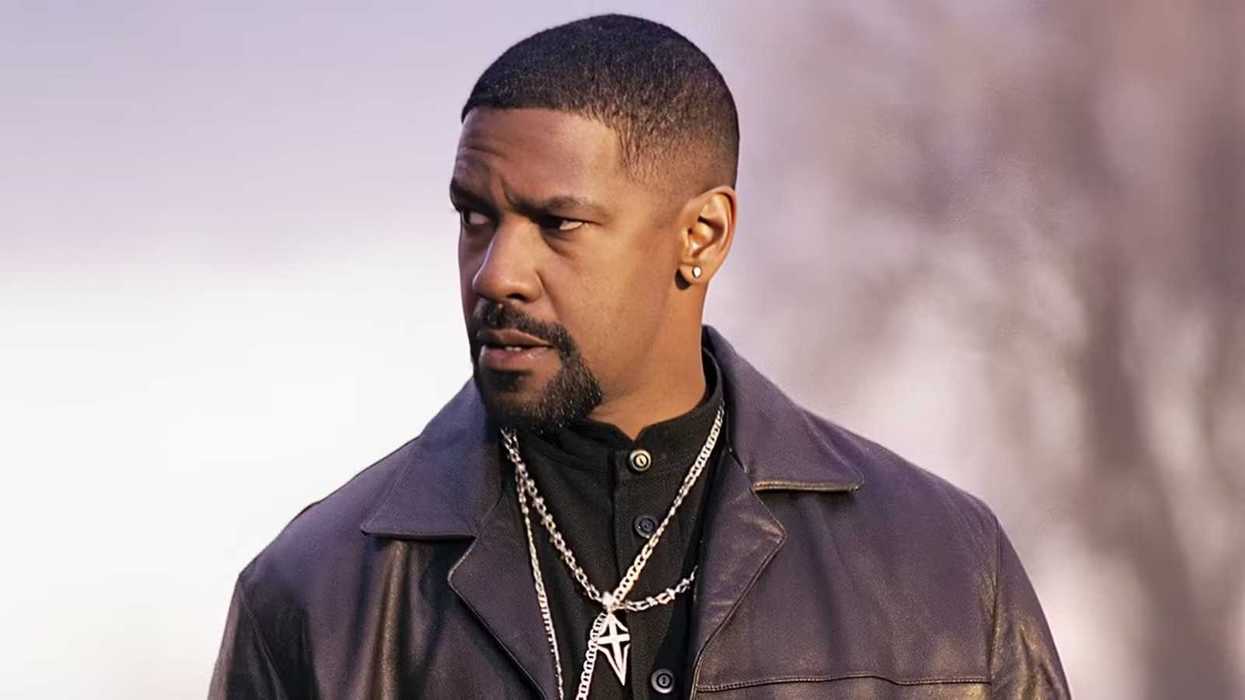
'Training Day'
Last night, I settled onto my couch and turned on an absolute classic of a cop movie: Training Day. When you look back at Antoine Fuqua’s 2001 masterpiece, it’s easy to get lost in the sheer, explosive gravity of Denzel Washington’s Oscar-winning performance.
This is a movie that keeps you on your toes and boxes you into a corner, just like it does with its characters. There's something about David Ayer’s dialogue that sets a trap for both the audience and the people in the movie. We're leaning into the story and aren't sure we'll be able to escape, just like Ethan Hawke.
Now, I think we all remember the "King Kong" speech. But today, I want to talk about a quieter, colder line that hits much earlier in the film. It's a plant that dictates the worldview of the movie and pays off later, as it's flipped on its head.
Let's dive in.
- YouTubewww.youtube.com
The Scene in Question
Training Day is like a study in building tension. It's essentially a two-hander, about diametrically opposed forces meeting under the guise of a job interview.
Early in the film, idealistic rookie and protagonist Jake Hoyt (Hawke) rides shotgun with soon-to-be-discovered as corrupt LAPD narcotics detective Alonzo Harris (Washington).
Jake does things by the book because he truly believes that the badge is a shield for justice and that objective facts dictate reality on the streets.
On the other hand, Alonzo is a predator who stalks the streets. His version of justice is dolled out between the people, and not with a judge and a jury.
Alonzo tests Jake's worldview by dismantling him and what he believes, piece by piece. When Jake tries to push back using logic and the letter of the law, Alonzo cuts through the noise with his philosophy on life and on the job.
"It's not what you know, it's what you can prove."
This comes back later in the movie, as the tables turn. Now, it's Jake pursuing Alonzo after he sets Jake up for a hit on another cop that Alonzo has shot to take his money.
This time, Alonzo repeats his line, but Jake has already made up his mind about the streets and justice.
- YouTubewww.youtube.com
The Illusion of Objective Truth
The whole movie is about the objective truth. There are things that are really happening, and things that they can prosecute. In order to do that, you have to have evidence.
But what happens when the evidence is manufactured? Well, then the truth can be anything you want it to be, because the truth is a thing you can prove, one way or another.
When we get to that line, it introduces the primary thematic conflict of the narrative, disguised as a practical lesson in street justice and police work.
But beneath the surface, it’s an indictment of the institutional systems we rely on and some foreboding.
We kinda feel that this is going to be a story about both of them finding the truth for themselves, and then bending it so that only one of them can survive.
Alonzo represents the subtext. He understands that in the real world, truth is malleable. Will Jake catch up to him or be crushed by that truth?
Denzel is amazing in this movie, and he treats the streets like they're a stage on which he's performing. We can see that he's probably the same way on the witness stand as he delivers this truth to the judge.
Now, both of them know if you can’t back up your reality with physical leverage, your reality doesn't exist.
Okay, so later, when we get the payoff line, as Jake defeats Alonzo, he does it by stripping Alonzo of his leverage and exposing his lack of "proof" to the community and the Russian mob.
Jake knows he alone cannot beat Alonzo, but the system Alonzo has built in Los Angeles can take him away. That's justice. And that's the truth.
- YouTubewww.youtube.com
Other Famous Training Day Lines
This is a movie with a lot of famous lines, so I wanted to add a few more in here that really stuck with me. Check out the script for the movie, too.
- "King Kong ain't got shit on me!"
- "You think you can do this to me?! You motherfuckers will be playing basketball in Pelican Bay..."
- "I'm the police, I run shit here. You just live here..."
- "To protect the sheep, you gotta catch the wolf, and it takes a wolf to catch a wolf."
- "Boom! You're dead. Never turn your back on the body, Hoyt..."
- "You wanna go home, or you wanna go to jail? You make the call."
- "This is a newspaper. It's 90% bullshit, but it's entertaining..."
- "A good cop inside a warm car... that's useless. Gotta get direct contact with the elements."
- "You gotta decide whether you're a wolf or a sheep, boy."
The Takeaway for Screenwriters
This is a great movie to watch for weiters. You can see the beginning of David Ayer's career and see what a noisy spec can get in Hollywood.
There are so many other lessons on the page, too.
As screenwriters, we often get caught up trying to make our characters speak with perfect moral clarity or state their intentions directly to the camera. We write heroes who win simply because they are "right."
But the world is not that way, and Ayer was able to find a way to capture those great areas and communicate them to people in a way that felt cinematic and thematic.
Here are a few other things I wanted to highlight for my writer pals.
- Weaponize Cynicism: Your antagonists shouldn't just be evil for the sake of being evil. Give them a philosophy that feels logical and relatable. Alonzo’s line hurts because, on a structural level, he isn't entirely wrong about how the legal system functions. He's right about a lot of things, which seduces Jake and us at first.
- Establish the Thesis Early: Use early conversational banter to introduce the core philosophical argument of your script. This line sets the rules of the game for the audience long before the bullets start flying. We fully get what this story is about, and we understand the world completely, even if we've never been there before.
- Subvert Audiences: Force your protagonist to wrestle with a worldview that challenges their identity and the audience's notions about society. Jake spends the rest of the movie realizing that to survive Alonzo, he has to learn how to play within Alonzo’s rules of proof.
Summing It All Up
Training Day still hits like a sledgehammer because it's an exploration of power, perception, and morality.
When you're building your next script, ask yourself what your characters believe and if they're opposites. Decide how you can explore these two points of view to add tension, and see if that blends into the plot.
The more depth you can add, the better your story will be.
Let me know your thoughts in the comments below.