The "Laughing in the Face of Danger" Trope Is the Ultimate Power Move for a Movie Hero
The trope where jokes are both funny and not!
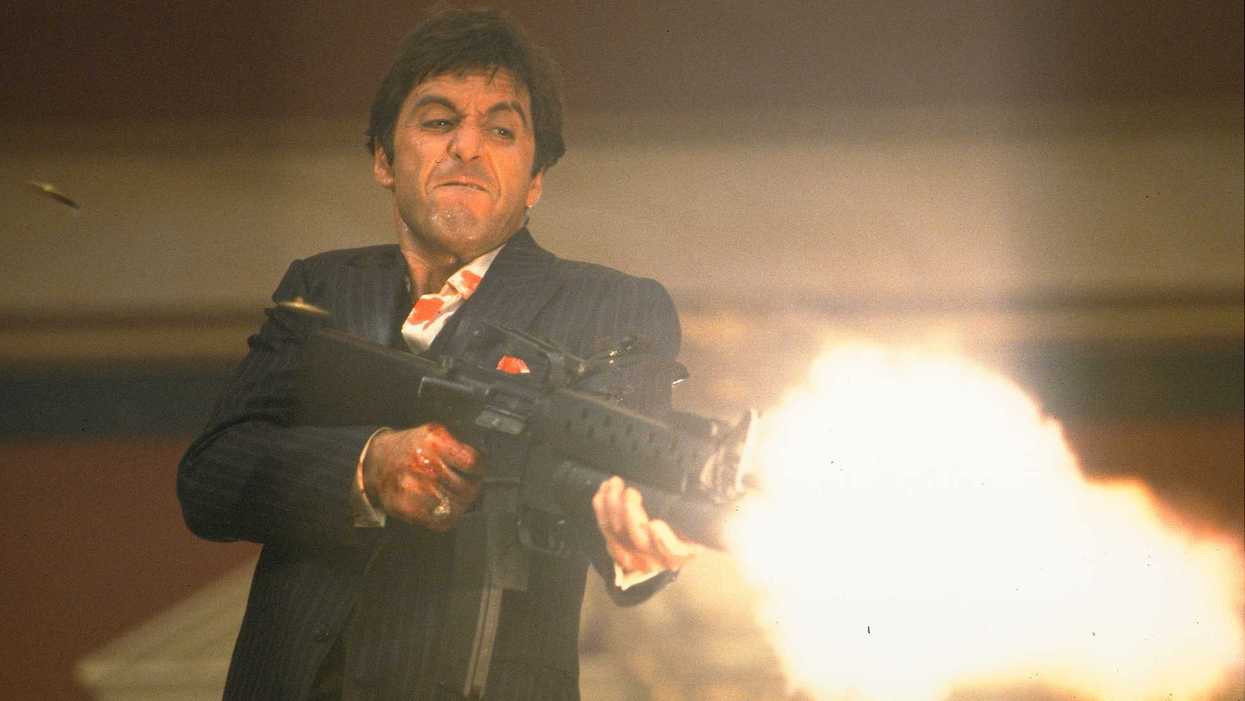
'Scarface'
What is an appropriate moment to crack a joke?
Well, there’s a screenwriting trope that heavily condones laughing in the face of danger.
It sounds like a total oxymoron. But it is storytelling’s most rebellious reflex—humor that has nothing to do with comic relief for comfort but everything to do with bravado and defiance.
The “laughing in the face of danger” trope is one of the most overused screenwriting tropes—not that we’re complaining in any way. In fact, this is the one thing I love about Bollywood because God knows, they use this trope often and damn well.
But, when things are anything but fine, why does a joke hit harder than it would at a time when things are, let’s say, joyous or peaceful?
In this article, let’s uncover everything about the laughing in the face of danger screenwriting trope, where laughter becomes both the ultimate attack and defense.
What Is the “Laughing in the Face of Danger” Trope?
The laughing in the face of danger trope is a narrative beat in which a character reacts to extreme adversity with humor.
This outright playful attitude toward something serious or dangerous is a form of defiance rather than a dose of comedy that seeks to overwhelm the opponent by inducing an imbalance of power.
The core idea of the trope is rooted in:
- Our mind’s miraculous coping mechanism
- Perseverance and refusal to surrender or retreat
- Psychological manipulation to induce hope in moments of despair
- YouTube www.youtube.com
How to Effectively Write the “Laughing in the Face of Danger” Trope
1. The Pressure Release
I asked earlier what the appropriate moment to crack a joke was. For this trope, always ensure that it comes out of the blue, right in the face of a fiercely tense sequence. The laughing in the face of danger trope is like a pressure cooker's pressure valve. Let the tension build up as much as possible, then release it by lifting the valve.
Remember to throw in a sharp plot twist right after to keep things interesting and further amplify the impact of the reckless humor.
2. The Higher the Contrast, the Better the Humor Hit
The situation and the joke need to complement each other, and the best way to achieve this is to introduce a stark contrast between them.
The hero, chuckling with a gun to his head, is laughing in the face of danger. A character joking about a “bad feeling” over a hunch is not quite there, although it does count in the right context.
3. Stakes Are Still the Top Priority
If the stakes aren’t high enough, humor is reduced to simple comic relief.
Also, if the victim is laughing at everything, they (and the audience) are not taking the stakes seriously. In both cases, you’re ignoring the cardinal rule of this trope.
In this trope, humor is the highest form of defiance and rebellion, so ensure that it comes through. The greater the danger, the greater the excitement. Think, “Say hello to my little friend,” in Scarface.
4. Situational Humor Over Structured Jokes
Jokes in these tropes work best if they are witty recollections of moments of the narrative.
Another great way to go about it is situational dark jokes. Irony and cynicism are the two most tried and tested literary techniques for jokes in this trope.
5. Thematic Resonance
It’s not mandatory, but it’s an added bonus if your humor is rooted in the central themes of your story, because it helps in aligning the audience with them. If not, that’s okay too.
Why Does the “Laughing in the Face of Danger” Trope Work?
1. Fear Exists, But It Doesn’t Rule
When a character shows the guts to take even the greatest stakes lightly, it empowers the audience in that moment. The fact that fear and danger will not decide their beloved protagonist's fate feels like a win. In the end, even if the villain wins, the payoff isn’t diminished. The moment becomes a feel-good moment that reminds us to seek hope in despair.
2. It Leaves Quite an Impression
When a character subverts our expectations, we generally tend to form a connection with them. While laughing in the face of danger is not a rare defense mechanism, it cannot be anticipated, so the action feels unpredictable in the moment. Naturally, such characters and moments stand out.
3. Rebellion Is Always Attractive
Seeing someone refuse to surrender even at their worst and fight back like a rebel underscores bravado, which in itself is a spectacular visual.
Also, who doesn’t find an individual who can laugh at their worst troubles attractive?
Nuanced Examples of the “Laughing in the Face of Danger” Trope
1. “Say Hello to My Little Friend” — Scarface
Tony Montana’s end in Scarface is as iconic as his journey as a crime lord. Sitting on the ashes of his empire, moments after his sister’s brutal death, Montana picks up a grenade launcher and walks right into the battlefield, crying defiantly, “Say hello to my little friend.”
The line is ironic, the moment exudes charisma, and what follows next is sheer spectacle—one of the most iconic examples of the laughing in the face of danger trope.
2. “You’re Gonna Need a Bigger Boat” — Jaws
This line comes right after the first time the shark makes an appearance in Jaws. Brody, Quint, and Hooper are patrolling the ocean.
As Brody is scattering bait into the water, the beast gives him a glimpse of itself as it pops out of the water. One look at the shark, and Brody is overwhelmed by the greatness of the danger that’s looming over them.
He quietly walks back inside and tells Quint, “You’re gonna need a bigger boat.” The moment is not only one of the finest examples of the laughing in the face of danger trope, but it’s the most famous one-liner from the movie.
3. Russell’s Death—Independence Day
Machines fail you at the worst of times, and for Russell, it cost him his life. But he didn’t let that deter him. Instead, he plans one last deadly attack on the alien spaceship before he dies.
Discovering that the missile is jammed into his fighter plane and cannot be fired, he decides to launch the plane as one huge missile. He flies the plane to the weakest part of the spaceship and then allows it to explode, with him inside it.
Russell’s hysterical laughter, moments before the explosion, as he cries out, “Hello, boys! I’m back!” is a moment of pure bravado and selflessness.
Which are your favorite scenes that feature this trope?