How a Real-Life Accident Led to the Wampa Scene in ‘Star Wars’
An actual accident changed the script.
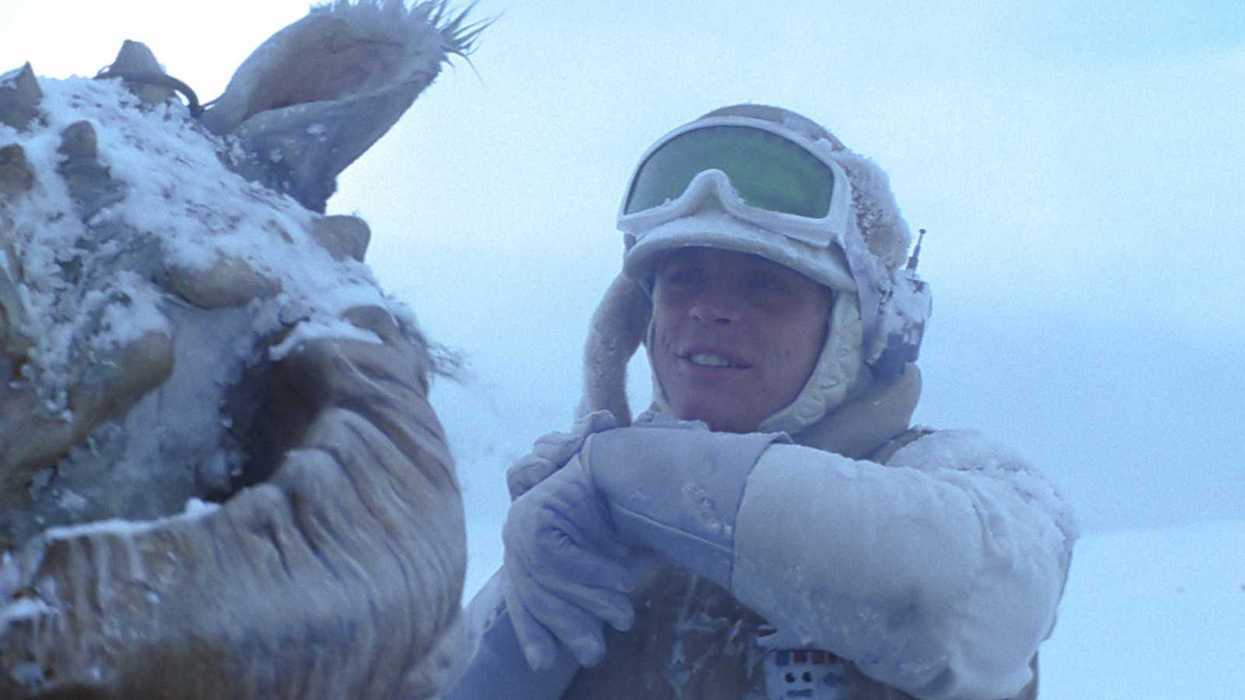
'Star Wars: Episode V - The Empire Strikes Back' (1980)
One of the finest moments from Star Wars: Episode V - The Empire Strikes Back (1980), directed by Irvin Kershner, shows Luke Skywalker being attacked by a Wampa on the freezing planet Hoth. The sequence, which occurs early on in the film, sets a darker tone for a memorable sequel. However, did you know that the famous mauling was influenced by a real-life accident that actor Mark Hamill suffered?
The dangerous mishap, which hit the actor hard, happened between the first film and its sequel. While Hamill was fortunately out of danger, the accident left him in quite a bad condition. Not only did the actor fracture his nose and his left cheekbone, but the incident left scars on his face long after it actually happened.
What exactly happened to Mark Hamill? How did Irvin Kershner and George Lucas masterfully incorporate the changes in his appearance in the movie?
Let’s jump right in and explore.
Mark Hamill’s Real-Life Accident
Months after wrapping up the shooting of Star Wars: A New Hope (1977), but before the shooting for the sequel kicked into high gear, actor Mark Hamill was driving his BMW in California when he lost control on a freeway off-ramp. The actor was quoted as saying, “Suddenly, I realized I was on the wrong freeway, and it might take me an hour and 45 minutes to find my way back. It was a split-second decision.”
After a moment’s indecision, his car flipped multiple times at high speed. Hamill suffered fractures to his nose and cheekbone, requiring reconstructive surgery. He recalled the crash as being a close call, and for sure, we are all grateful that he survived it, came out of danger, and back into the movies.
However, while the actor was considered out of danger and the injuries healed, they did alter his facial appearance quite noticeably. Now, heading into a popular movie sequel with changes to his appearance required justification. Not the kind that is done in press, but the kind that is done organically, through the power of storytelling.
Why Great Filmmaking Requires Flexibility
George Lucas and director Irvin Kershner, who must have been thankful that Mark Hamill was out of danger on a human level, needed to avoid panicking and devise a strategy to avoid continuity errors between the two films.
What they needed, essentially, was a “bridging sequence” that would justify the injuries on Mark Hamill’s (Luke Skywalker) face. Now, great filmmakers don’t just squeeze a scene into a movie to do such a thing. They use the moment to ease an actor in and also elevate the story. Lucas and Kershner did precisely that.
Early treatments for The Empire Strikes Back floated the idea of Luke getting a scar on his face through what could be some kind of a crash-like incident. However, the creators took this idea to an all-new level. The Wampa attack wasn’t just a solution; it was a cinematic solution and a masterclass in artistic flexibility.
It is believed that the scene wasn’t invented solely because of Mark Hamill’s accident. The Wampa and the Tauntaun, both Hoth creatures, were already brewing. However, the incident gave the team a practical reason to introduce the creatures and make the real scars appear like dramatic wounds.
Also, making this change allowed the crew to shoot the Wampa sequence earlier in their schedule, masterfully leveraging Mark Hamill’s tragic accident into the film’s story and giving the audience a thrilling sequence simultaneously.
A Lesson In Turning Problems Into Story
While the crew carefully incorporated Mark Hamill’s injuries into the film’s story, what is most important here is that the Wampa scene works very well regardless of the real-life backstory. The scene, which isolates Luke Skywalker in the frozen wilderness of Hoth, quietly puts him in a position where he has to rely on the Force to retrieve his lightsaber.
The sequence, which happens early on, is cleverly layered with important story beats and does a great job of setting the sequel’s marginally darker tone. The Wampa attack doesn’t just explain the facial change; it launches Luke Skywalker’s arc on Hoth.
While it would be perfectly understandable if, after a dangerous and life-threatening accident, the crew was forced to make unforeseen changes to a scene, Lucas and Kershner never made it appear that way. Their version of unforeseen changes involved turning a problem into a sequence that elevated the film’s story.
There is a major filmmaking lesson in how the Star Wars crew turned what could have been a continuity debacle for a crucial sequel into a cinematic weapon.
On a film set, when a logistical problem arises, we are often likely to think of a logistical solution instead of a cinematic one. The Wampa sequence is a fascinating example of what happens when a film crew does the opposite by searching for a cinematic solution. They turned a serious setback into a thrilling movie sequence that deepened the Star Wars mythology without losing any detail or causing continuity errors.
Summing It Up
While we often focus on finding immediate, logical solutions to continuity problems, the Wampa sequence in Star Wars is a great example of how something powerful and meaningful can stem from a major setback. The crew turned a real accident into one of the saga’s most memorable opening sequences.
Which is your favorite sequence from The Empire Strikes Back? Tell us in the space below.- How George Lucas Bet on Himself—and Won Big with 'Star Wars' ›
- “I’ve Got a Bad Feeling About This” — How a Running Joke Became A ‘Star Wars’ Tradition ›
- The Story Behind the ‘Star Wars' Crawling Text ›
- Get a Sneak Peek at the New Ryan Gosling 'Star Wars' Movie | No Film School ›
- We Almost Got a New 'Star Wars' Movie from Soderbergh and Adam Driver | No Film School ›
- 9 Iconic Quotes From the Star Wars Franchise | No Film School ›
- "I Was Terrified Having That Knowledge": Mark Hamill on Keeping Cinema's Biggest Secret ›