What Is an Open Ending? (And Why Some Films Refuse to Give You Answers)
An ending without an ending is worth participating in.
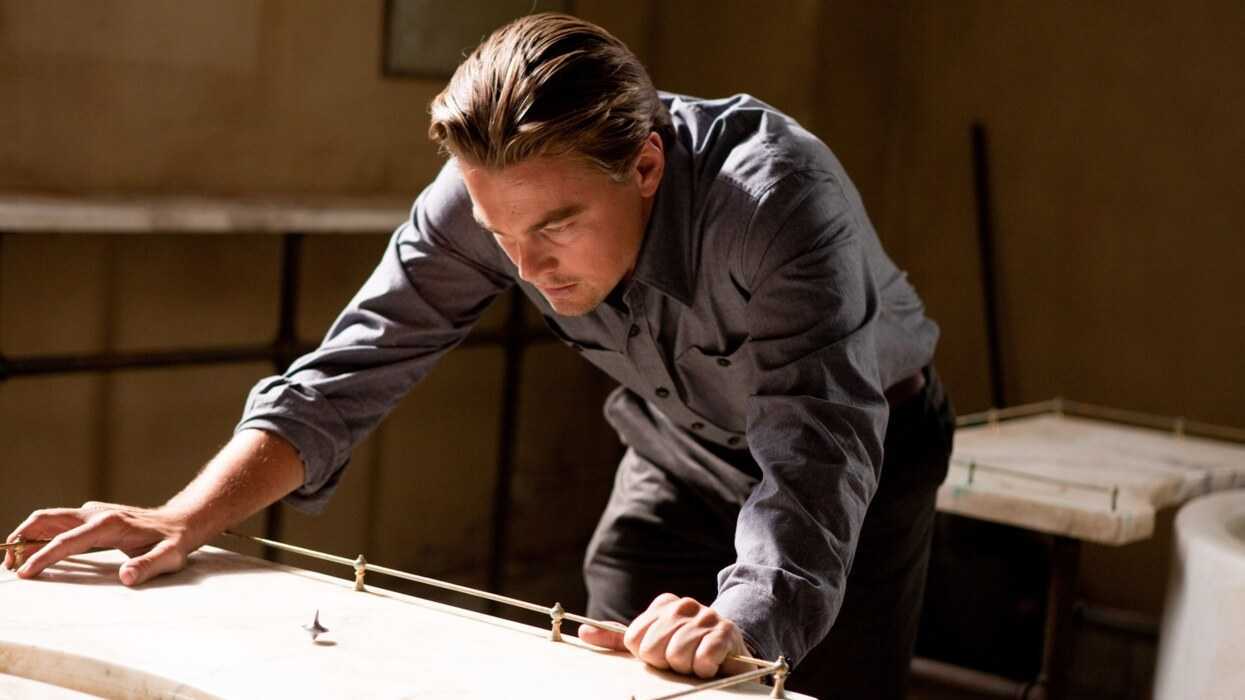
Inception (2010)
Open endings suck… said no one ever. Okay, a few maybe. I’m not friends with them anymore.
Open endings may not be everyone’s cup of tea, but they can be a fun and visceral way to end your story. The likes of Christopher Nolan, Charlie Kaufman, and Denis Villeneuve will agree with this hot take.
More often than not, a screenwriter or filmmaker’s larger goal through their story is to leave the audience with something to think about — an ending that ends with a moral question, or an idea that doesn’t let one sleep peacefully at night. And, somehow, we can’t get enough of it if presented beautifully.
The reason is that open endings tend to make you feel jittery with their ambiguity. But deep down, you know that it reflects your own life, which is filled with unresolved events, a reality you can’t run away from. Though one must imagine Sisyphus keeps moving forward.
Let’s break down what an open ending really is.
What Is an Open Ending?
An open ending is when a writer leaves the outcome open to the viewer’s interpretation, which is the opposite of the go-to closed ending. Unlike the closed and satisfying endings, an open ending leaves the viewer with more questions than answers.
The story doesn’t end with a dramatic explosion or overwhelming emotional send-offs. Rather, they can be the most mundane moments of the story, connecting to something bigger.
From a screenwriter's perspective, an open ending is a brave choice; they are putting the essence of their work into the hands of the audience to perceive and judge.
But if done well, this deliberate attempt to twist the narrative in an open ending leads to discourse rather than dissatisfaction.
Why Do Filmmakers Use Open Endings?
Open endings are deliberate creative choices that do not quite satisfy the viewers. Then why bother to use them? Because they help create complex and compelling narratives.
1. The Device Mirrors Real Life’s Entropy
An open ending leaves it up to us to fill the void and connect the dots. It’s quite similar to the relationship between life and us. As the universe doesn’t provide us with answers, it is we who finally become active participants and make sense of the events in our lives.
2. Pushes You to Think Beyond
The beauty of open endings is that they encourage people to discuss and have discourse. You leave theatres with a new set of possibilities in your mind and are very eager to imagine.
Most importantly, you are eager to form an opinion in a very liberating way. Open endings give you that space to go wild with your imagination.
3. The Resonance Effect
A well-executed open ending usually results in a compelling narrative, thus prolonging a movie's life through its rewatch value.
We are familiar with such films that have stood the test of time with their mind-bending open endings. Decades later, new generations discover them and get blown away, only to pass them on to the next generation.
Famous Examples of Open Endings
1. Inception (2010) — The Spinning Top
Christopher Nolan’s love for open endings shows in his films. Inception is one of those films whose ending resonated not only with the audience but also with critics.
The movie ends with Cobb (Leonardo DiCaprio) spinning his totem on a table to check if he’s still dreaming or not. After waiting for it to halt for a moment, he is pulled away by his children’s faces while we keep at the spinning top.
We anticipate something’s about to happen, but the top wobbles a teeny tiny bit, and the screen instantly cuts to black. We are left to contemplate what just happened on Hans Zimmer’s soundtrack.
2. Shutter Island (2010) — “Which would be worse?”
Martin Scorsese’s psychological thriller ends with Teddy saying these powerful words, “Which would be worse, to live as a monster or to die as a good man?”
The line signals that Teddy has accepted the lobotomy procedure as a symbol to destroy his previous identity. But we are deprived of a conclusive answer to which identity was real and which one was his delusion.
At first, Teddy was able to convince the audience that his perspective was true. Till the very end, I was ready to incline more on his side. But since he can be easily termed as an unreliable narrator, Shutter Island is really left to the viewer’s interpretation.
3. The Lobster (2015) — Knife and the Restaurant
Yorgos Lanthimos is one of those directors who deal with twisted matters.
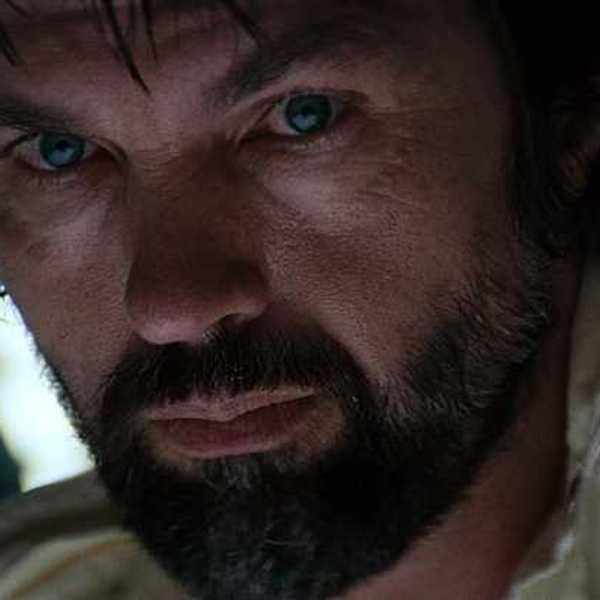
In The Lobster, David (Colin Farrell) is seen holding a knife in the bathroom while his lover, Rachel Weisz, waits at the table. Does he blind himself? Or does he walk away? Well, we never get to see what he really does with the knife. The camera stays put on his lover until it cuts to black.
I don’t know about you, but the film’s absurdist and dystopian tone makes me question my beliefs. After all, it's Yorgos Lanthimos.
4. A Separation (2011) — the Family Court Corridor
A Separation is one of the most realistic and heartbreaking portrayals of the complexities of a divorce.
Asghar Farhadi’s film ends in a chaotic Family Court corridor. The daughter gets called into a magistrate’s chamber to choose a parent with whom she’ll live. We never get to see what she decides. On the contrary, we are left with both her parents sitting alone in the corridor, silently reflecting on their decisions. It’s a reflection of how human relationships succumb to quiet, unresolved issues.
5. Birdman (2014) — A Leap of…
Alejandro G. Iñárritu’s Birdman ending follows Riggan (Michael Keaton) jumping off the hospital window. Behind him, his daughter looks up and smiles — Did he fall? Or did he fly off into the sky? Is it a death or a rebirth?
We are left to use our imagination to make sense of how it ends. Is her daughter looking up with optimism a sign of his father’s creative liberation, or does Alejandro mean something profound? Or is he just poking fun at us? It all depends on what we choose to see.
Summing It Up
Open endings are not easy to crack, but once they do, this device elevates your film beyond just a story and plot.
Sometimes, movies don’t have to resolve everything in the end. They just have to resonate with the audience and leave with a question to ponder.