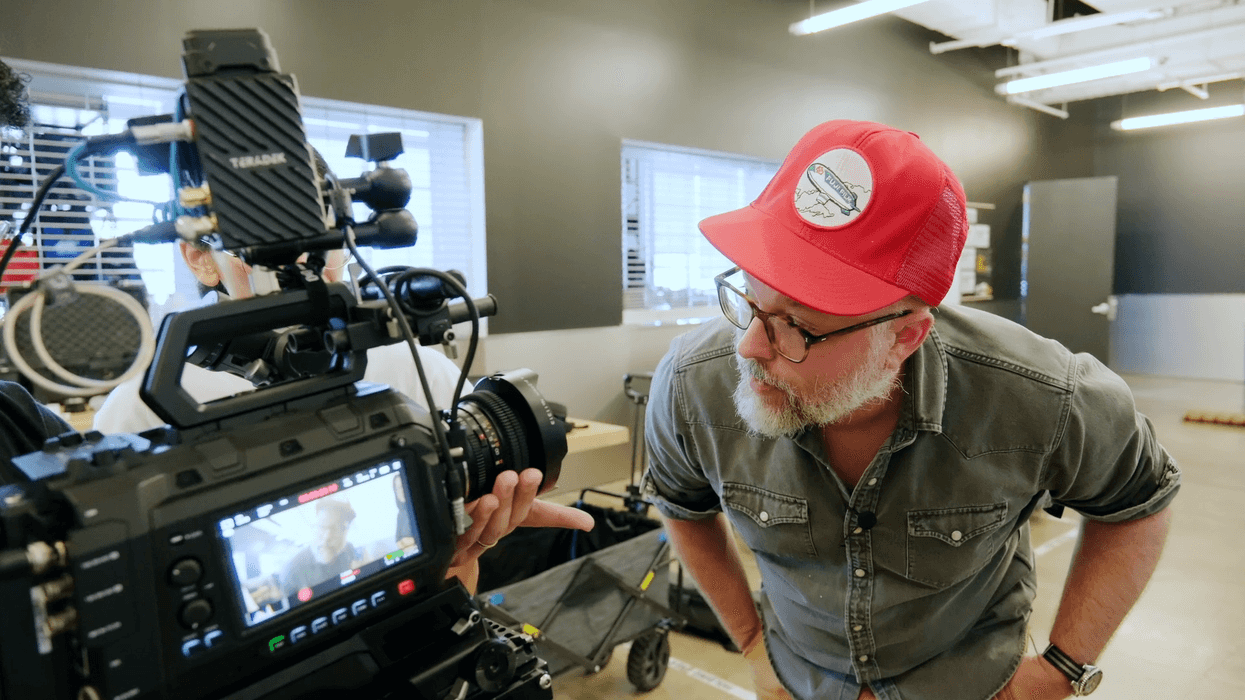
As sensors get bigger, we need different lenses to cover the sensor. With the new releases of larger sensors in cameras like the Blackmagic URSA Cine 17K 65 and the GFX Eterna 55 from Fuji, filmmakers now face yet another format where they have to learn the landscape of what lenses they can use to cover these humongous sensors.
We set out to test the options that will be available to most of us, and we're happy to report that there are some choices there for us.
Big Sensor Digital Is Here
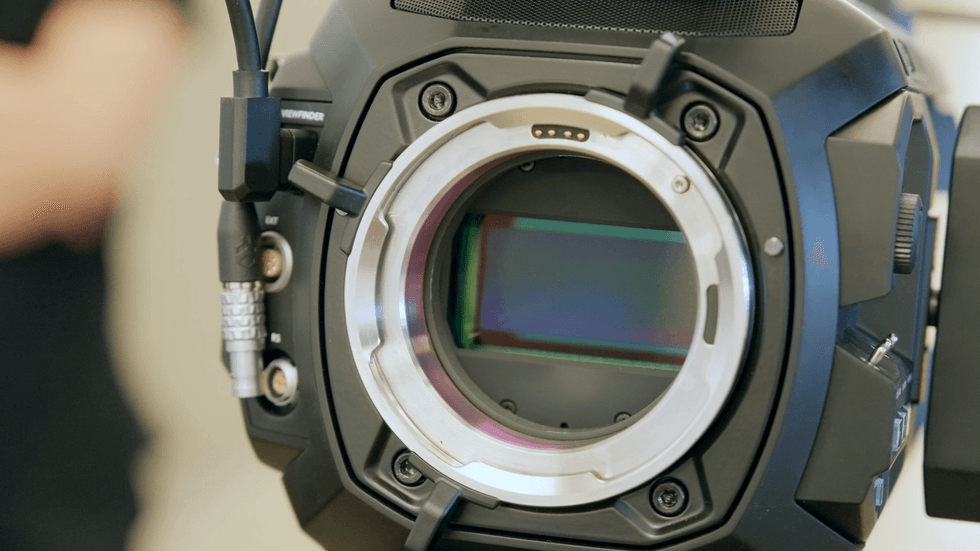
That is a big sensor
Credit: Charles Haine
We've all been dreaming of big sensor digital cameras for a long, long time. We learned about 70mm and IMAX, and most of us assumed we wouldn't be able to shoot them much, if ever, but digital was different. The sensor size getting bigger didn't cost us more hard drive space. So as full frame rolled out, we knew it would keep going.
What Lens Should We Shoot?
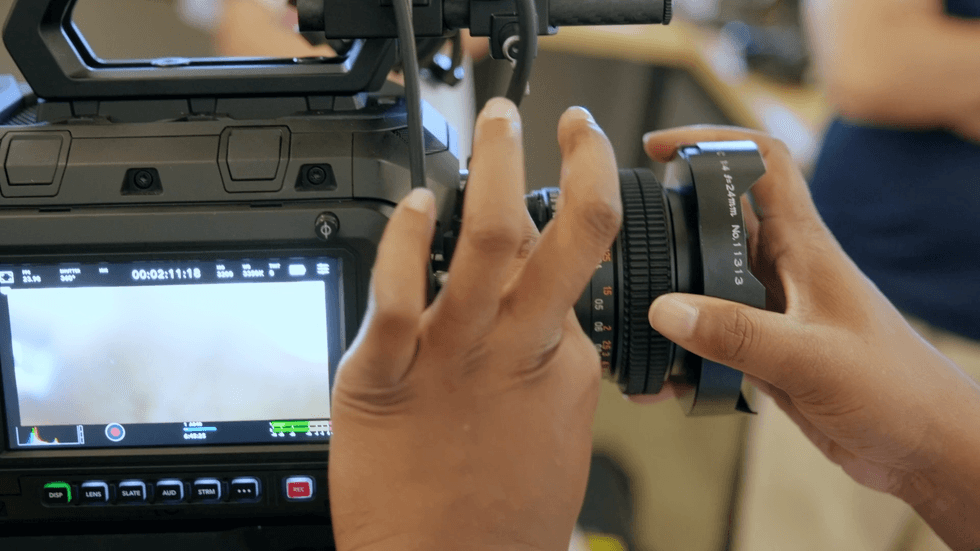
Mounting little lenses with big coverage
Credit: Charles Haine
The question most filmmakers had, then, was what possible digital cinema lens could we use to cover that big old sensor? Now, the obvious answer here is that we could easily just rent Leica Thalias, or Cooke Panchro 65s, or any of the other ultra-high-end lenses rolling out. They would be out of the budget to buy, but if we had a budget, we could rent.
Testing
What about all those productions where you can't rent? Or, what if you buy one of these packages (they are a stretch, but it's not an insane stretch, especially if you do an equipment lease), what then? What if you are a production company or film school and you want something to just "own" to have around for shooting with the package on the regular, without spending more money, and you save your rental budget for the big jobs?
So, because we love testing, we did a test.
Topline Glass
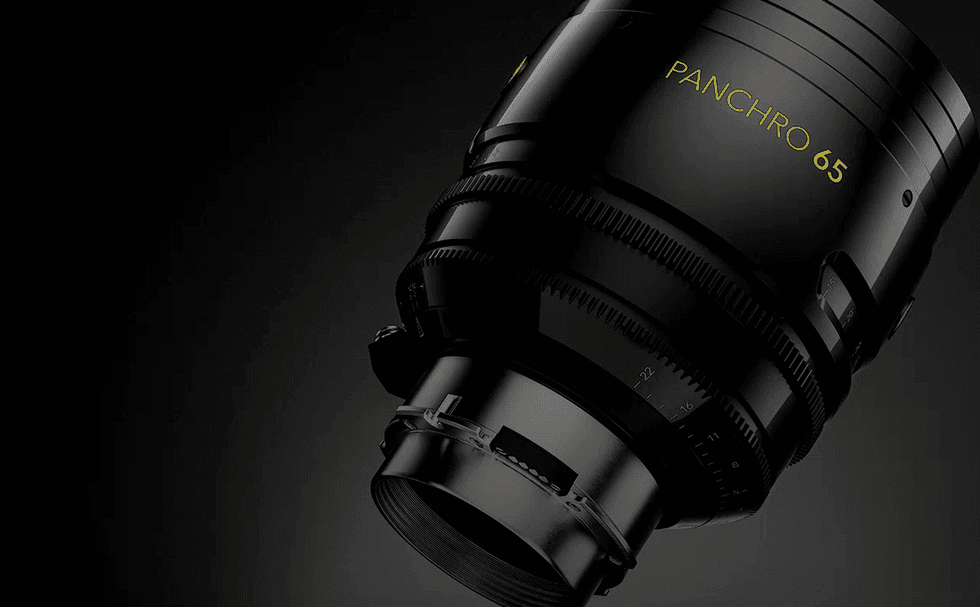
Oh, if we could afford to buy Pancrho 65, Cooke's new lineup of large sensor glass...
Cooke Lenses
The first and most obvious answer is vintage medium-format still glass. Hasselblad and Mamiya have both made a lot of lenses that are quite beautiful and also cover the sensor well. We decided to test out mostly Mamiya glass and went for Mamiya 645 glass. Manual focus was good for us, since the more modern auto-focus lenses aren't always going to function on a camera like the Blackmagic 17k. The Mamiya 645 made the best choice for a wide variety of lenses, which are also very affordable.
The "mainline" lenses around 35-35mm were often available in beautiful examples for only a few hundred dollars. The truly beautiful 80mm F2 lens didn't cost that much more. The only really "pricey" lens was the 24mm, but even that wasn't too painful from a "cinema lens" standpoint.
While we went Mamiya, we did test a friend's Hasselblad lenses, as well.
Converiting to "Cine"
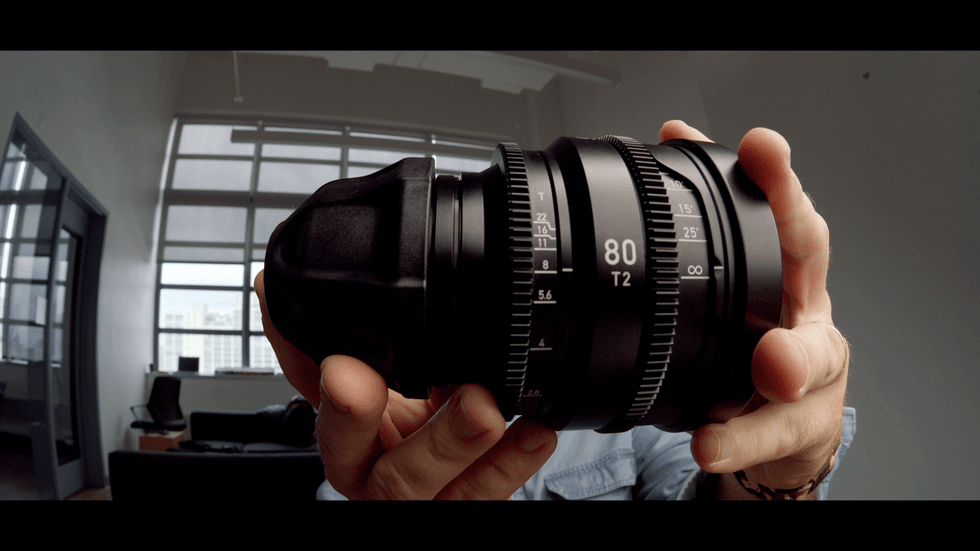
Lenses converted by PChood
Credit: Charles Haine
We all know that a true cine conversion, done by the likes of TCS or Duclos, can be quite expensive. A full new housing needs to be designed and built, the lens unmounted, remounted, it's a lot of complicated work that can easily run thousands of dollars.
Our goal here was "what will the indies do," so we went another way. We found PChood at a table at NAB, and while apparently they advertise a lot on Instagram and Facebook, we aren't on social media, so we missed them, but luckily, they had a table, and we could see their conversions firsthand.
They de-click the aperture, and can replace the aperture blades if you like. Then they "sleeve" the lens in a housing that leaves the original lens intact and puts on focus and aperture rings and a consistent body size for clip-on matte boxes.
For like $900.
The big drawback is that you have to navigate the timing of shipping to Shenzhen, China, and waiting for it to come back. And your wire transfer has to be from a business account. But, if you can navigate all that, you know what?
Kinda great, for the price. The lenses still look great. The bodies now look "consistent" for a client and are declicked and much easier to work with. Lens nerds won't love them, and as a lens nerd myself, I get it, but what I need from the lens is to give me beautiful imagery in a way I can work with, and this worked out pretty darn well, I have to be honest.
Kipon Expander
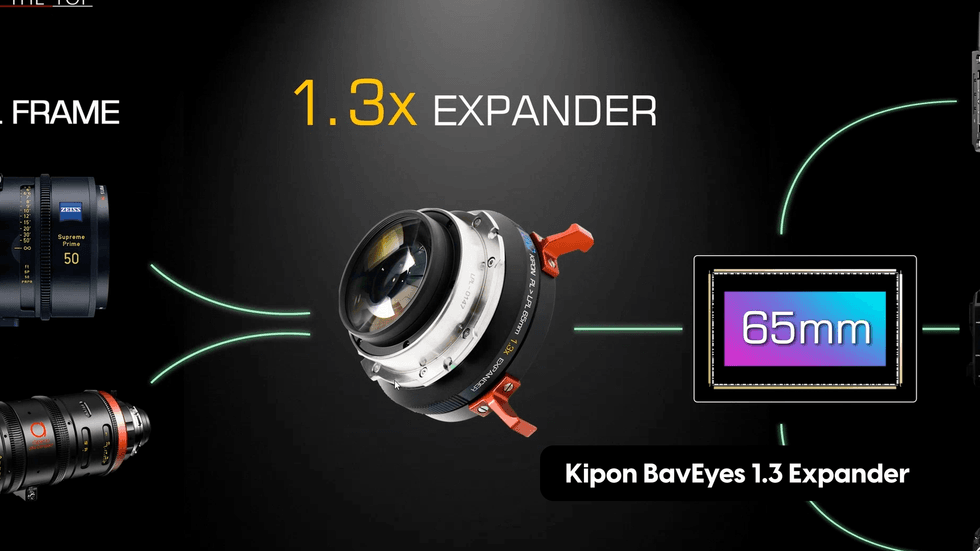
Kipon BavEyes 1.3 expander
Credit: Kipon
The other option we explored was the Kipon BavEyes 1.3 expander. You lose 1/2 stop of light, but you can use any lens that covers full frame. It adapts PL to LPL, so if you are set up for LPL on your Blackmagic 65mm, you are good to go.
Honestly, we tested this thinking it would be the "backup," but in the end, it was really the "Oh, this is great, use this" setup. The Mamiya lenses are awesome, but the 80mm is the only F2; the others are F4, and that is kind of slow in this day and age. With the Kipon Baveyes, take your T2 Full Frame Cine Prime, stick it in the adapter, and you have a T2/2.8 split lens that covers your sensor.
It also worked dynamite with Zooms. We had a set of Fuji Premistas out, and having beautiful full-frame zooms on the 17K was a darn delight.
On top of all that, pretty much any full-frame lens longer than around 35mm or so just covered the 17K sensor naturally. You need to test this for your glass, of course, but as lenses get longer, their image circle gets larger, and pretty quickly, you are set up to cover big. You only really need a medium format or "65mm" covering lens if you are wider than 35mm or so.
Conclusion
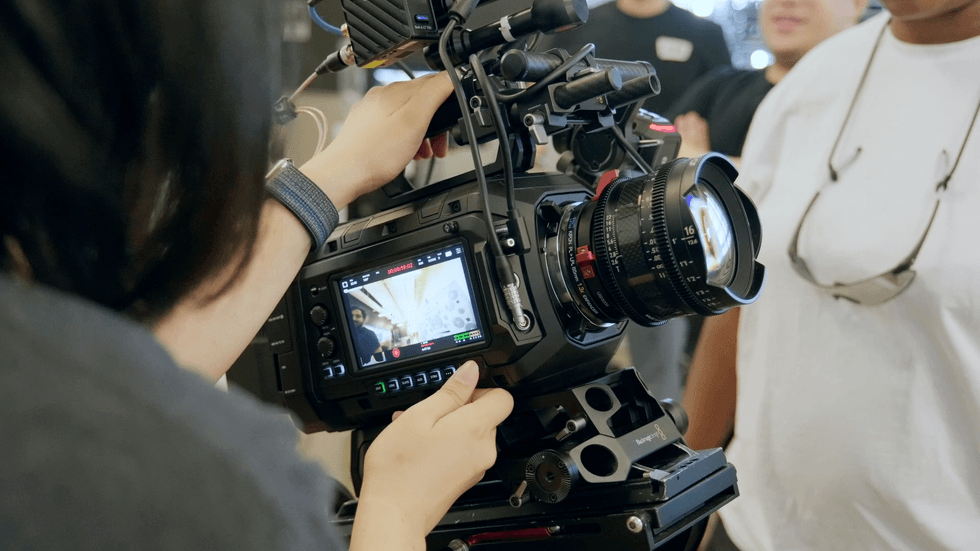
16mm Irix with a Kipon Expander to cover 17K
Credit: Charles Haine
In the end, it's going to be hard to choose between building up a set of medium-format still lenses vs. an expander. For only a few hundred dollars, you can get a pretty wide array of Mamiya 645 glass, get an LPL to 645 adapter, and be 'covered.' For not much more than that, you can convert them to PL and "sleeve" them.
But the Kipon might have a slight edge. It's more of a cost ($3550 or so, depending on current tariff rates), but it gives you a ton of flexibility.
There is even some hope it'll be able to eventually have an L mount base so you can use it with Super35mm lenses on full frame cameras, like a vintage Angenieux zoom, so it has a lot of options in your kit.
- Fujifilm Premista Zoom Lenses Debuted for Large Format Cameras ›
- ARRI Introduces New Large Format Alexa Mini LF ›
- Here’s a First Look at Cooke Optics' New Large-Format Panchro 65/i Lens Series ›
- Leica's New Large Format Lenses are as Beautiful as They are Expensive ›
- Is This New FUJINON Large-Format Power Zoom the Perfect Lens for the GFX ETERNA 55? ›