‘Spider-Man’: Green Goblin’s Coldest Line Reveals the Truth About Heroes
Willem Dafoe’s Green Goblin exposes people’s hunger for downfall and the fragile nature of hero worship in the Sam Raimi classic.
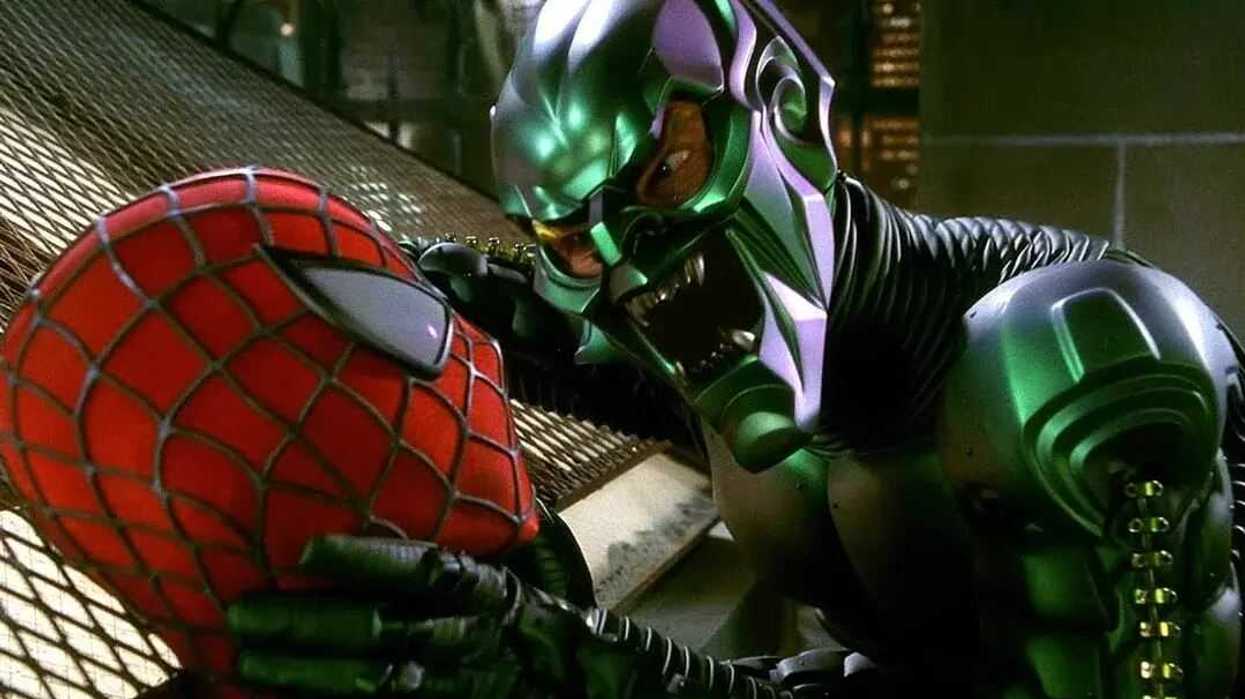
Spider-Man (2002)
Aside from all the swoon-worthy qualities and capabilities, we humans also possess some traits that make us more conflicted and complex beings. For example, we may be social animals, but that doesn’t save us from feeling envy when someone rises above us. It’s the classic “if not me, not you too” sentiment. It’s an ugly sentiment, but accept it, we have all felt it at some point.
This is even truer when it comes to celebrities. In public, we may fawn over them, cheer for them; in the privacy of our minds, however, we can’t help but dream up their fall, their disgrace. It soothes us to imagine everyone is just as ordinary, miserable, and breakable as we are. It placates our sense of insecurity and inferiority.
And that’s the exact sentiment Norman Osborn, a.k.a. The Green Goblin (Willem Dafoe), appeals to while trying to sway Peter Parker, a.k.a. Spider-Man (Tobey Maguire).
“But the one thing they love more than a hero is to see a hero fail, fall, die trying. In spite of everything you have done for them, eventually they will hate you. Why bother?”
The words sound dismissive and brutal, not to mention evil. And yet, even though the movie’s villain is using them to manipulate the hero, they don’t sound exaggerated. Perhaps they resonate because they have a semblance of truth in them.
Within the story, Spider-Man, the benevolent hero, hears these words as a threat; we, the common people, however, cannot escape their uncomfortable veracity.
The Quote and Its Context
The Confrontation
After capturing Spider-Man from Jameson’s (J.K. Simmons) office, the Green Goblin brings him to a rooftop. Spider-Man’s legendary reflexes have temporarily sobered up; the Green Goblin can easily attack him. But Spider-Man could be an asset to his cause, so instead of attacking his body, he works on Spider-Man’s worldview and attempts to recruit him. The line comes as the crux of his pitch.
The words are also a warning: the public lifts heroes only to drop them when they are at their highest. And, since you are led to believe the applause is permanent, the fall hurts more than it should.
Subverting the Hero Fantasy
Superheroes don’t work for profit and gain. Their only earning is admiration. The Green Goblin turns this idea on its head. He says that people “tolerate” a hero’s rise only while it amuses them. The moment the climb starts turning into a reminder of their limitations and failures, they feel they are being mocked. They appreciate role models they can follow. They don’t like examples they can never live up to.
Here, the Green Goblin is trying to detonate the safe place in Spider-Man’s mind: his belief that his good deeds will protect him from any judgment. If Spider-Man is to take this bait, suddenly, his journey will no longer be about winning love; it will be about surviving disappointment. The Green Goblin is telling him that the disappointment is imminent and assured.
The Psychology Behind the Line
The Thrill of a Public Downfall
We have all indulged in yellow journalism from time to time. You may have searched YouTube for things like “embarrassing celebrity moments” and “celebrity public feuds.” These are the moments that break their carefully curated, sparkling, almost ethereal image and show us the real humans behind it. It kills the barrier between you and them. These public downfalls, or at least the sobering moments, are as satisfying as they are entertaining. Today, the internet has lit this instinct and spread it like wildfire. The downfalls are no longer lessons; they have become reality shows.
Fragility of Hero Worship
Our deal of putting someone on a pedestal is quite simple and black-and-white: stay a hero forever; a small slip-up, and we will pull you down. When we deem someone a hero, they stop being human and become expectations, with no privilege of a single lapse moment. To me, it seems like they are the celebrated gladiators in the arena, and we are the spectators, eager to witness a legendary moment when their skulls break open. The Green Goblin is addressing this mentality. People like someone to look up to, but they equally like to prove they are not perfect. It’s less about heroes failing and more about our pride.
Noble Truth Wrapped in Villainy
This line’s enduring appeal lies in the fact that it reveals how society treats ambition, success, and moral responsibility. Heroes are heroes; they carry the weight, not because the world makes it any easier, but because they rise above it. Admiration can’t be your source of inspiration if you want to be a hero, because admiration is unpredictable. The true meaning of heroic life must come from standing your moral ground and standing firm, no matter what.
Conclusion
What’s meant to be a threat and a moment of decision for Spider-Man, for us, becomes a mirror held to our faces. Despite being a villain, the Green Goblin’s words are anything but vile, let alone nonsensical. If anything, this might be an unlikely and unintended piece of fatherly advice from the Green Goblin to Spider-Man.
It prepares Peter to understand his responsibilities and likely fate as a hero. And if he is to extract the right moral out of these words, he might learn that true heroism means doing the right thing even when the applause dissipates.
The only thing about these words that feels weird is the fact that they come from someone who is supposed to be wrong.
- Sam Raimi Thinks Making Another Spider-Man Would be 'Beautiful ... ›
- How 'Evil Dead Rise' Carries on Sam Raimi's Practical Effects ... ›
- Watch Sam Raimi Create Horror Through Controlled Chaos | No ... ›
- How Growing Up on Sam Raimi's Sets Influenced These Horror ... ›
- 10 Filmmaking Tips from Sam Raimi | No Film School ›
- How Did the Coens and Sam Raimi Define the Shaky Cam? | No ... ›
- Sam Raimi and 'The Evil Dead' Provide a Blueprint for Indie ... ›
- Watch: 'Spider-Man 2' Can Teach Us a Thing or Two about the Two ... ›
- Why Spider-Man's Entire Ethos Comes Down to Just Six Words | No ... ›
- The Most Misunderstood Line in ‘The Great Gatsby’ ›
- The Inarguable Spider-Man Movie Rankings (Hot Takes!) | No Film ... ›
- Why 'Spider-Man: Into The Spider-Verse' Works as a Great Movie ... ›
- 8 Great Filmmaking Lessons from Sam Raimi's 'Spider-Man 2' | No ... ›
- Best Spider-Man Movies ›
- Willem Dafoe's Best Horror Performances From Schreck to Ryuk ›