Why WWII Remains Hollywood's Favorite War
As it turns out, it's much easier to make a movie when everyone knows who the bad guys areo n screen.
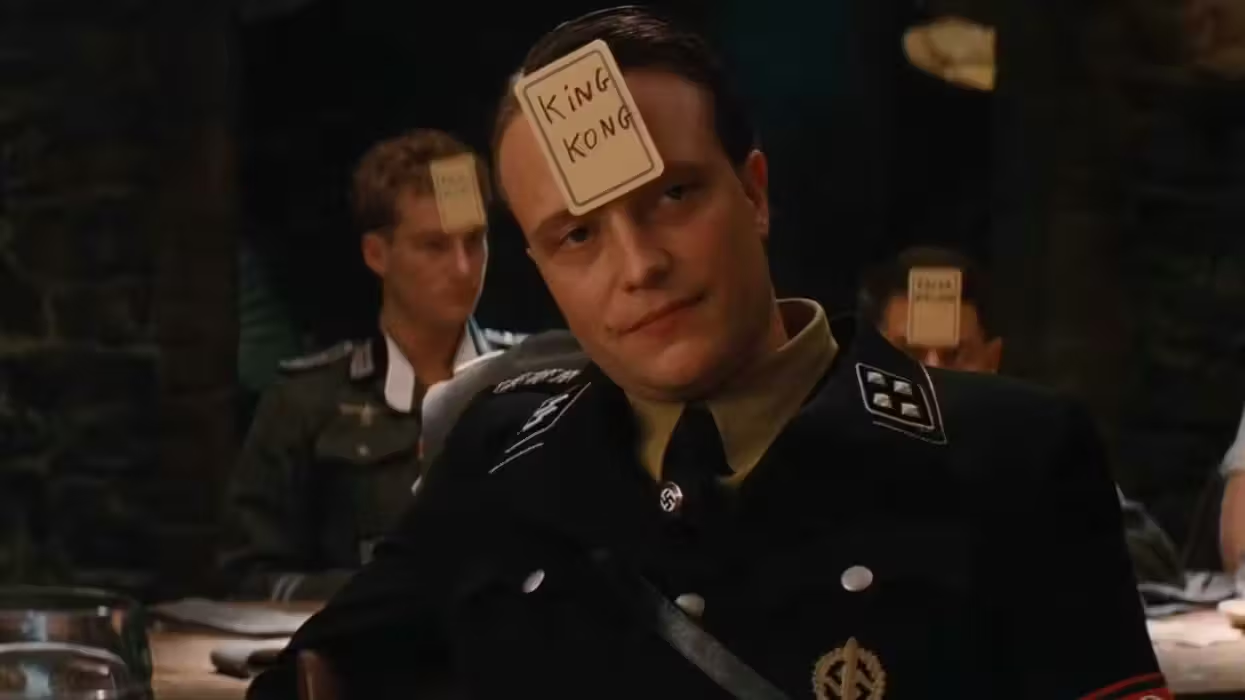
'Inglorious Basterds'
I will admit that I love a good WWII movie or TV show. I have sat and watched Band of Brothers countless times, and I feel like I could quote all of Saving Private Ryan, I'll even dig into the obscure ones and watch something from a different point of view.
The thing is, there are so many WWII movies and TV shows out there because it's clearly Hollywood's favorite war to dramatize. But what makes this almost 100-year-old conflict so ripe with stories that we keep going back to the well?
Let's dig in.
- YouTubewww.youtube.com
Absolute Moral Clarity
I don't want to get too political here, but a lot of the wars going on both right now and since WWII have been pretty controversial. That means, when you're dramatizing them, you're already wading into something that might upset half the people you're trying to market the movie to, and that makes it harder to sell.
In modern screenwriting, we are obsessed with anti-heroes, gray areas, and psychological complexity, but the business affairs of studios want movies that can make the most money.
So you're always going to be fighting a battle on two fronts: can you have a movie with clear stakes and a clear antagonist that also reflects the themes and traits you care about, AND execs see the potential for a hit?
To me, the easiest conflict to do that in is WWII, because there aren't any normal people out there who don't sense the moral clarity around it.
Let's just compare it to Vietnam, which was a war where there were protests against, one that broke America apart, and that scarred a generation that fought in it.
I mean, look at movies like Apocalypse Now or Platoon, which show Americans descending into madness around he whole thing.
It just hits different.
Unmatched Genre Versatility
Think about all your favorite WWII movies and TV shows; sure, they're all in the war genre, but they usually have some sort of other mash-up.
They're men on a mission, heist movies, biopics, or really anything.
Here are just a few other examples I pulled out to show you that you can really do anything within the conflict.
| Genre | Film Example | Narrative Focus |
| The Heist / Action | Inglourious Basterds / The Dirty Dozen | A ragtag team on a highly specific, high-stakes mission behind enemy lines. |
| The Thriller / Espionage | The Imitation Game / Allied | Codebreaking, quiet paranoia, and the intellectual battle behind closed doors. |
| The Romance / Melodrama | Casablanca / The English Patient | Star-crossed lovers separated by global catastrophe. |
| Survival / Horror | Dunkirk / Overlord | Pure visceral tension, focusing on the instinct to survive rather than the politics of winning. |
WWII is a macro-setting that instantly raises the stakes of any story you put inside of it. You can take something small, like opening a movie theater, and add the Inglorious Basterds to the mix, and then it becomes epic.
Or even a contained horror movie like Overlord has a greater sense of terror inside it when you make the bad guys engineering monsters Nazis.
The Intellectual Property (IP) That Never Dies
We're always going to have WWII. It's over, and we can dig through it to pick out events or people we want to dramatize, but there's this inherent understanding of the war and what it meant to the people involved. We teach it in school, and it has affected the whole globe, so everyone has some recognition of it.
In an era dominated by comic book movies and established toy brands, Hollywood is terrified of original ideas, so they have no problem taking something they can put on a poster, and someone can instantly understand.
History is the ultimate public domain IP.
You don’t have to pay a licensing fee to write a script about the Battle of the Bulge, the French Resistance, or the Tuskegee Airmen.
You can tell those stories straight on, or you can use them in any genre you want.
It’s a low-risk, high-reward creative goldmine for producers.
Summing It All Up
If you're writing a historical WWII script or pitching one to direct or produce, don't just focus on the bombs and the tanks.
Give us the exact genre you're working in, and what it can add to the conversation.
WWII is so popular because it forced ordinary people to decide exactly who they were when everything was on the line and asked them to risk it all for a clear battle of good versus evil.
That's marketable, but you still have to be original inside of it since we have so many other WWII movies to stand out.
What is your favorite WWII film, and does it rely on these classic narrative tropes, or does it try to subvert them?
Let us know in the comments!