Movie MythBusters: Did a Stuntman Really Die on Camera Filming ‘Ben-Hur’?
This investigation dives into the long-circulated rumor that a stuntman died during Ben-Hur’s chariot race and the truth behind the sequence.
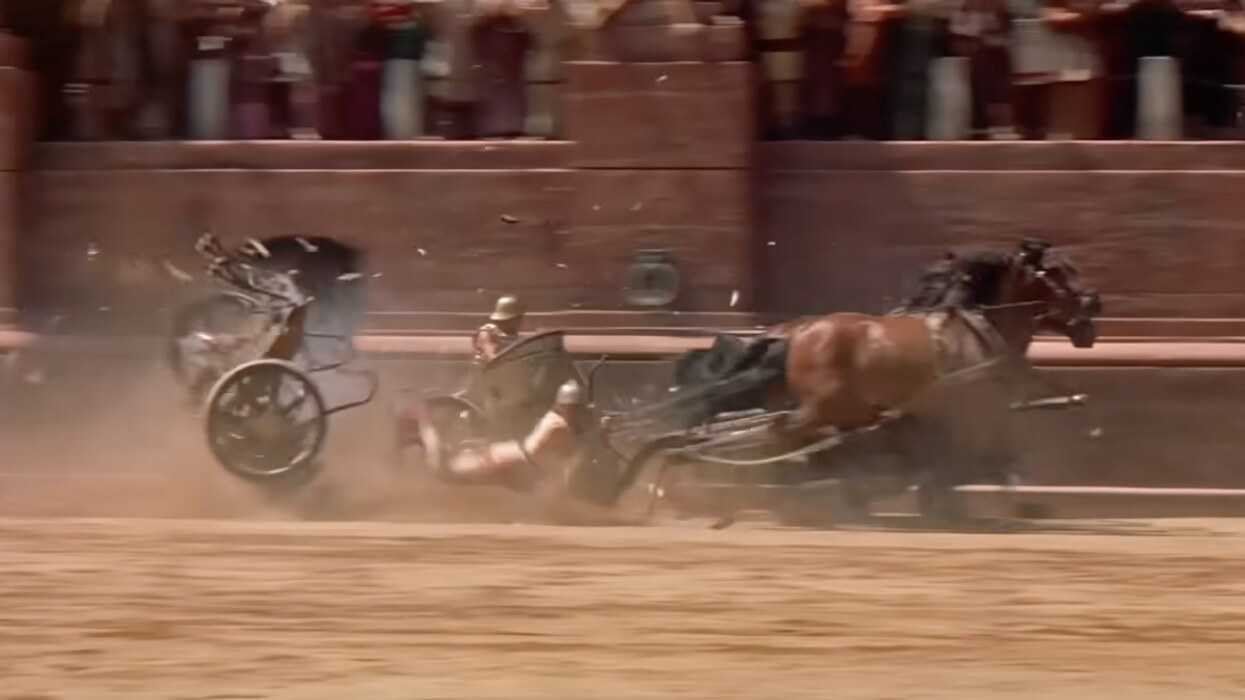
A still from Ben-Hur (1959)
Ben-Hur (1959) set records at the 32nd Academy Awards by winning an unprecedented 11 Oscars, including the Best Picture, Best Director, and the acting awards for both male categories.
Aside from this glorious legacy, the film is also talked about because of an incident—a fact or a myth, we will see—that put it in the critical eye of the audience: a stuntman died on camera, the footage was retained in the final cut, and Hollywood not only kept quiet but also showered it with 11 Oscars.
Whether true or false, it will be revealed as we dig deeper into this matter. For now, it’s safe to say that such stories gain momentum because filmmaking operates on a large scale. It feels quite possible that no one and nothing can always be safe while making a film.
Still, myths get thicker as facts get watered down. This is where production notes, eyewitness accounts, and studio records come in handy. The closer we look, the easier it becomes to see what really happened.
This investigation is also going to follow that pattern, so we can separate a stunt from the story.
The Origin of the Myth
Early Fan Speculation and Word-of-Mouth Gossip
It all started with a simple movie viewing. Some early viewers thought one of the stunt-falls during the chariot race seemed too real to be staged. The doubts were whispered, these whispers soon turned into opinions, and opinions into claims. Then, be it film clubs or screenings, people went on repeating it. It gained traction on the gossip columns that minted out the rumor and turned it into a movie folklore. Checking the facts seemed like a distraction from the exciting debate, so they didn’t—a habit we seem to have brought with us into the present.
The Rise of Film Trivia Books and Misinformation
Ed Goodgold and Dan Carlinsky’s Trivia (1966) is considered the first widely published trivia book. When it became a New York Times bestseller, other trivia books quickly sprang up. Especially in the late ‘60s and in the ‘70s, specialized trivia books, including those that focused on films and Hollywood, became very popular. However, this wasn’t reliable journalism. They published “claims,” not facts, and they published them without fact-checking.
So, when there was a claim about an alleged fatal crash on the sets of a history-making blockbuster, and when these trivia books exploited it, it didn’t take much time for it to spread. The practice of citing the source of information, such as production logs and studio records, wasn’t the norm. All this made the rumor look reliable even though it wasn’t.
What Actually Happened During the Chariot Race
The Real Accidents and the Stuntman Who Fell Forward
It would have been a miracle if the production and filming of such a dangerous scene had gone without a single mishap or injury. Despite all the safety precautions, the production suffered some minor incidents. Production reports and insurance logs confirm several falls and injuries. However, not only were they not fatal, they were not even that serious.
The biggest injury that took place happened to Joe Canutt, the son of Ben-Hur’s chief stunt coordinator, Yakima Canutt. The experienced senior Canutt had instructed his son not to hold the front railing of the chariot. Joe, either carelessly or mistakenly, failed to follow through on this advice and, as a result, was thrown forward from his chariot after it hit a barrier.
You can see the accident here.
When the accident took place, the crew, including Yakima Canutt, feared that Joe had actually been killed. However, much to everyone’s relief, after hitting the ground hard, Joe ended up with only a cut on his chin. It wasn’t serious, and he recovered quickly. In MGM’s records, this incident is mentioned as an injury, not a tragedy.
Why the Fall Looks Fatal on Camera
The wide shot in which Joe Canutt is hurled off his chariot looks far more catastrophic than it actually was. He was wearing safety paddings, but they were not discernible due to the distance, the rousing dust, and the rapid (almost fleeting) nature of the moment.
And yet, no matter how many times you rewatch the scene, it looks very real. That’s because it was not a rehearsed choreography; it was 100% unscripted accident. It looks real because it was real. So, it is no wonder people believe when someone claims the performer died after this accident.
Why the Shot Stayed in the Final Cut
The shot was a real accident, and it caused a minor injury, but it didn’t cause any real tragedy. Also, the authenticity of that visual couldn’t be “created,” especially when CGI didn’t exist; it went into its infantile phase a couple of years after Ben-Hur was released. The accident looked (and was) so real and matched the scene’s intensity so impeccably that it would have been a massive, misguided call not to keep the shot.
MGM presented it as a “successful capture of a high-risk stunt” instead of hiding it as an accident. In fact, the controversy surrounding the incident only helped the film’s success.
Safety, Crew Practices, and Production Reality
Ben-Hur was a herculean production. It involved massive logistics, hundreds of extras, custom-built chariots, carefully planned tracks, and rigorous choreography. Keeping up with the standards of the time, safety was strict. It had well-equipped medical teams and professional animal handlers. Meticulous rehearsals were carried out on a daily basis. Stunt performers were trained for months in advance. The production budget had already accounted for unforeseen production halts whenever accidents would happen. Their production records show injuries, but nothing fatal, and the studio carefully documented every incident for insurance claim purposes.
Legal, Logistical, and Archival Checks
MGM’s studio archives have the insurance logs, which mention injuries but not deaths. This can be ostensibly verified by the fact that there is no record of any family (of the crew members) filing lawsuits or for insurance claims, nor is there any record of legal settlements in the production’s paperwork.
Studios historically kept details, such as insurance claims, payroll, and incident files, as internal records. Many were later transferred to libraries, such as AMPAS, UCLA, USC, and were not fully digitized. So, if you need specific details of a movie, you will have to access such sources and request the production files. The entry point for this research might be the Margaret Herrick Library catalogue.
Conclusion
The rumor emerged because of our inherent affinity for sensationalism, and it survived simply because the stunt looked dangerous enough to be real. Our love for gossip worked as a fuel, and voila… we got a juicy movie trivia that has entertained us for decades.
If you care enough to line up the facts, the fog clears, and you can see the reality for what it is. The legend may be dramatic, but the truth is much simpler and grounded: no stuntman died during the production of Ben-Hur.
- 10 Insane Stunts Actors Did Themselves | No Film School ›
- Stunts 101: 3 Things You Should Know about Using Breakaway Glass ›
- This Full Length Doc Will Give You New Appreciation for Stunt ... ›
- Stunt Falls 101: How to Shoot Them & Remove Wires in Post Once ... ›
- Learn How to Master These Eight Stunt Tricks | No Film School ›
- 'The Holdovers' Stunt Coordinator Reveals Her Path To Becoming a ... ›
- Go Behind The Scenes Of The 'Mission: Impossible - Final ... ›
- Why Did a James Bond Stunt Require $70K Worth of Coca-Cola ... ›
- Jump Into Learning How to Fall Correctly for Stunts | No Film School ›
- 11 Orson Welles Great Films, Ranked for Cinephiles ›
- Before Street Racing, ‘Ben-Hur’ Defined Cinematic Speed ›