The ‘Coach Carter’ Speech: Unpacking “Our Deepest Fear”
A deep dive into the monologue delivered by Timo Cruz, exploring its origins in Marianne Williamson’s poetry, and why it still endures.
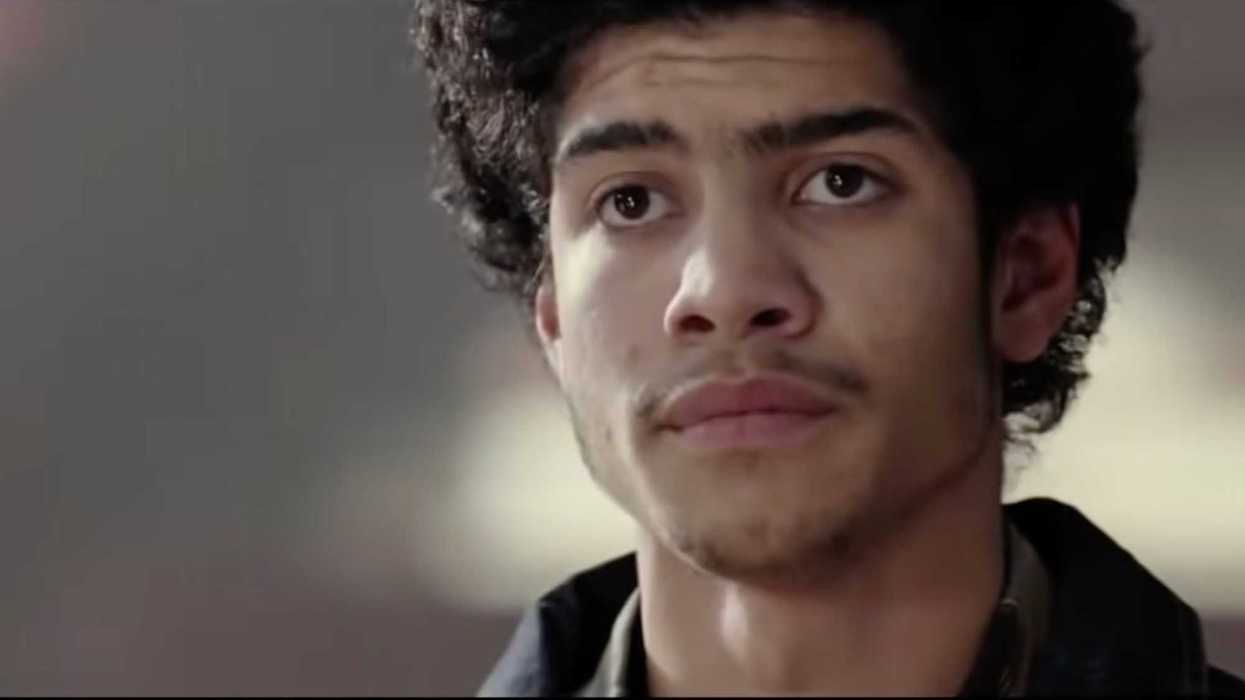
‘Coach Carter’ (2005)
When you think of a sports drama, the vibe you expect is an exciting game, cheering, catharsis, bravado, and a bit of an adrenaline rush. Right? Coach Carter (2005), however, flips the script and shows students sitting on the school’s basketball court, “studying.” And then you hear a student stand up and start reciting, of all things, poetry. What’s the deal here?
Well, this scene (in a movie about athletics) wants you to stop “gearing up” and take a breather. It asks you to prioritize recognizing your potential over collecting empty wins. It wants you to absorb this moment of self-actualization.
It’s a small scene; it comes toward the end of the movie, and it’s quiet. However, as it unfolds, it continues to reframe everything. Suddenly, the world of school sports (or sports in general) stops being about wins and losses; it becomes about fears, potential, and the weight of expectation. It stops being about athletes and becomes about all of us who are trying to recognize and chase our potential.
The Premise and the Scene
Ken Carter (Samuel L. Jackson) joins Richmond High as the basketball coach and takes its rowdy, willful team, the Oilers, under his wing. In a move unusual for a coach, he demands that the team members sign a contract in which they agree and promise to not only fulfill the required attendance but also sit in the front rows in all their classes, maintain a GPA of at least 2.3, and submit progress reports on grades and attendance. While some players sign the contracts, some, including Timo Cruz (Rick Gonzalez), don’t. Carter’s approach is questioned by both the faculty and the parents.
As days pass, repentant Cruz joins the team and is helped by other players. Otherwise, regardless of some problems, such as the team’s captain’s girlfriend getting pregnant and another player being suspended for skipping school, the training goes smoothly, and the team bonds. The team wins quite a few tournaments, and the mood is jubilant. However, when Carter discovers that some players are failing academically, he locks the gym and offers to open only when the team players deliver on their contract’s terms.
Carter’s decision proves very unpopular. Cruz quits again, but when one of his cousins is killed in a botched drug deal, he is shaken and, once again repentant, begs to rejoin the team. Meanwhile, the matter of the “locked school gym” reaches the media and causes community outrage. The school board votes to reopen the gym, prompting Carter to resign in protest.
The scene in context comes toward the end. Carter finds out the players are on the now-opened basketball court, not playing but studying instead. They pledge solidarity with Carter, saying they intend to finish what he started. This is when Cruz stands up and delivers this monologue.
More Than a Movie Quote
A Turning Point in the Narrative
Up until this point, a lot has happened. The team had clashed with Carter, taken objection, revolted, and finally came around to following his mentorship. They completed impossible physical challenges. They have watched Cruz quit and rejoin twice. When the gym’s lockdown and Carter’s resignation create a disturbing vacuum, the players decide to follow Carter’s footsteps instead of what the school, society, or even the media is expecting them to do—i.e., focus on the sport alone.
This action by the team is more than just solidarity with their favorite teacher. It’s the sign that they have internalized the lesson Carter was trying to teach them. In the movie, Carter is shown to have a habit of asking his players, “What is your deepest fear?” The team, initially, is mostly clueless about its purpose. But when Cruz stands up and delivers this monologue, it doesn’t remain just an answer to that question or a mere sentimental moment. Cruz, here, is literally verbalizing the culmination of the team’s journey.
The Source: Marianne Williamson’s “A Return to Love”
This detail is kind of surprising to most readers. The obvious opinion is that the monologue was written by the film’s writers, Mark Schwahn and John Gatins. But no. These powerful words were taken from a passage by Marianne Williamson in her 1992 book “A Return to Love: Reflections on the Principles of a Course in Miracles.” The original text reads:
“Our deepest fear is not that we are inadequate. Our deepest fear is that we are powerful beyond measure. It is our light, not our darkness, that most frightens us. (We ask ourselves, who am I to be brilliant, gorgeous, talented, and fabulous? Actually, who are you not to be? You are a child of God.) Your playing small doesn't serve the world. There's nothing enlightened about shrinking so that other people won't feel insecure around you. We are all meant to shine, as children do. We were born to make manifest the glory of God that is within us. It's not just in some of us; it's in everyone. And as we let our own light shine, we unconsciously give other people permission to do the same. As we're liberated from our own fear, our presence automatically liberates others.”
The film took Williamson’s spiritual text (skipping the lines mentioned in the brackets) about our internal blocks and the restrictions we put on ourselves, and put it in the mouth of the most difficult teenager from the streets. This contrast—ancient wisdom spoken by a Millennial—gives the scene its unique power.
Timo Cruz: The Perfect Messenger
For most of the movie, Timo Cruz comes off as an arrogant teen who constantly talks back, displays the wrong attitude, quits the team, and returns only when he sees them winning. He is truly an exhausting kid. When Carter locks the gym (on account of dropping grades), Cruz quits again. But this time, when his cousin is gunned down in a drug deal gone wrong, he begins to see the truth and the weight of Carter’s values. The second time he begs Carter to let him rejoin the team, he is not looking to bask in the glory of winning; he is literally begging Carter to save his life.
His standing up and saying these words is not an act of showing off—showing off how much he has evolved. This is a profound moment of self-actualization. He is presenting himself as living proof that transformation is possible. Cruz is the perfect person to say these words because he has lived the struggle.
Why the Words Still Hit Different
This is a foreign concept to the way we, as humans, intrinsically function. We are not only scared of failure but also, somewhere deep down, we expect it to happen. What these lines tell us is that it’s not the failure we are scared of; rather, we are scared of our potential and how much we can actually achieve—“Our deepest fear is that we are powerful beyond measure.” That makes us shrink ourselves so we don’t stand out and make a fool of ourselves. Or, some of us with low self-esteem voluntarily dim our lights so as not to make others feel like we are outshining them.
But why shouldn’t we?
And that’s a question worth asking regardless of when and where you are. When you choose to dim yourself, you are making an example for others—you are spreading the spirit of low self-esteem. Why would you do that?
This monologue says that success should be collaborative instead of competitive. Growing together. Rising together. Reigning together.
Conclusion
In a movie where you might expect slam dunks and high-stakes games, you end up with something far more valuable. It’s been over twenty years now, and Cruz’s recitation of “Our Deepest Fear” has outgrown the film and spanned generations. And it will continue to do so for as long as the movie stays around. Its staying power is in the fact that it comes not from a wise teacher (or a grown-up, for that matter) but from someone who doesn’t know any better—someone who we all believe we always remain. This kind of plot twist is always worth revisiting. Because movies and stories might get old, but wisdom doesn’t.