I’ll Beat It Out of You: The Story Behind the Toughest Line in ‘Code of Silence’
How “(If) I want your opinion, I’ll beat it out of you” underlines the grit and unwavering resolve of a tough, self-sufficient lawman in Code of Silence (1985).
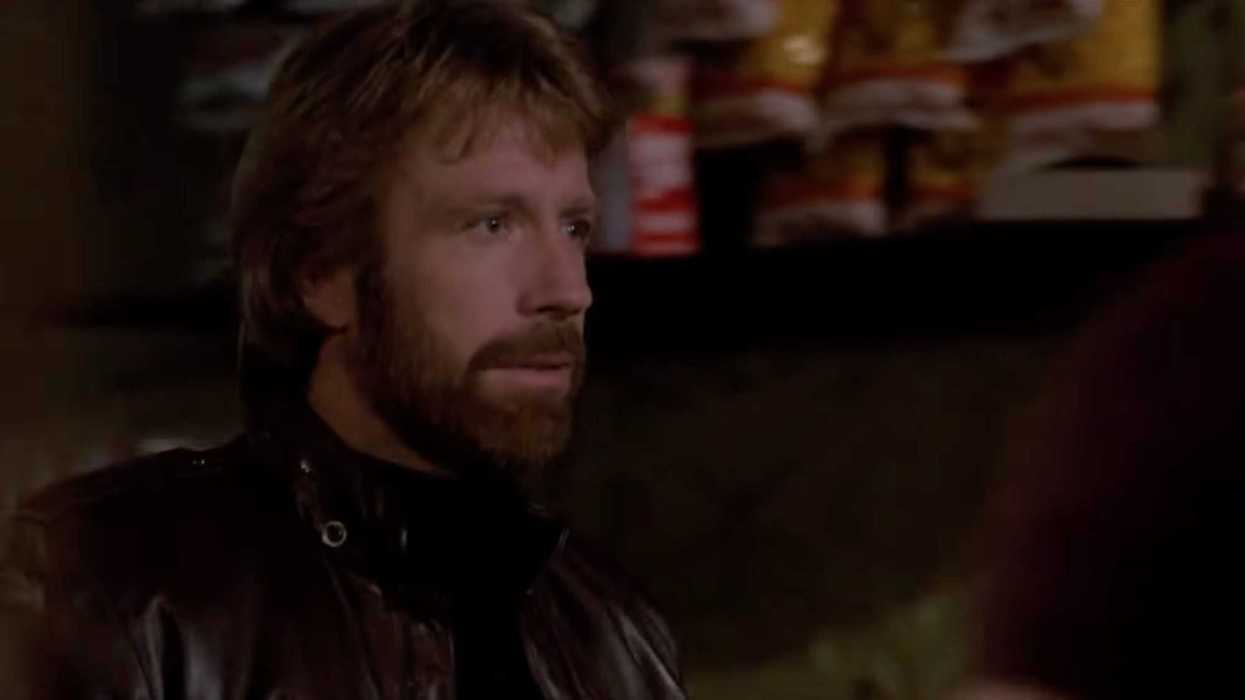
‘Code of Silence’ (1985)
In Code of Silence (1985), Sergeant Eddie Cussack (Chuck Norris), a CPD detective, lives in a world that is violent, deceitful, and corrupt. That’s obvious, considering his profession. But what’s worse, he is in a position where he cannot count on his own colleagues—something to do with him defying the “blue curtain,” an informal brotherhood code in the police department that expects him to keep quiet about his colleagues’ errors, misconduct, and even crimes.
But Eddie is the hero. So, it’s expected of him to rise above selfishness and unfairness, which he does. That results in him getting the cold shoulder from his sullen brethren. And all of this happens in the middle of a brutal mob war. It’s fair to say that Eddie, here, is forced to be the “one-man army” that was a popular action trope in the ‘80s.
This line comes matter-of-factly in a scene, but it still defines who Eddie Cusack is. While his badge signifies his loyalty to his profession, his one-liners, such as this one, highlight his philosophy of self-reliance.
The moment he says this line, we discover a lawman who (for the time being, at least) has zero interest in bureaucracy, red tape, and of course, unsolicited advice. In the moment, he is a one-man army with a very short fuse for nonsense.
The Scene
Sergeant Eddie Cusack is leading a sting operation to catch a cocaine trafficker, Luis Comacho (Henry Silva). However, a mafioso, Tony Luna (Mike Genovese), and his men ambush the exchange, which leads to a violent gunfight, leaving several dead. In the fight, an aging cop, Cragie (Ralph Foody), kills an innocent bystander. To hide his error, he plants a gun on the dead man.
While Luna absconds, leaving his daughter, Diana (Molly Hagan), under the care of his associate, and Eddie continues pursuing Luis, an inquiry is set against Cragie. Cragie’s associates launch a signature petition attesting to his professionalism. Eddie, who once filed for Cragie’s transfer and believes he is a liability to the force, refuses to sign the petition. This puts him at odds with his colleagues.
Meanwhile, Luis has Luna’s family killed; however, Eddie thwarts his plan to kidnap Diana. He puts her in the care of Ted Pirelli, his late father’s former partner.
At Craige’s hearing, Eddie neither accuses him nor corroborates the narrative put forward by his associates. However, it doesn’t reflect well on Cragie when it comes to light that Eddie once filed for his transfer. Eddie’s colleagues accuse him of disloyalty to his department, saying he broke the “code of silence.” Now Eddie is left with no allies, except his partner, Detective Dorato (Dennis Farina).
In the meantime, Luis manages to kill Pirelli and kidnap Diana. Eddie plans to rescue her by raiding a pool parlor frequented by Luis and his gang. He requests backup, but his call is ignored out of spite. So he goes alone.
At the parlor, one of Luis’ henchmen sees him and says, “Hey, you don’t wanna be here.” Eddie, without looking at him, snaps, “(If) I want your opinion, I’ll beat it out of you.”
What the Line Says About Eddie
A Lone Wolf in a Crowded City
Eddie is a man who is left to his own devices, simply because he refuses to prioritize “brotherhood” over duty. He is untethered from his group and is navigating his way all by himself—the proverbial lone wolf in the criminal world. He has fully accepted his situation. Since his own colleagues refused to help him, he has chosen not to expect any favors from anybody, least of all from those he wants to bust.
Clear Perspective
Eddie knows the system that he works in. He knows he cannot take the criminals down all by himself. So, when he wanted help from his buddies, he formally put a request for backup. His buddies were preoccupied with malice, so they refused.
This is not an ideal situation, but backing away is also not an option. That’s why, having no other choice left, Eddie raids Luis’ hangout all by himself. This shows that Eddie, unlike his colleagues, knows what is important and doesn’t let personal grievances or petty differences affect his focus on his duty.
But the refusal from his colleagues to have his back doesn’t make him vulnerable. He suddenly doesn’t go soft on a helping hand or a piece of kind advice. For him, a goon is still a goon. His method of “extracting” information from them is still the way it was before. Just because he is alone, the dynamics or the process don’t change. He is still the officer of the law. He is the one who asks whatever he wants to ask, whoever he wants to ask, and in whichever way he wants to ask.
When he says this line to the guy, he is practically saying, “Don’t get sweet with me; we ain’t buddies. For people like you, I have different methods. I will use them if and when I want.”
A Cop Who Sets His Own Rules
While his call for backup says that he doesn’t overestimate himself and he is not reckless, his decision to go alone (after the refusal) says that he is prepared for Plan B. He is fine with operating outside of his comfort zone, without the protection of his department. He deals with corruption and half-measures daily, without letting them get the better of him. He has his sharp focus on his duty. Most importantly, when the situation demands action, he will not entertain debates, negotiations, or unsolicited opinions. This reveals one important fact about him: his authority doesn’t come from his badge. It’s inherent.
Violence as a Working Tool
Usually, violence is associated with anger and passion. But in Eddie’s case, he is not angry. His focus on duty stops him from getting carried away by emotion. He is practical. He is a police officer to the bone. He is not used to asking or begging for information; he “beats” it out. It’s violent, but it’s tested and tried, and he is comfortable with it. And anyway, look at the people he is dealing with. Any other approach wouldn't even make sense.
The Delivery
There is literally no drama, no build-up, and no emotion around the line. Norris delivers the line as if it’s simply the second half of the sentence that the other guy started. And he says it in one breath. You can sense his “departmental” or “procedural” nonchalance in its delivery. This shows how that line, its meaning, and its weight are integrally sewn to Eddie’s personality as an officer of the law.
Conclusion
This line may not be iconic. There is no “I’m gonna make him an offer…” kinda glamour. But that’s the thing. It wasn’t written to be “quotable”—although it totally is. But, chiefly, it was written to define a character. And in that sense, the line does its job perfectly well. It shows us who Eddie Cussack is and how he thinks, and it also reinforces the film’s tone.
The line works because it doesn’t try too hard.
- The 8 Best Westerns of the ‘80s: Ranked ›
- 10 Most Iconic “Vaporwave” Movies of the ‘80s ›
- ’80s Movies: The Ultimate 18 Films of the Decade ›
- Learn How to Fight on Camera from a Pro Who Got Punched by Chuck Norris | No Film School ›
- RIP to Chuck Norris: Honoring the Legacy of an Ultimate Action Auteur | No Film School ›
- 10 Best Chuck Norris Movies | No Film School ›
- This Chuck Norris Quote Was So Awesome It Changed Action Movie Genre Logic Forever ›
- Chuck Norris Turned the Classic Western Into the Modern Actioner With This One Line from ‘Lone Wolf McQuade’ ›
- Remember That Time Chuck Norris Stopped a Chainsaw With His Bare Hands? | No Film School ›