It’s just 10 words long. No shouting. No guns. Just a soft, almost affectionate murmur: “I’m gonna make him an offer he can’t refuse.”
It lands with the weight of a bullet.
Few lines in cinema have managed to crawl into pop culture and stay lodged there for decades.
This line isn’t just famous because of who said it or when. It endures because it captures something elemental: the terrifying charm of power when it's exercised with cold precision. In The Godfather, it serves as a reminder that real authority doesn’t scream. It whispers.
And in that whisper is the entire moral gray zone of the Corleone family, where kindness and coercion cannot be told apart.
This article explores the line from every angle, from its origins and the context of its first cinematic use, to its craft, its subtext that gave the line its spine, and how it spread far beyond the screen.
And finally, we’ll wrestle with how a line about power shaped—and damned—Michael Corleone’s soul.
The Birth of the Line
The line first appeared in Mario Puzo’s 1969 novel The Godfather. In the book, Don Vito Corleone uses this phrase to reassure Johnny Fontane that he will secure him a coveted movie role. The don says, “I’ll make him an offer he can’t refuse,” implying a blend of persuasion and underlying menace.
When Francis Ford Coppola adapted the novel into the 1972 film, he retained this line, recognizing its potent mix of politeness and threat. The phrase encapsulates the duality of the Corleone family's world, where offers are made with a smile, but refusal is not an option.
Marlon Brando’s portrayal of Don Vito Corleone brought a unique depth to the character. To craft the Don’s distinctive voice, Brando drew inspiration from real-life mobster Frank Costello. He listened to recordings of Costello’s testimony before the Kefauver Committee, noting his raspy, subdued tone. Brando emulated this, giving the don a voice that was both soft and commanding.
By speaking softly, he draws the listener in, creating an intimate yet intimidating atmosphere. This approach aligns with the character’s philosophy. True power doesn’t need to shout.
The Line in Context
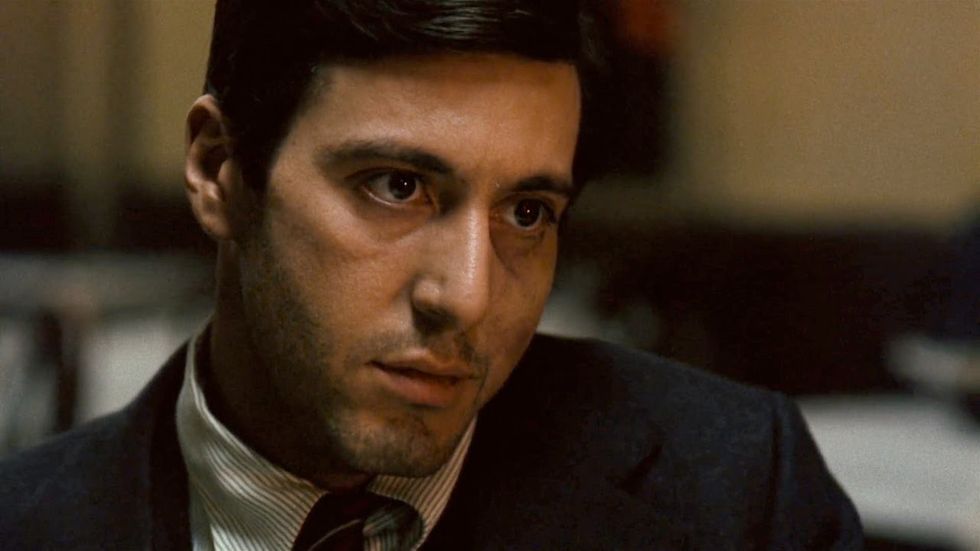
In the film, the line is first delivered during a conversation between Michael Corleone (Al Pacino) and Kay Adams (Diane Keaton). Michael recounts how his father helped Johnny Fontane (Al Martino), a Sinatra-like crooner, get out of a certain contract by making the producer an offer he couldn't refuse.
Michael says, “My father assured him that either his brains or his signature would be on the contract.”
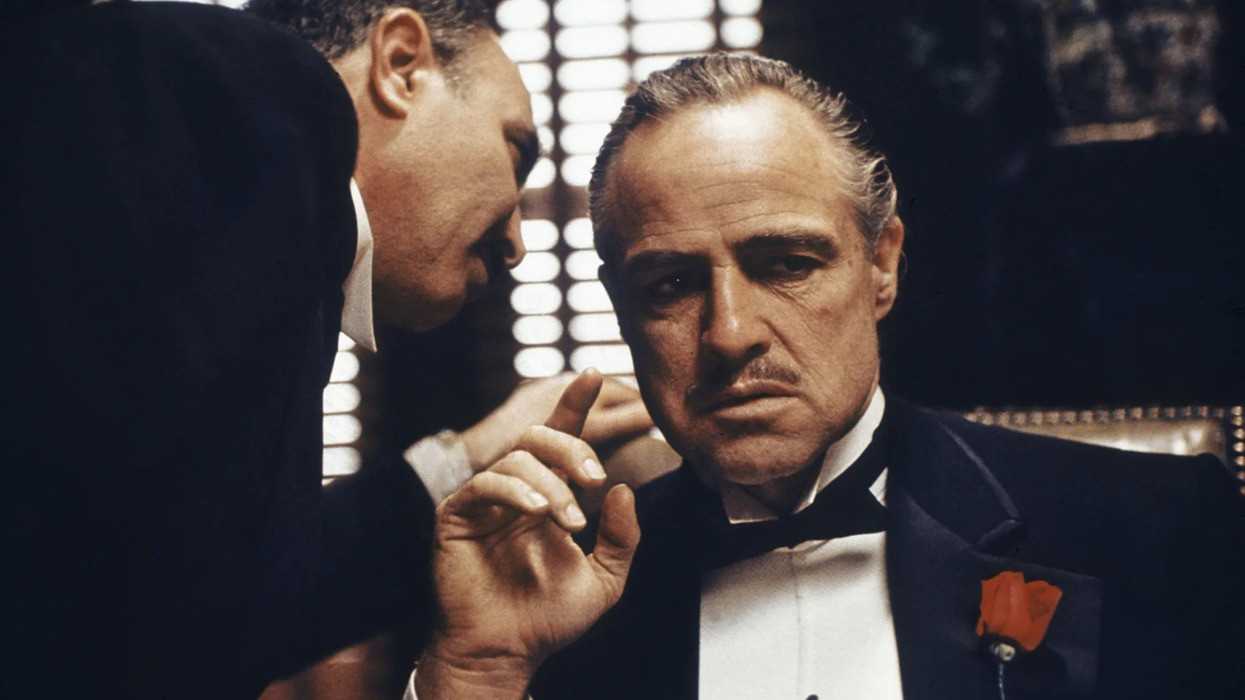
Michael may utter these words first, but it’s Vito Corleone (Marlon Brando) who embodies them. When Johnny Fontane once again shows up at the Corleone wedding begging for help, he’s a wreck, a once-successful singer now clinging to the Godfather like a lifeline.
The film shifts into one of its most famous exchanges. Vito listens patiently, then utters the iconic words with quiet finality: “I’m gonna make him an offer he can’t refuse.”
Brando says it with a casual and calm reassurance, almost like a father promising to fix a child’s problem. That’s what makes it terrifying. In Don Vito’s world, consequences are a given.
The line lands even harder—this time visually—when we see how that “offer” is enforced. The producer who’s blocking Johnny’s role wakes up next to the severed head of his prized racehorse.
The don’s strength lies in his network, his reputation, and his unshakeable authority. The threat is unspoken but fully understood by both the characters and the audience.
This moment redefines the power dynamic in the film. Unlike Michael’s later weaponization of the line, Don Vito uses it sparingly. Violence, to him, is a tool of persuasion best used subtly, sparingly, and always with plausible deniability. After all, it’s not personal. It’s just business.
The Line’s Cinematic Craftsmanship
Coppola’s direction emphasizes subtext and restraint. By having characters speak softly and avoid overt displays of aggression, the film creates a tension that is more unsettling than explicit violence. The line’s delivery is a prime example. Its menace lies in what is implied, not what is said.
Visually, the film uses lighting and framing to reinforce this subtlety. Scenes are often dimly lit, with characters partially obscured, suggesting hidden motives and the ever-present threat of unseen forces. That’s the genius of DP Gordon Willis for you.
Nino Rota’s score for The Godfather is both haunting and understated. The music often recedes during moments of tension, allowing silence to amplify the impact of the dialogue. In the scene where the line is delivered, the absence of music forces the audience to focus on the words and their implications.
This strategic use of sound heightens the sense of dread. The quietness becomes a character in itself, embodying the silent, pervasive power of the Corleone family.
 'The Godfather' CREDIT: Paramount Pictures
Cultural Impact and Legacy
The line has transcended its cinematic origins, becoming a staple in various forms of media. It has been parodied in shows and referenced in countless films and advertisements. Its adaptability speaks to its powerful construction and universal themes.
In politics and business, the phrase is often used to describe coercive tactics, sometimes humorously, sometimes critically. Its usage underscores the blurred lines between persuasion and intimidation in various spheres of power.
In corporate settings, the line has been co-opted to describe aggressive negotiation strategies. While often used tongue-in-cheek, it reflects a reality where offers are structured to be irresistible, or face consequences.
Psychologically, such euphemisms make threats more palatable, allowing individuals to rationalize coercive behavior. By framing ultimatums as “offers,” the moral implications are softened, facilitating actions that might otherwise be deemed unethical.
The Godfather Effect
The Godfather shifted the portrayal of gangsters from overtly violent figures to complex, family-oriented individuals. The line embodies this transformation, presenting threats as part of a sophisticated, almost noble, code of conduct.
This romanticized depiction has influenced countless films and series, from Goodfellas to The Sopranos, shaping the public’s perception of organized crime and its operatives.
The Line’s Moral Weight
As Michael Corleone ascends to power, the line takes on a darker significance. Initially used to describe his father’s methods, Michael eventually embodies the phrase, making offers that are, in essence, commands.
The baptism scene epitomizes this transformation. As Michael renounces Satan in a church, his orders lead to the simultaneous execution of rival mob leaders.
This juxtaposition highlights his complete immersion into the violent world he once sought to avoid.
…and It’s Real-World Shadow—From Fiction to Criminal Lexicon
The Godfather’s Paradox: How the Mafia Adopted Its Own Myth
Life Imitating Art: Real-life mobsters began using the phrase “an offer he can’t refuse” as an actual mafia slang, borrowing directly from Puzo’s fiction. What started as a screenwriter’s invention morphed into real-world vernacular for intimidation—a self-fulfilling prophecy.
FBI Adoption: Law enforcement picked up on it, too. The phrase began appearing in surveillance transcripts and federal indictments. Its deceptive civility made it ideal as circumstantial evidence—thinly veiled threats that still carried legal weight.
Linguistic Warfare: Why the Line Works as a Threat
The Power of Politeness: What gives the line its staying power isn’t the threat—it’s the niceness of it. It doesn’t growl or spit. It smiles. By couching violence in civility, the speaker makes coercion sound like charity.
Psychological Manipulation: Behavioral experts argue that euphemistic threats like this lower emotional resistance. They create emotional distance from the act, making it easier for both parties to rationalize what’s essentially violence wrapped in velvet.
The Dark Legacy: When Pop Culture Glamorizes Crime
Criticism from Italian-Americans: Not everyone celebrated the line’s popularity. Advocacy groups like the Italic Institute of America criticized The Godfather for reinforcing damaging stereotypes, arguing that lines like this glamorize a culture of violence that harms real communities.
The “Godfather Effect”: Scholars and historians have noted that the film became a reverse blueprint—mobsters started quoting The Godfather not to be clever, but to feel authentic. It was life imitating art imitating life, in the most dangerous way possible.
A Line That Redefined Power Dynamics
Corporate and Political Misuse: The phrase has drifted far from mafia dinner tables into boardrooms and campaign offices. It’s now used (sometimes jokingly, sometimes not) to describe corporate ultimatums and political pressure tactics.
Ethical Backlash: Academics warn that such glamorization erodes public sensitivity to real-world violence. When language turns threats into metaphors, it can blur the line between charm and cruelty—something The Godfather never shied away from, but never fully condemned either.
Conclusion
“I’m gonna make him an offer he can’t refuse” began as a line of fiction but grew into something far more potent. On screen, it captured the Corleones’ chilling blend of civility and coercion. Off screen, it slipped into the real world—adopted by mobsters, tracked by the FBI, and quoted in boardrooms and politics. It became more than a movie line; it became a blueprint for power.
But with that legacy comes contradiction. While iconic, the line has faced criticism for glamorizing violence and reinforcing stereotypes. Its poetic calm disguises brutal intent—making the threat sound reasonable, even noble.
And that’s why it endures. It reveals how real power operates—not with rage, but with restraint. Through choices that aren't really choices. Through threats that smile. In just ten words, it tells us everything we need to know about persuasion, fear, and the darkness behind a well-delivered offer.
- Why Luca Brasi's Origin Story Was Too Violent for 'The Godfather' ›
- Watch: How Minimalistic Cinematography Brought 'The Godfather Part II' to Life ›
- What Does Steven Spielberg Think is the 'Greatest American Film Ever Made'? ›
- What If ‘The Godfather’ Was Set in the Present Day? | No Film School ›
- The Godfather’s Cat: A Furry Accident That Made Film History | No Film School ›
- Michael Corleone’s Wardrobe Was the First Red Flag | No Film School ›
- Bet You Didn’t Notice 'The Godfather' Uses Oranges as a Death Signal | No Film School ›
- Friends Close, Enemies Closer: The Most Famous Lesson From 'The Godfather' | No Film School ›
- American Made: The Moment Barry Seal Walked Out — and Never Truly Escaped ›
- Breaking Down Michael’s Kiss of Death in The Godfather Part II ›
- How Did Marlon Brando Change Acting Forever? | No Film School ›
- What Are the Best Marlon Brando Movies? | No Film School ›
- How Films Come Full Circle: Endings That Mirror the Beginning ›
- The Calm Before the Storm: Analyzing Don Vito’s Lethal “No” That Ignites ‘The Godfather’ ›
- Unpacking Don Vito’s “Code of Manhood” in ‘The Godfather’ ›
- Film Quote of the Day: 'The Godfather Part: III' Quote That Revealed Don Corleone's Philosophy | No Film School ›