How Films Come Full Circle: Endings That Mirror the Beginning
Explore the “coming full circle” trope and learn how film endings echo their beginnings to strengthen emotional and thematic impact.
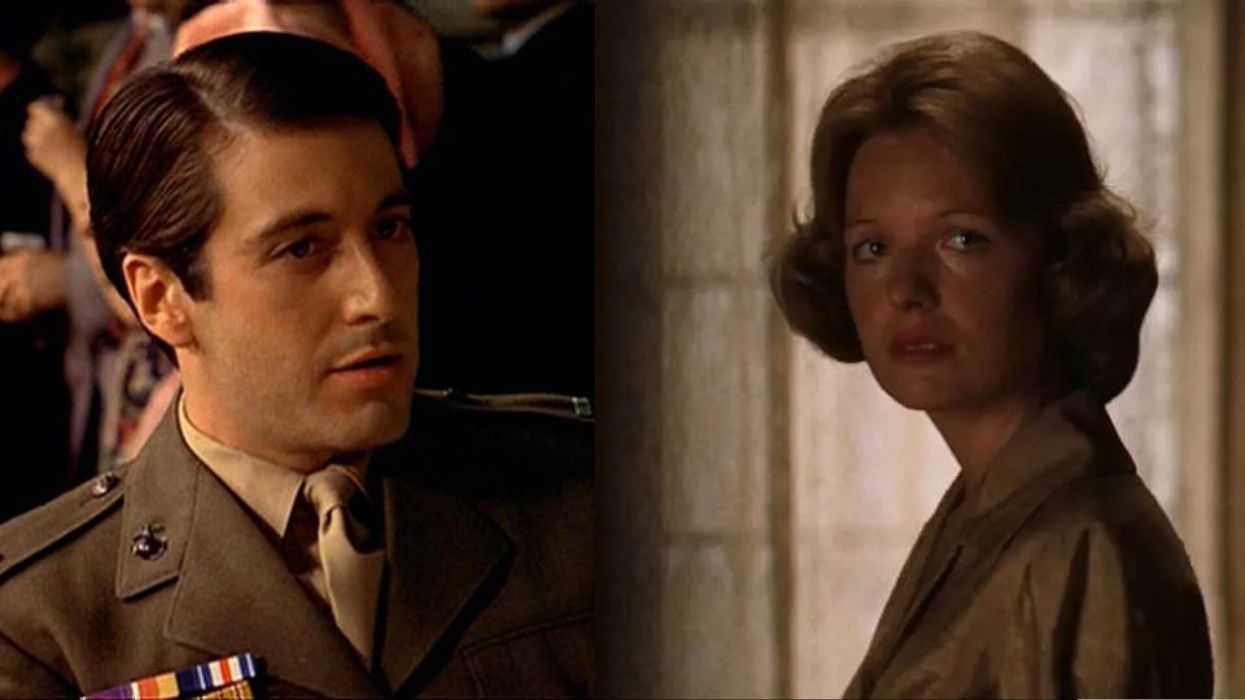
The Godfather
Many times, you will notice that stories come back to where they started. Is it because writers get tired, and then it becomes too much to devise a fresh ending? Of course not.
When stories end by returning to their beginnings, they intend to show how things have changed because of the narrative journey the characters undertook. And also because there is some sort of poetic justice, a sense of closure, a peculiar feeling of cleanliness in “coming full circle.”
And the experience of it, for the viewers, is quite curious: they feel the ringing of the past, kind of a déjà vu effect, without knowing why it touches down so well. As in, they don’t understand why, despite seeing the moment twice, it feels different the second time.
In this article, we are going to explore its functions and effects, as well as what filmmakers achieve by using it, so much so that some have used it like their signature filmmaking move. We will also see how it can backfire and how a filmmaker can use it effectively.
Coming Full Circle: The Trope
Definition
“Coming full circle” is a narrative arc where characters, plots, or themes return to a state, situation, or place similar to where they began, often with a new understanding or a meaningful change as a result of the journey.
Why Beginnings Matter
The movie’s beginning is the establishment of the narrative arc’s journey. It serves as the first base, or the starting point, for everything that follows. When a story’s ending circles back to this first base, the viewers are able to decisively measure the characters’ growth, loss, and transformation. The trope, which highlights the contrast between the beginning and the end, serves as a frame of reference.
In other words, the beginning poses a question, while the ending brings back the answer.
How Endings Echo Earlier Beats
The effectiveness of a narrative echo lies in its subtlety and in how intrinsically it is woven into the story’s rhythm. It can be conveyed through a camera angle, a small gesture or a dialogue that a character repeats, or a similarity between settings. The key is how characters respond differently in the repeated situation. It makes their journey feel earned and substantial—or poignant, depending on the desired effect. In any case, the important point is that it doesn’t draw too much (and obvious) attention to itself.
Circular Structure vs. Simple Repetition
Simply repeating the same element twice, word to word or frame to frame, is just what it sounds like: repetitive and static. It doesn’t carry any meaning and feels like an unnecessary placeholder. Circular structure, on the other hand, creates contrast, reveals new information, adds new dimensions, deepens the theme, and reframes the character. While a simple repetition is an empty gimmick, the circular structure is a significant narrative choice.
Why Filmmakers Use It
Creating Emotional Payoff
The circular ending reminds viewers of the opening and taps into their emotions invested in it. It makes watching the ending a reflective experience and creates a desired effect, heartbreaking or comforting, based on how the journey has unfolded. This enables the audience to see the character growth without needing too much exposition.
Highlighting Character Growth
Characters usually start with limitations and later evolve, but sometimes, they also start evolved and become a lesser version of themselves in the end. Either way, when the story loops back, the contrast underscores the changes they have undergone. These changes are reflected in their choices, actions, posture, tone, and even their choice of words. It’s just simple, clean, active, yet layered storytelling.
Reinforcing Themes and Motives
When the ending meets a story’s beginning, it’s basically highlighting the story’s core idea, such as fate, redemption, or closure. The narrative patterns filmmakers typically (but also not that typically) use to achieve this are roads, doors, or repeated questions.
Building Narrative Cohesion
A story that circles back feels more decisive because it makes its central message clearer and definitive. It ties all the loose ends together and indicates that the story and the characters in it have reached their natural resting spot.
Famous Examples Where a Story Comes Full Circle
The Godfather (1972): Doors That Define a Legacy
Michael Corleone’s (Al Pacino) journey starts as a family outsider. He is introduced at Connie’s (Talia Shire) wedding, where he sits with his girlfriend, Kay (Diane Keaton), kind of isolated from the family members and the guests. In an attempt to highlight the fact that he has nothing to do with the family’s mafia business, he even puts this isolation into words, saying, “That’s my family, Kay. That’s not me.”
By the end, however, his journey concludes with him not only stepping into the family business but also taking the reins from his father. He formally becomes the godfather. The moment when his transition becomes apparent to Kay is signified symbolically: the door closing between them.
This is the narrative arc circling back to Michael’s legacy of being isolated from his family; at the beginning of the story, from his parents and brothers, and by the end, from Kay, now his wife.
The Shawshank Redemption (1994): Freedom Framed Twice
The movie starts with Andy Dufresne (Tim Robbins) sitting in the suffocating atmosphere of his car, listless, morose, and in despair. He is holding a gun. His body language is tight and heavy.
Later, in the court, he is erroneously accused and convicted of murdering his wife and is sentenced to two consecutive life terms. In this scene, he is surrounded by many people, but he has never been more alone in his life.
However, by the end, after he has achieved his rightful freedom through gumption and the sense of justice (directed at himself) that was denied to him at the beginning, he is seen at the beach in Zihuatanejo. The atmosphere is bright and full of hope. Later, when Red (Morgan Freeman) joins him on the beach, it’s just the two of them, and yet, he has never felt more alive.
The narrative echo is more cinematic than literal. The movie retains Andy’s isolation, but it flips its meaning. While he exudes hopelessness and confinement in the beginning, he radiates hope and freedom in the end.
The Lion King (1994): The Circle Made Literal
As it’s iconic now, The Lion King opens with the beautiful Circle of Life soundtrack. It ends with Rafiki, the wise shaman, bringing Simba to the edge of Pride Rock and presenting him to the gathered animals as their newborn prince and the future king of the Pride Lands.
By the time the movie comes to its conclusion, a lot of things have happened: Scar kills Mufasa and makes little Simba believe he was responsible, Simba flees, Scar becomes the king, Simba forms a friendship and grows up with Timon and Pumba, Nala and Mufasa’s spirit encourage him to claim his place in the “circle of life,” he visits the Pride Lands, confronts and defeats Scar, and ultimately reclaims his status as the rightful heir to the throne. The film jumps a few days ahead and concludes with Rafiki again presenting the animals their newborn prince and the future king—except, this time it’s Simba’s son.
Both times, the scenes atop Pride Rock, where Rafiki presents the newborn prince, are almost identical. But the meaning has evolved. Simba’s return to the Pride Lands is not just closure; it signifies growth, responsibility, and continuity. The ending echoes the beginning, but it also recontextualizes it.
Conclusion
The soul of the circular endings remains in their quiet revelation of the change. This trope is the lens that lets viewers see the beginning again, but in a different light. And in doing so, the final image achieves a more layered form. If done well, this “coming full circle” indeed makes the story feel complete and satisfying.
- The 4-Part Framework Behind Every Great Movie Ending ›
- Disney’s “B-Project” That Became 'The Lion King' ›
- The Godfather Line That Changed Movie Dialogue Forever ›
- How Closing a Door Rewrote Michael’s Fate in ‘The Godfather’ ›
- Michael Corleone’s Wardrobe Was the First Red Flag ›
- Michael Corleone's Arc in 'The Godfather' Films Proves He's the Best ... ›