Unpacking Don Vito’s “Code of Manhood” in ‘The Godfather’
How Don Vito Corleone’s quiet rebuke to Johnny Fontane defines masculinity through family devotion and personal responsibility.
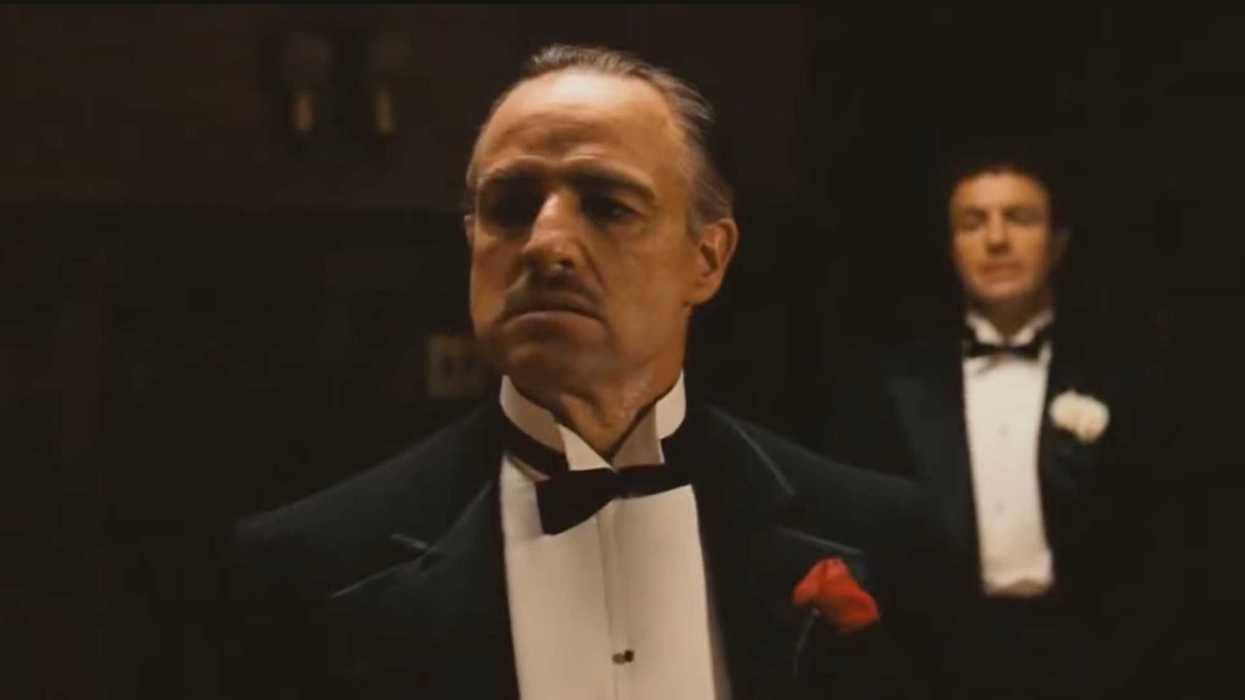
‘The Godfather’ (1972)
Don Vito Corleone (Marlon Brando) is an interesting mix of a daunting company CEO and a reassuring HR manager. He can make veiled threats and give a loving, fatherly rebuke in one breath. And all this glory is established in the first few minutes of the film, after Johnny Fontane (Al Martino) shows up weeping about a career slump. What we see then is the “Baddy Daddy” at his best.
Despite all the graphic violence, the real power that The Godfather (1972) thrives on is its riveting moral frequency. You might expect a crime boss to associate manliness with bravado and machismo or the number of enemies you take out. But no. Simply put, Vito judges whether you are a real man, depending on where you are when the sun goes down.
In a very, very interesting manner, Brando’s (and Puzo’s and Coppola’s) Vito considers masculinity as a domestic responsibility. Yes, if you can’t run your business, if you bend over to your enemies, if you run away from legal consequences, you are not a very good gangster, let alone a crime boss. But when your family sits down at the dinner table and you ain’t there, you are not even a real man. That’s really something coming from someone like him.
But, if you look closely, it’s his sophisticated take on power that balances the brutality of the street with the sanctity of the home.
The Context
At the beginning of the film, Vito is hosting his daughter’s wedding at his house. Among the guests, the most high-profile one is Johnny, a famous singer and a legit celebrity. Johnny also has another, more personal and more important motive to be here. A particular film producer is gumming up the works for him, in particular his foray into acting, by refusing to cast him in a movie that Johnny thinks will definitely work for him. Vito considers Johnny his godson, and, in that capacity, Johnny is here to complain about the film producer.
While stating his issue, Johnny’s tone is pretty weepy for Vito’s liking, and he gives him quite a rebuke. And then, as if to make sure Johnny deserves his help, Vito asks him, “You spend time with your family?” When Johnny confirms that he does, Vito lightens up and states his philosophy, “Good. Because a man who doesn’t spend time with his family can never be a real man.”
- YouTube www.youtube.com
The Domestic Standard of Power
Loyalty Starts at Home
Regardless of being a mafia family, the Corleones mirror a traditional family structure and dynamic. And because Vito believes in family values, this structure is reflected in his organization as well. For instance, titles like “Godfather” and “Caporegime” (Capo) are professional and relational, but the loyalty at the base of every role and every title is very personal.
So, whenever Vito calls his organization his family and demands family commitment, he is trying to safeguard the foundation of his crime empire. He believes a man who can abandon his family is capable of abandoning his alliances, and that makes him untrustworthy. He very well understands that at the foundation of any professional (be it criminal or political) organization are real, individual people and their personalities. If they are strong, the organization is strong. If they are weak and unstable, so is their organization.
The advice he gives to Johnny is no doubt fatherly, but at its core, Vito has placed strategic weight.
Private Discipline, Public Authority
Vito is famously unflappable and level-headed. You don't see him losing his cool very often. For example, he deals with reckless and volatile Sonny, weak and timid Fredo, and cold and calculating Michael with the same patience he displays with everyone else. And this same control at home reflects in business, too. He is introduced at Connie’s (Talia Shire) wedding, where he is hosting, listening, and deciding, all with the same forbearance and gravitas. That’s natural authority because it’s rooted in visible family presence.
So, when he sees Johnny displaying all the traits he disdains, he loses it a little. See his expression in this scene, right before he gets up from his chair—pure disbelief that a man can be so weak. You can see the (rare) anger boiling up. And then he screams, “You can act like a man!”—and slaps. Aside from this moment, he has never displayed such intense emotion. And that’s telling something. Johnny’s instability weakens him. And his reaction tells you how important it is for him to be family-centric. His reaction is less a reaction and more a correction: Fix your household, then fix your career. Power flows from discipline, not weakness.
The Paradox: A Moral Code Inside a Crime World
Selective Morality
Even though Vito displayed such level-headed and high-standing morality, we cannot overlook how limited it is. He vehemently applies this morality to his inner circle—protecting family, rewarding loyalty, punishing betrayal, and so on. But you step outside of his circle, and the rules change.
Now, this may seem like a double standard to you—and make no mistake, it is—but like it or not, this selective morality creates cohesion in Vito’s world. His men follow him, respect him, and fear him because his standards, within the inner circle, are as consistent as they are resolute. This “spending time with family” advice is Vito reinforcing that boundary: If you want protection, honor the code.
Legacy Over Ego
Vito is a far-sighted businessman. He thinks generations ahead. He doesn’t see his empire as a momentary dominance; he sees it as a continued reign. As he sees it, spending time with family is an investment in legacy. He is very shrewd that way. He makes sure his sons inherit the values before they inherit the business. That should explain why Michael, the youngest son, inherits the business over his older brothers. He is Vito’s true heir, in blood and in soul.
In the context of this scene with Johnny, masculinity becomes long-term thinking. Impulse has no place. Presence does.
Conclusion
Vito’s definition of masculinity remains a fascinating study in character. For him, showing up for the people you love is as masculine as it gets. His belief in prioritizing the family dinner table over the boardroom transcends the era of the film and is especially relatable today more than ever.
Ultimately, it’s the consistency of your presence and the moral standing of your character that make you a real man. Vito says (and strongly believes) that if you have no one substantial to share your power with, it’s essentially pointless. A man is only as strong as the bond he shares with his family.
- The Godfather Line That Changed Movie Dialogue Forever ›
- Vito and Michael Corleone’s 3 Defining Scenes in The Godfather ›
- Friends Close, Enemies Closer: The Most Famous Lesson From 'The Godfather' ›
- Decoding the “Sicilian Message” of ‘The Godfather’ ›
- The Story Behind the “Act Like a Man” Slap in ‘The Godfather’ ›
- The Don Corleone Line That Still Resonates More Than 50 Years Later ›
- The Four Words That Opened The Godfather and Changed Cinema ›
- Film Quote of the Day: 'The Godfather Part: III' Quote That Revealed Don Corleone's Philosophy | No Film School ›