7 Directorial Debuts That Left a Lasting Impact on Cinema's History
A single first film was all it took for these seven directors to rewrite cinematic history.
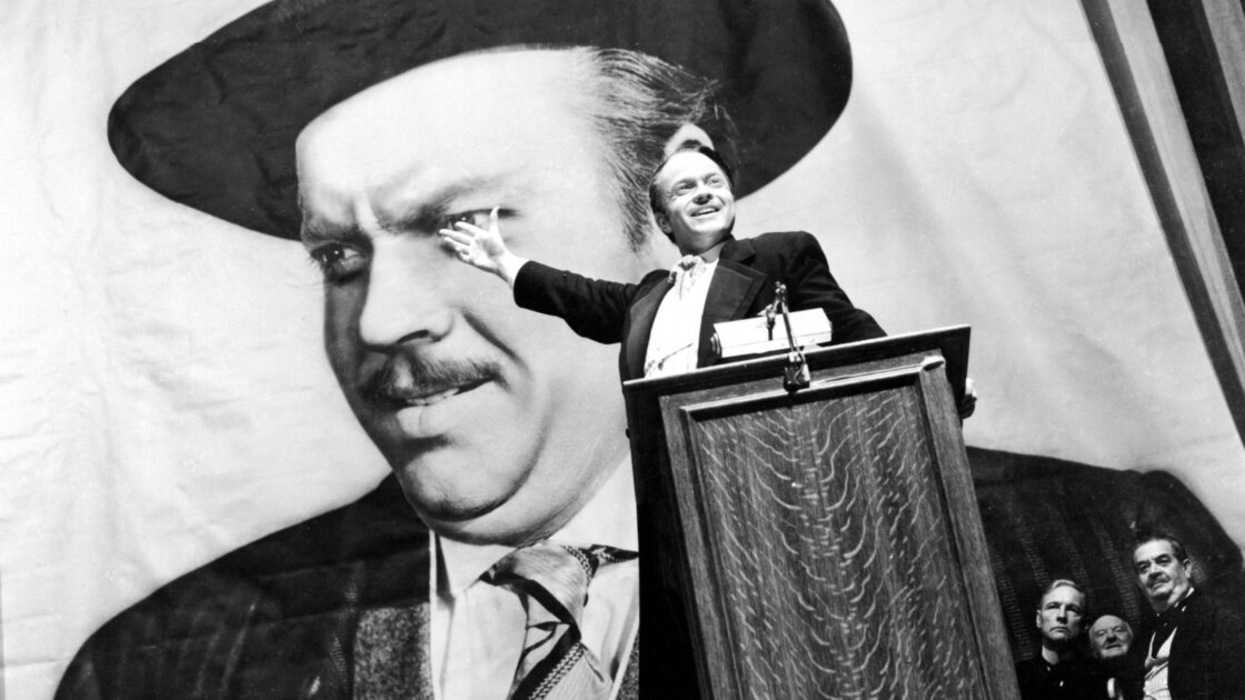
Citizen Kane (1941)
A director’s debut movie is like a calling card. It establishes their identity. If the debut movie is also impressive, it implies that the director has excelled in a lot of filmmaking principles that define what a good movie is.
But every once in a while, there comes a new, inexperienced director who throws away this book of guiding principles and makes a movie entirely out of a new set of rules. These rules sometimes make you do a double-take, sometimes leave you confused, sometimes leave you astonished, and sometimes shatter your set expectations from a cinematic experience.
We are going to explore seven such filmmakers who refused to follow the beaten path, and through their defiance revolutionized filmmaking.
Best Directorial Debuts of All Time
1. Orson Welles (Citizen Kane - 1941)
Written by: Herman J. Mankiewicz & Orson Welles
Orson Welles, at just 23, had already made waves with his notorious radio broadcast, War of the Worlds. His realistic dramatization of H.G. Wells’ classic was so effective that it caused nationwide panic, which newspapers reported on the front page. So when, just three years later, he came up with Citizen Kane, people knew it was going to be something out of the ordinary. And it was.
The movie starts with an aging and ailing newspaper magnate, Charles Foster Kane (Orson Welles), on his deathbed, observing a snow globe. Kane utters his final words, “Rosebud,” and dies. From here on, the movie follows Kane’s life, his ascent to power and decline, and the enigma surrounding his final words through a series of flashbacks and testimonials from people who knew him. At the thematic core of its narrative structure, which is explored from several points of view, are two questions: how does memory warp reality, and how far would a man go fixating on absolute power?
It was the era when the studio system controlled everything about filmmaking and the lives of those involved in it. Welles, an independent filmmaker, wasn’t bound by a dictating studio, and that allowed him to experiment. He and cinematographer Gregg Toland explored deep-focus photography in which the background and foreground remain equally sharp, adding layers of meaning to a single image. When other films adhered to a simpler linear storytelling approach, Welles boldly used a non-linear structure. His groundbreaking use of sound design gave a new sense of realism through overlapping dialogue. The story of the making of Citizen Kane should teach aspiring filmmakers that self-assurance is just as important as skill.
2. Agnés Varda (Le Point Courte - 1955)
Written by: Agnés Varda
Agnés Varda, originally a photographer, never attended a film school and yet came to be known as the “grandmother of the French New Wave.” Her first film, Le Point Courte, simultaneously explores two narratives taking place in the same fishing village: the first, a young couple (Philippe Noiret & Silvia Monfort) dealing with their failing marriage, and the other, village fishermen who defy a health-board ban on harvesting shellfish, thinking it's politically motivated.
The film’s hybrid style—part narrative fiction, part documentary—is what makes it so revolutionary. By using amateur actors, Varda gave the narrative a sense of authenticity that was unparalleled in French cinema. The term “French New Wave” didn’t exist back then, but this movie is considered the genesis of it thanks to its disjointed structure and realistic style, which predated both Godard and Truffaut.
Varda’s film serves as evidence that a lack of formal training shouldn’t deter filmmakers from making their first feature. All you need is a distinct, radical vision and the guts to follow your dreams, and you have a revolution in your hands.
3. Satyajit Ray (Pather Panchali - 1955)
Written by: Satyajit Ray
In Pather Panchali, a boy named Apu (Subir Banerjee) grows up in rural Bengal surrounded by poverty, family hardships, and fleeting pleasures that nature bestows upon them. The film depicts a world that is both uniquely Indian and universally relatable. A mother’s silent suffering, children chasing a train, and the melancholy that sits within are just a few of its heartwarming moments.
Despite using amateur actors and very little funding, Ray, who was influenced by Italian Neorealism, managed to capture an incredibly deep emotional range. Pandit Ravi Shankar’s stirring score and the film’s poetic use of natural landscapes gave Indian cinema a new language that was intimate, humanist, and deeply cinematic. It showed how cinema can transform regional tales into universal realities. The film is also noted for marking India’s entry into the international film discourse, showcasing to the global audience what it had to offer.
Pather Panchali is an excellent example for novice filmmakers about how to accomplish more with less. Ray used the budgetary restrictions to his benefit by focusing more on his storytelling skills. Ultimately, Pather Panchali is a lesson in black-and-white 35mm: if your story has heart, vision can outweigh the lack of resources.
4. François Truffaut (The 400 Blows, 1959)
Written by: François Truffaut & Marcel Moussy
At just 27, François Truffaut used his own turbulent youth as a subject to transform into the cinematic excellence that we know as The 400 Blows. The movie centers on Antoine Doinel (Jean-Pierre Léaud), a resourceful youth who is misunderstood by everyone because of his rebellious streak. Desperately in search of love and autonomy, Antoine, from time to time, finds solace in movies. In the climax, and in one of the movie’s most iconic images, he escapes to the sea. As he sprints towards it, he looks into the camera, and the film concludes with a freeze-frame of his face, hinting at his isolation and the ambiguity of his future.
Truffaut’s use of natural lighting, handheld camerawork, and location shooting eliminated the constraints of a studio production. Critics praised its raw, intimate narrative and nearly journalistic eye, which contributed to the film being honest in ways they hadn’t seen before. Its nomination for Palm d’Or and Truffaut’s win for Best Director at the Cannes caused the French New Wave to progress from being a film philosophy to a globally recognized cinema.
Truffaut proved that your own life can occasionally serve as sufficient inspiration for a groundbreaking film, and if it does, you must not hesitate. He turned his cinema into his autobiography by relying on his own experience. You can call it a filmmaking equivalent of method acting, a practice that is still adopted by filmmakers worldwide.
5. Jean-Luc Godard (Breathless, 1960)
Written by: Jean-Luc Godard
Breathless is a story of Michael (Jean-Paul Belmondo), a petty criminal on the run, and Patricia (Jean Seberg), an American student caught in his orbit. Driven more by attitude than by plot, Godard’s film is a blend of existential romance and crime caper.
Godard’s notorious jump cut, which divided continuous action into jittery, electric fragments, broke editing conventions. He used actual Parisian streets as his set, allowed characters to improvise as well as break the fourth wall, and layered the movie with cultural allusions that gave it a sense of life that only a few movies had before. In the post-WW-II era, when the French government funded happy, escapist movies, Godard defiantly stuck to his realistic vision, often resorting to self-funding his movies. And that’s why Breathless felt like something out of the box, in a very disruptive way. It caused a stir and forced the audience to see movies differently.
The two most important lessons one should take from Goddard’s filmmaking are that rules are meant to be broken and rebellion is nothing but your individual style.
6. Andrei Tarkovsky (Ivan’s Childhood, 1962)
Written by: Mikhail Papava & Vladimir Bogomolov
Tarkovsky had just graduated from film school when he took on Ivan’s Childhood. Ivan (Nikolai Burlyayev), a 12-year-old orphan serving as a scout during World War II, is the protagonist of the tale. He must balance his duty with the memories of his stolen youth.
Tarkovsky made the narrative profound by not treating it as a regular war movie and instead using surreal dream sequences that blend with fluid tracking shots and a contemplative pace. Tarkovsky’s movies are famous for their “visually poetic” style, which he achieves through long takes and artistic compositions. Ivan’s Childhood is known to have established that style. This was a much-needed break from the propaganda-driven movies that were rife in Soviet films of the time.
Tarkovsky exemplified the power of perspective. He showed, if you had your unique artistic voice, you could make established genres appear different. And only a true filmmaker can understand how liberating that idea is.
7. David Lynch (Eraserhead, 1977)
Written by: David Lynch
Eraserhead tells the story of Henry Spencer (Jack Nance), who lives in an industrial wasteland, taking care of his severely deformed baby after his wife left him. As Henry struggles to adjust to this new reality, he experiences a series of bizarre hallucinations. One of these hallucinations also serves as the most iconic image of the film: Henry’s head is removed and used in a factory to manufacture pencil erasers.
David Lynch worked on his debut for five years, using the minimalist 22-page script, often living on very little money, and frequently resorting to shooting on abandoned sets. The end result, however, was a fever dream of sound and vision in black and white that combined absurdity, surrealism, and horror to create something nobody ever expected. Its industrial sound design, stark imagery, and ominous atmosphere served as the model for Lynch’s distinctive cinematic style. Initially, Eraserhead thrived as a midnight movie, but later went on to gain cult status and inspired subsequent generations of independent horror and experimental films.
Lynch’s advice for filmmakers looking for their first project is straightforward: don’t run away from the odd. Sometimes, having the guts to follow your strangest, wildest instincts is what makes you authentic.
- How to Write, Direct, and Survive Your First Feature Film ›
- Make Your Directorial Debut with These Tips From Phoebe Nir ›
- 4 Lessons on Being a First-Time Director from a First-Time Director ›
- At What Age Do Directors Typically Make Their First Feature Film? ›
- Getting Better as a Director: Learning How to Talk to Actors ›
- 15 Tips on Becoming a Better Director ›
- How to Become a Movie Director: Getting the Job is the Job ›
- Decoding “Rosebud”: Orson Welles’ Greatest Narrative Trick | No Film School ›
- 6 Filmmakers Who Started as Actors | No Film School ›