The Wisdom Behind Gandalf’s Words on Life and Death
Gandalf’s speech to Frodo is a powerful warning about judgment.
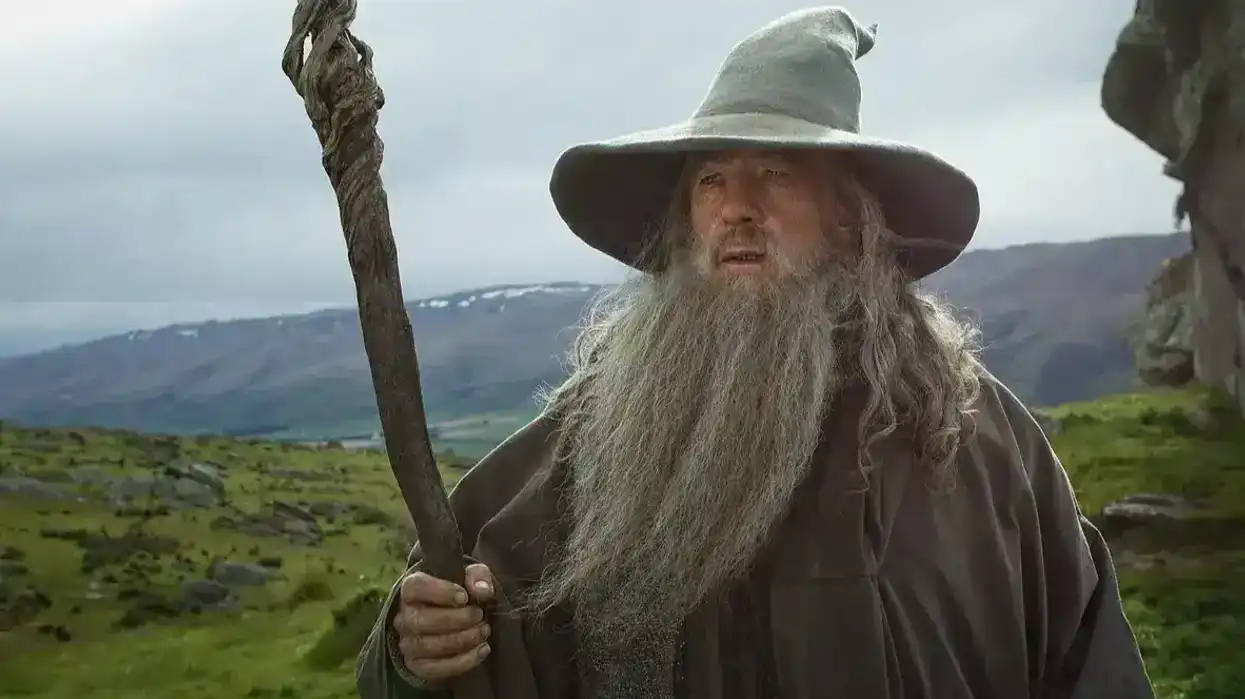
'The Lord of the Rings: The Fellowship of the Ring' (2001)
In The Lord of the Rings: The Fellowship of the Ring, a quiet exchange in the Mines of Moria carries tremendous moral weight that goes on to define the rest of the trilogy. In the dim glow of Moria’s ancient hallways, as danger looms, Frodo Baggins wishes that Bilbo had ended Gollum’s life decades earlier. In his quintessential wisdom-soaked words, Gandalf acknowledges his frustration and then delivers a powerful lesson about judgment, humility, and death.
“Many that live deserve death. And some that die deserve life. Can you give it to them? Frodo, do not be too eager to deal out death in judgment.”
Gandalf’s words don’t feel like fantasy dialogue, but rather, they feel philosophical, spiritual, and morally profound. His words cut to the heart of our role in the life and death of another being.
Why does this line say about the illusion of what is deserved? What can it teach us about writing characters with a moral code?
Let’s jump right in and explore.
The Moment Frodo Wants Gollum Dead
In The Lord of the Rings: The Fellowship of the Ring (2001), Frodo Baggins (Elijah Wood) spots Gollum (voiced and motion captured by Andy Serkis), a wretched creature following the Fellowship through the darkness. He recalls that Bilbo Baggins (Ian Holm) once had the opportunity to kill Gollum but refused to.
Frodo believes that Gollum deserved death. His reaction comes from fear and his own moral compass. However, Gandalf (Ian McKellen) looks at the matter on a much deeper level, not limited to the subject of Gollum alone. With the words, “Many that live deserve death. And some that die deserve life. Can you give it to them? Frodo, do not be too eager to deal out death in judgment,” Gandalf corrects Frodo firmly but kindly. He does not disregard Frodo’s fears because he understands and empathizes with the Hobbit for the weight he carries on his shoulders. However, he insists on not being binary in his judgment on life and death by saying, “pity stayed Bilbo’s hand.”
These words establish Gandalf’s foresight and his deeper philosophical understanding, which fuels a moral code that Frodo is only just learning about. Gollum represents the corruption of the mind. A creature that cannot be trusted because of its silent obsession and thirst for power, something it only briefly tasted and wishes for more of.
Yet, Gandalf stops Frodo by teaching him that wishing for the certainty of death for another being hardens into cruelty. In his view, even the fact that Gollum was, in fact, following the Fellowship sneakily and was far from a creature any of them should be anywhere near did not account for judgment regarding the creature’s death.
Gandalf’s line is not about whether Gollum is dangerous or not, but whether Frodo has the right to decide who should live and who should not.
Illusion Of What Is Deserved
The genius of Gandalf’s words lies in how he leverages the word “deserve”. According to the wizard, while Frodo did believe that Gollum deserved to die, what would he say about those who deserved to live but died instead? Gandalf cleverly uses Frodo’s own binary understanding of life and death to quietly shed light on the naive nature of his understanding of the concept.
Life doesn’t work by punishing evil with death and good with endless life. If it did work that way, how did the Fellowship find themselves in the position that they are in? Some wretched souls linger while the good die early. According to the wizard, this has always been the nature of life, and it should be unsurprising to one and all.
On the other hand, what one might consider to be “deserved” might not be the same for another person. The very concept of judgment and considering something as deserved is subjective and not a social norm. Gandalf teaches Frodo that it isn’t up to him to decide the life and death of another being, even if he considers them to be cruel.
According to him, “deserved” is nothing but an illusion born out of a person’s moral foundation and present situation; it does not apply to those around them simply because they wish it to.
What This Line Can Teach Writers About Moral Complexity
Here are three essential takeaways from this iconic Gandalf line.
Mercy Can Be A Strength
One of the most fascinating aspects of this Gandalf line is how it presents mercy as a strength instead of a weakness. Pity is not a flaw. Instead, it is a deliberate choice that can make a character appear stronger, wiser, and more focused on their actual intentions.
A Good Argument Remains Incisive
Gandalf’s response to Frodo is essentially a disregard for his belief system, but the way it is conveyed, it never appears to disrespect the Hobbit. Gandalf first acknowledges Frodo’s pain and then goes on to explain why his thinking is flawed and inconsistent with how life works. That makes it a great, cinematic argument without either of them losing composure.
Establishing A Moral Code
Perhaps the greatest achievement of this line lies in how it establishes Gandalf’s moral code. In his words, we can find a deep spiritual and moral awareness. He isn’t dismissive of Frodo. Instead, he advises him like a mentor or a guardian would. That’s what makes this scene so powerful.
Summing It Up
At its core, Gandalf’s line is not about ignoring evil; it is about humility in the face of life’s inherent unfairness. The minute we start to decide who decides what, we lose sight of reality. Gandalf helps Frodo establish a stronger moral core, which, as we all know, benefits him greatly as the saga progresses.
Which is your favorite Gandalf quote of all time? Tell us in the comments below.
- What Gandalf Teaches Us About Choice In ‘The Lord Of The Rings’ ›
- Gandalf’s “Fool’s Hope”: A Profound Truth in ‘The Lord of the Rings’ ›
- The Real Meaning Behind Gandalf’s “Never Late” Line in ‘The Lord Of The Rings’ ›
- Gandalf’s Final Goodbye Was One of the First Scenes Ian McKellen Shot for ‘The Lord of the Rings’ ›
- Profound Words of Wisdom & Inspiration from the World's Best Cinematographers | No Film School ›
- Ernest Hemingway’s Writing Wisdom in 13 Rules | No Film School ›
- Why We Need Both Wisdom and Ignorance To Be Filmmakers | No Film School ›
- 9 Best Movie Characters Driven by a Strict Moral Code ›
- Why Gandalf at Minas Tirith Is One of the Most Perfectly Composed Shots in The Lord of the Rings ›
- The Line from 'LOTR' That Changed How We Think About Grief ›