The Hero’s Sacrifice: Why This Trope Always Breaks Us (3 Perfect Movie Examples)
A guide to help you understand the hero’s sacrifice trope.
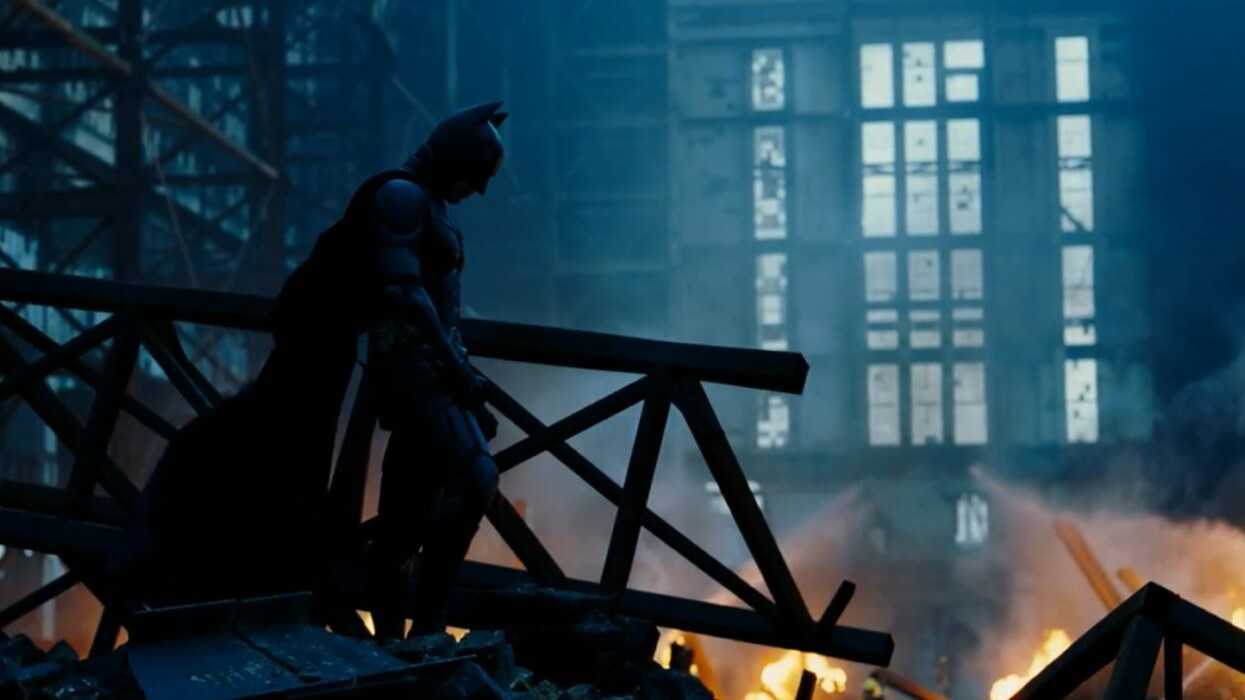
The Dark Knight (2008)
A hero’s sacrifice is considered one of the hardest-hitting storytelling devices a filmmaker could use. As true as this may be, audiences often know when a trope like this is being used to pull their heartstrings and make them feel sorry for a protagonist.
When the hero’s sacrifice is done well, it’s applauded. When it’s done poorly, it throws the audience off, making it quite a polarizing trope.
We will try to observe the power of the hero’s sacrifice trope and how this deliberate, earned tragedy can actually help your story honestly and emotionally, if you do it correctly.
Let’s jump right in.
What Is The Hero’s Sacrifice?
Simply put, the hero’s sacrifice is a moment in a film, typically towards the end, when a protagonist willingly gives up their life or something almost as monumental and irreversible. It isn’t a suicide or martyrdom for the sake of ego. It isn’t just an on-screen death of a protagonist.
A hero’s sacrifice has a larger and greater purpose for humanity, or a specific part of society that needs its hero to take the ultimate step. It is important to know that this sacrifice isn’t forced upon a protagonist, but it is a voluntary decision or a result of their efforts for the greater good.
The best ones are foreshadowed and feel emotionally and logically unavoidable. Their root cause is buried deep into the protagonist’s story in a manner that makes the sacrifice “the painful but only solution.”
A well-written hero’s sacrifice forces us to confront a harsh truth: Sometimes selflessness is the only way out.
What Makes A Hero’s Sacrifice Great?
Now that we’ve understood what the hero’s sacrifice really means, let’s take a closer look at what makes a hero’s sacrifice work and, consequently, what doesn’t.
- The audience must believe that survival would have been possible: If your protagonist, from the get-go, did not have a chance at survival, this trope won’t hold. They must willingly make a difficult choice that endangers their life.
- The hero must have something to lose: This cannot simply be a few supporting characters or material effects. The hero must have something significant to lose. It must feel as though the sacrifice is a colossal move on their part.
- Make the other solutions disappear: If a hero has to sacrifice themselves, you have to make sure that other “solutions” to the problem aren’t lying around. If they are, eliminate them and brighten the focus on your protagonist and their ultimate choice.
- The aftermath may not be a necessity, but it’s important: How does a writer express the magnitude of a hero's sacrifice without depicting the aftermath? I’d say this part must be done subtly and not overwhelmingly. The weight of sacrifice can feel heavier if you take the audience through the aftermath.
Films That Mastered The Hero’s Sacrifice
Let’s take a look at three films that used the hero’s sacrifice trope to perfection.
Gladiator (2000) - Directed by Ridley Scott
A betrayed Roman general is sold into slavery and fights as a gladiator to avenge his family and topple a corrupt, evil emperor.
Maximus, played by Russell Crowe, challenges Commodus (Joaquin Phoenix) in the Colosseum. In the background, Rome’s fate hangs in the balance. Maximus is horribly wounded before the battle because Commodus secretly attacks him to get an unfair advantage. At the end of the film, Maximus kills the emperor and, on his dying breath, restores the Republic and frees his fellow gladiators.
Maximus’s sacrifice is both physically and emotionally painful. We witness his journey from the very beginning, we’re aware of his tragic past, and we want him to succeed. His sacrifice at the end, for the sake of Rome, perfectly sums up his character, who puts the larger purpose of freedom (for all) over his own life. Scott ends the film on a tragic but dreamy note, almost making us feel as though Maximus has found peace and liberation in his own death.
Children of Men (2006) - Directed by Alfonso Cuarón
In the year 2027, where humans have been infertile for 18 years, a bureaucrat must escort the only pregnant woman to a safe zone.
Theo, played by Clive Owen, protects Kee through treacherous war zones and political uprisings to reach the Human Project boat. The film’s iconic long take captures the chaos and mayhem with utmost intricacy and artistic panache. Eventually, Theo dies smiling as the baby cries and the ship appears on the horizon.
Theo made the ultimate sacrifice, literally, for the sake of humanity. This is just as symbolic as a matter-of-fact deployment of the hero’s sacrifice trope. The aftermath, an overwhelming feeling of “humanity has a chance”, ensures that Theo’s sacrifice did not go in vain; in fact, it was probably humanity’s only shot at continuity.
The Dark Knight Rises (2012) - Directed by Christopher Nolan
In the final part of Christopher Nolan’s popular Dark Knight trilogy, a broken Bruce Wayne returns as Batman to stop Bane from destroying Gotham with a fusion bomb.
You may wonder why I’ve taken this film as an example of the hero’s sacrifice, and you’re right to question that. Let me explain myself. Superhero films are widely adored and discussed. It puts tremendous pressure on filmmakers to create something refreshing while also adhering to audience expectations.
The Dark Knight Rises dealt with an even greater pressure: finishing off a beloved trilogy. Nolan chose the hero’s sacrifice to do this. Batman (Christian Bale) flies the bomb out over the ocean and seemingly sacrifices himself to save Gotham’s people. Gotham holds a funeral, and the legend of Batman is set in stone. Except Batman isn’t actually dead.
Bruce Wayne chooses a symbolic death, and the legend of Batman lives on. Nolan makes a political statement with Bale’s line earlier in the film, “A hero can be anyone.” This, coupled with Batman’s symbolic death, makes The Dark Knight Rises a fabulous example of the hero’s sacrifice. Nolan created a jaw-dropping superhero trilogy only to end it on a simplistic and positive note, all built on the foundations of a hero’s sacrifice.
Final Thoughts
The hero’s sacrifice trope focuses on a single, primal question: Is your protagonist going to give up his own life for the sake of others? Hope isn’t always about a happy ending. Sometimes, it’s bittersweet, and we lose our heroes in the process.
What are some of your favorite films that used the hero’s sacrifice trope?