9 Hollywood Characters Who Were Originally Written to Die (And Why Studios Changed Course)
The sun shines, even for those who were once dead on the page and never meant to survive.
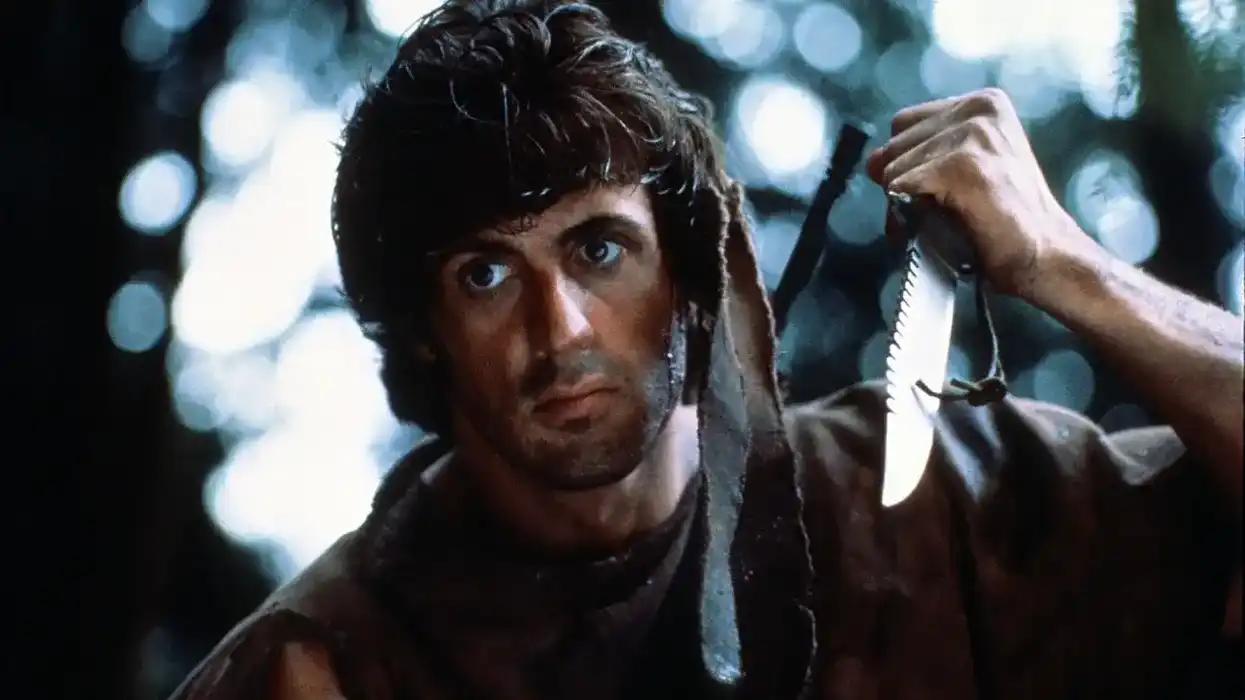
First Blood (1982)
Some characters survive the story by fighting through it, and others survive because the director takes a U-turn on their deaths.
Why, you ask? There are a plethora of reasons. Maybe the character begins to feel more important toward the end, or the preview screenings didn’t strike a chord with the audience, and whatnot. But we are always glad to see those characters live on, and some of them even become the most beloved.
Such survivors in movies remind us that major plot changes can happen at any point in making a movie, and for all the good reasons.
Now, let’s look at some characters who were supposed to die, but didn’t.
9 Most Characters Who Survived the Story and Shouldn't Have
1. Ian Malcolm - Jurassic Park (1993)
Jeff Goldblum’s charisma mixed with Ian Malcolm so well in Jurassic Park that the character’s fate had to be changed, who was to die in the original novel. Moreover, by that time, Steven Spielberg had already killed enough characters in his movies to know which ones to keep alive for the audience’s pleasure.
So, when the time came, Ian Malcolm survived a T. rex attack and made it to the history books as one of the best supporting characters. The leather jacket jokester was so popular among fans at the time that he was revived in the sequel, The Lost World: Jurassic Park (1997).
2. Will Rodman - Rise of the Planet of the Apes (2011)
Originally, director Rupert Wyatt had shot the scene of Will Rodman (James Franco) dying in Caesar’s arms before he vanishes in the Muir Woods. But ultimately, the death scene was scrapped, and Will lived with a bittersweet ending.
Since James Franco’s Dr. Will Rodman was the epicenter of the emotional exchange between him and Caesar (Andy Serkis), their relationship helped ground Caesar’s character and the beginning of the ape revolution. Will Rodman’s survival was to honor that unorthodox friendship, which also left anticipatory space for possible human-ape reconciliation in the sequels to come.
3. John Rambo - First Blood (1982)
The source inspiration for the movie was a novel by David Morrell, in which the protagonist commits suicide, leading to a bleak yet appropriate ending. But while adapting it, Sylvester Stallone knew that John Rambo could be a bankable character and turned him into a Hollywood legend from the originally written tragic hero.
Since he was also the writer of the screenplay, he managed to pull every creative to his side and altered the final act. The movie version has John Rambo bearing his soul to Colonel Trautman (Richard Crenna) about his demons before giving in to the authorities.
4. Happy Hogan - Iron Man 3 (2013)
After Aldrich Killian (Guy Pearce) met Pepper (Gwyneth Paltrow), Happy (Jon Favreau) was supposed to die in a confrontation with Aldrich’s henchmen during his investigation of Aldrich’s fishy business. That’s what some of the storyboards for Iron Man 3, created by storyboard artist Dan Sweetman, show.
Instead, Marvel and director Shane Black decided to put Happy in a coma, and he starts to recover by the climax. But I can’t help but imagine how Happy’s death could have changed Tony Stark’s (Robert Downey Jr.) demeanor in the movie and the forthcoming Marvel movies.
5. Rocky Balboa - Rocky V (1990)
Even though Rocky V fell very short of impressing fans, thank God they didn’t let our beloved Italian boxer Rocky (Sylvester Stallone) die in it.
The original script had Rocky succumb to his injuries in the arms of Adrian (Talia Shire), after a street brawl with his own protege Tommy Gunn (Tommy Morrison). Stallone chose against the idea and rewrote the ending. After all, Rocky dying at the end would have made matters worse for the fifth installment, as it was already not the brightest of them all.
6. Clarence Worley - True Romance (1993)
Quentin Tarantino gave his script to Tony Scott to direct it. In Tarantino’s version, Clarence Worley (Christian Slater) dies in the final shootout, and Alabama (Patricia Arquette) ends up alone. But Tony Scott made changes for the oddball hero, and Clarence survives the big climax shootout. According to Tony, a somewhat happy climax was necessary for such a hardcore romantic and violent film to work. Clarence's survival highlights the “love story” aspect to counter the movie’s grittiness.
Reluctant at first, Quentin came around to Tony’s vision as it provides a more satisfying ending to audiences who really fell in love with Alabama (Patricia Arquette) and Clarence.
7. Ellen Ripley - Alien (1979)
Written by the British author David A. McIntee, the book Beautiful Monsters revealed that Ridley Scott wanted Ellen Ripley’s fate sealed by the very end of the movie — he wanted a xenomorph to chop Ripley’s head off. But this idea seemed way darker to the producers, as the science-fiction horror movie was already bleak enough.
Ultimately, Ripley survived, and the xenomorph perished. Moreover, Ellen Ripley went on to feature in several sequels of the acclaimed Alien franchise.
8. Deputy Dewey Riley - Scream (1996)
In the original Scream screenplay written by Kevin Williamson, Deputy Dewey dies after being stabbed to death. But when director Wes Craven cast David Arquette for the role, the character became younger, livelier, and likable.
Foreseeing that Deputy Dewey would connect with audiences, Wes Craven decided to shoot two versions of the ending — one with Dewey dying and one without. When shown in the test screenings, the audience rejected the death scene, so Deputy Dewey lived to be stabbed for a ridiculous number of times in the franchise.
9. Han Solo - Star Wars: Return of the Jedi (1983)
More often than not, the most popular way to raise the stakes in a movie is to kill off an important character. Because it heightens the protagonist’s emotional drive to achieve the goal by integrating the weight of revenge.
While developing the script, Lawrence Kasdan wanted Han’s character to be dead in the middle of the movie to raise the stakes. But George Lucas wasn’t a fan of this idea. Looking at his emotional impact on the audience, killing Han would have given tremors to the franchise’s fans. Plus, being a major character, Han Solo was also a merchandising blaster and a star character in the entire saga.
Moreover, Han appeared in the subsequent sequels — in Star Wars: The Force Awakens to steal the Millennium Falcon (ship) and Star Wars: The Rise of Skywalker for a brief cameo.
Conclusion
Changing a character during the making of a movie can reshape a movie’s future. These examples clearly show that. From casting choices to private test screenings to the studio’s notes, anything can influence these decisions. One thing is for sure: these calculated decisions only strengthen the film in the polished version.
For which characters in the above list are you most relieved?
Let us know in the comments.
- How to Write Characters Who Sound Nothing Like You ›
- What Makes a Character Sympathetic? This Video Essay from Screentakes Explains ›
- How to Create Three-Dimensional Characters From a One-Dimensional Character ›
- 11 Character Archetypes in Film Noir Movies ›
- How Do Pro Writers Create Characters? ›
- 'Frivolous and Dumb' Techniques for Writing Good Characters ›