The Beast Within: 9 Horror Movies Where the Monster is Actually Grief
These horror movies slash you in half with their unresolved grief.
'Midsommar' (2019)
Yes, gore is fine, but the most frightening movies creep under your skin with their underlying themes of grief, trauma, and loss. A handful of horror subgenres, including elevated horror, tackle these human emotions in devastating fashion, where the supernatural becomes an allegory for grief.
The way filmmakers unpack these painful emotions in such films makes them relatable to us. While it’s often the case of losing your loved ones in movies, the way one deals with grief varies from person to person. Here is a list of such films where grief-stricken characters are visually represented through evil, supernatural metaphors.
9 Best Horror Movies Where Grief is the Monster
1. The Babadook (2014)
Jennifer Kent’s Australian horror film The Babadook tells the story of a widowed mother, Amelia (Essie Davis), and how she deals with the violent death of her husband as her troubled son, Samuel (Noah Wiseman), dreams of a monster coming to kill them both.
Throughout the movie, Amelia tries and fails to process her grief to take care of her disabled son. These feelings manifest into the monster Babadook, a children’s book monster in the movie. With minimal jump scares, Babadook gets you with its dark, broody atmosphere, which lets you get a peek into the widow’s mind as she deals with the psychological pressure alone.
2. Hereditary (2018)
Martin Scorsese called Ari Aster’s intense horror Hereditary a remarkable movie. The film begins with the death of Annie’s (Toni Collette) mother, and her lack of grief slowly turns into guilt due to her resentment toward her mother. Later, Annie is forced to see her daughter, Charlie’s (Milly Shapiro), headless body inside the car.
The performances of every actor involved are amazing. Hereditary sucks you into its world and leaves you breathless at times as you see people cope with grief. Once it ends after a disturbingly long sequence, you’ll be grateful for your own family (provided they are not cursed, as shown in the film).
3. The Sixth Sense (1999)
On the surface, The Sixth Sense might seem about a kid struggling with people hanging around as spirits and not departing. But the central theme of M. Night Shyamalan’s supernatural horror masterpiece is longing and the pain of unfinished goodbyes.
The film’s ghosts are the embodiment of unresolved guilt and trauma, who died violently as the living deny their suffering. Even Malcolm, played by Bruce Willis, is a walking, talking manifestation of denial of his own death.
4. Talk to Me (2022)
Talk to Me is the breakout Australian horror film from Danny and Michael Philippou, which follows Mia (Sophie Wilde) as she becomes involved in a bizarre occult game in which GenZs summon spirits by using a possessed model hand.
This independent debut horror movie, later distributed by A24, is genuinely creepy and features nerve-wracking visuals. The film cleverly draws parallels with the party game as a metaphor for drug use, and how trauma and grief can trigger addictive behaviors in teenagers.
5. The Others (2001)
During World War II, Grace (Nicole Kidman) moves with her children to a new house as she awaits news of her missing husband. Little does she realize that her new house is haunted, as a series of supernatural events follow her family around the house.
Alejandro Amenábar’s The Others is a great example of Gothic horror that explores the themes of life and death in a spooky mansion. The central theme of the movie is about dealing with the trauma and grief of losing a family member, which is way darker than you think, packed with an unexpected twist at the end.
6. Midsommar (2019)
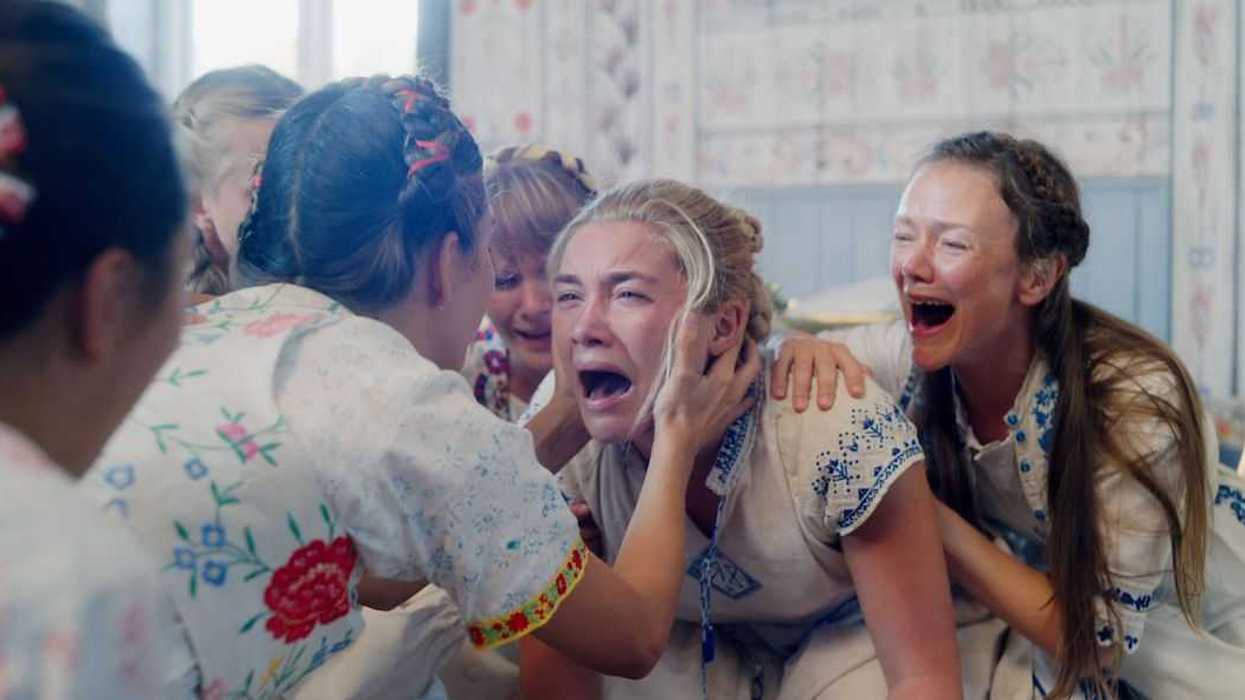
Yet another horror masterpiece from Ari Aster, Midsommar is a folk-horror film starring Florence Pugh as Dani, who copes with grief after her sister’s murder-suicide. To make her feel good, her emotionally distant boyfriend, Christian (Jack Reynor), reluctantly invites her on a trip to Hälsingland, Sweden, with his friends, where a series of horrific events unfold.
During the vacation, the Harga cult feeds on her emotional destruction. At one point, Dani witnesses Christian cheating on her, and the women of the Harga community come to mimic her cries in a hauntingly visceral scene. The film ends with Dani finding refuge for her grief with her newfound community.
7. The Night House (2020)
After the unexpected suicide of her husband, grieving Beth (Rebecca Hall) tries to live her life in a lakeside house that her husband built for her. Soon, she is haunted by a presence called “Nothing,” as she investigates her husband’s secret life.
The Night House is a creepy, tension-filled haunted-house story that gets darker the more you dive in. Rebecca Hall’s performance as a grieving woman keeps you invested in the mystery. Moreover, the film asks viewers an unnerving question: What’s more terrifying? To lose a loved one or to discover that you’re safer with them gone? Both are terrible realizations.
8. Relic (2020)
Director Natalie Erika James’s horror Relic centers on how a mother and daughter cope with their elderly mother, Edna’s (Robyn Nevin), dementia. However, her condition becomes increasingly erratic as a black mold seems to be taking over the house. It destroys Edna’s body and serves as a metaphor for dementia.
Relic is a great example of elevated horror. It’s an exceptionally well-written, realistic story of dementia and abandonment. It is not a movie of big jump scares; instead, it slowly gets under your skin with its atmospheric dread. Emily Mortimer, Robyn Nevin, and Bella Heathcote all deliver exceptional performances.
9. The Descent (2005)
After her husband and daughter tragically pass away in a car accident, Sarah (Shauna Macdonald), the only survivor, embarks on an adventure with her friends to distract herself from her grief. Her friend, Juno (Natalie Mendoza), leads them into an unknown cave, which is plagued by creatures called “crawlers,” and kills all the adventure seekers one by one.
For Sarah, this traumatic experience becomes a journey to get over her grief with creatures and the cave posing as metaphors. She also learns about her friend’s relationship with her deceased husband. In the end, Sarah is the only survivor, and getting out of the cave means she is finally able to accept her husband’s and daughter’s deaths.
Summing It Up
Lately, the surge of psychological horror movies proves that the most effective way of terrifying the audience is through the manifestation of suppressed trauma or unresolved human emotions like grief.
Let us know your thoughts in the comments.
- What Are The Highest-Grossing Horror Movies of All Time? ›
- The 10 Funniest Horror Comedy Movies You Need to Watch This Year ›
- Defining the Horror Genre in Movies and TV | No Film School ›
- The Ultimate Guide to Horror Subgenres ›
- What Is Cozy Horror? The Subgenre Where Creepy Meets Comfort ›
- 17 Best International Horror Films for True Genre Fans ›