The 13 Best Westerns of the ‘90s: Ranked
From Oscar-winning epics to cult classics, we count down the finest entries in the ‘90s Western revival.
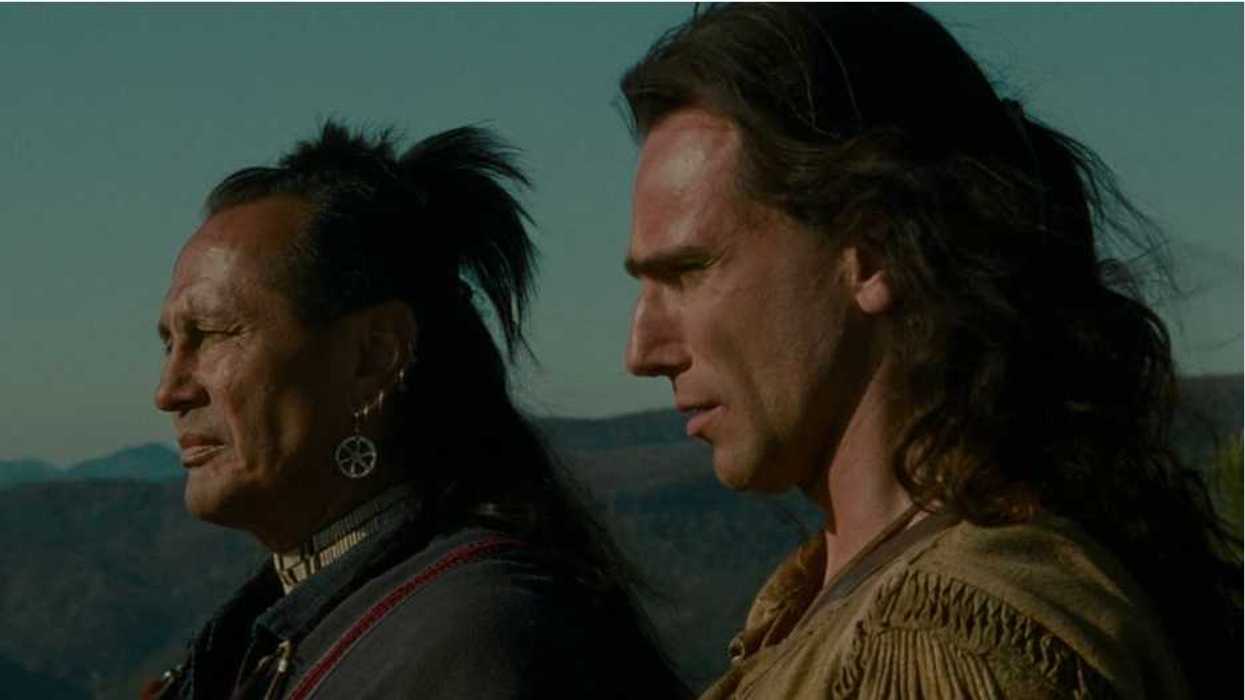
‘The Last of the Mohicans’ (1992)
Westerns dominated Hollywood during their, and also Hollywood’s, Golden period. As time moved on, so did the audience and their sensibilities. The “white hat” hero of Westerns started to become obsolete in the era of new-age antiheroes. But Westerns refused to vanish.
The ‘80s and the ‘90s are considered the period of revival for Westerns. Technically, the ‘80s witnessed the continued decline of the genre, which was further exacerbated by the new wave of action, sci-fi, and cyberpunk movies. It wasn’t a great decade for Westerns. The ‘90s, however, saw a significant resurgence.
The movies that came out during this decade were marked by gritty realism, moral ambiguity, and prestige. These movies noticeably moved away from the “white hat vs. black hat” dynamic. The focus instead centered on what life was like for the outcasts, dreamers, and tired legends of the old frontier.
The ‘90s audience had an evolved taste. They wanted a sprawling historical epic as much as they wanted a weird, indie trip through the desert. Whatever it was, the ‘90s delivered.
These are the 13 Westerns that we think aptly represent the revivalist spirit of that interesting decade.
13 Top-Rated Westerns From the 1990s
13. Maverick (1994)
Written by: William Goldman | Directed by: Richard Donner
Bret Maverick (Mel Gibson) is a professional gambler and needs an extra $3,000 to enter a high-stakes poker tournament on a luxury paddlewheel steamer. He forms an awkward alliance with a con artist, Annabelle Bransford (Jodie Foster), and has to deal with a man in pursuit of him, Zane Cooper (James Garner).
If the poignant somberness is what a typical Western feels like, then Maverick walks a completely different path. Unlike the darkest entries that will follow, this one leans into charm and wit, but without making a mockery of the genre. Its bright, saturated visual palette and sharp comedic editing maintain high energy. The film’s comedy often comes through the characters talking directly to the audience. Overall, its fast-paced screenplay treats the Old West as a vibrant, theatrical playground for tricksters.
12. The Ballad of Little Jo (1993)
Written by: Maggie Greenwald | Directed by: Maggie Greenwald
The story takes place in the 19th century. Josephine Monaghan (Suzy Amis) has an illegitimate child and is thrown out of her house. In order to survive the rugged Old West, she dresses as a man, takes up a new identity, “Little Jo,” and works as a sheep herder, hiding her secret for decades.
The premise makes it clear that it’s not your regular gunslinging Western. This one is a quiet, intense look at gender and survival. Also, it must be noted that Greenwald’s minimalist style brings out the isolation of the landscape. The camera work is peculiarly focused on Josephine’s grueling physical work to make it appear as high-stakes as bank robbery.
11. Geronimo: An American Legend (1993)
Written by: John Milius, Larry Gross | Directed by: Walter Hill
After the U.S. government goes back on its promise and forces the Apache onto a barren reservation, Geronimo (Wes Studi) and his band of warriors rise up against 5000 U.S. cavalry soldiers.
Respecting the movie’s historical background, Hill avoids making it into an out-and-out action flick and instead gives it a somber, respectful tone. The film should be noted for two main reasons: its stunning wide-angle shots and its humanizing a historical figure often turned into a caricature. Ry Cooder’s soundtrack provides a haunting, authentic layer to the visual storytelling.
10. City Slickers (1991)
Written by: Lowell Ganz, Babaloo Mandel | Directed by: Ron Underwood
- YouTube
In this Western comedy, three middle-aged city mice, Mitch (Billy Crystal), Phil (Daniel Stern), and Ed (Bruno Kirby), escape their boring urban lives and sign up for a grueling two-week cattle drive in the Southwest, under the mentorship of Curly (Jack Palance).
The film’s unique selling point is that it mocks the Western tropes, while at the same time paying homage to them. Palance’s performance brought the film the quaint, old-school gravitas. Fast pacing and sharp dialogue aid in bridging the gap between the Old West vibe and the modern urban anxiety.
9. Back to the Future Part III (1990)
Written by: Bob Gale | Directed by: Robert Zemeckis
Marty McFly (Michael J. Fox) travels to 1885, where Doc Brown (Christopher Lloyd) is trapped and working as a blacksmith. Once there, they try to figure out how to fix their DeLorean while dealing with the outlaw Buford “Mad Dog” Tannen (Thomas F. Wilson).
Aside from its signature comedy, the film is also noted for perfectly blending the 19th-century aesthetics with the 1980s blockbuster energy. Its train climax is a production feat in itself. We think it’s one of the best ‘90s Westerns because of its intuitive production design and its playful homage to iconic Western set pieces, such as train robberies.
8. Ride with the Devil (1999)
Written by: James Schamus | Directed by: Ang Lee
Set during the Civil War, Jake Roedel (Toby Maguire) and Jack Bull Chiles (Skeet Ulrich) join the pro-Confederate Missouri Bushwhackers to make their way through violence, shifting loyalties, and personal moral dilemmas.
Stunning landscapes and poetic tone are the elemental mainstays of Ang Lee's features, and that’s true here as well. It’s actually amazing how he brings that romantic edge to the historical violence of the border wars. It also boasts dense, period-accurate dialogue and an insightful portrayal of the psychological toll of conflict.
7. Legends of the Fall (1994)
Written by: Susan Shilliday, William D. Wittliff | Directed by: Edward Zwick
Set in the Montana wilderness of the early 20th century, the film follows the Ludlow family, led by Colonel William Ludlow (Anthony Hopkins) and his three sons. While WWI looms, their lives are changed forever when the youngest son returns with a fiancée, Susannah (Julia Ormond).
The film’s strong points are visual spectacle and its emotional weight. Zwick’s use of golden-hour photography adds an ethereal charm to the already sweeping landscapes of Montana, almost making the setting a character in itself. Another thing to note is its use of an orchestral score to elevate the personal tragedies. That’s a typical feature of an epic melodrama.
6. Dead Man (1995)
Written by: Jim Jarmusch | Directed by: Jim Jarmusch
A meek accountant, William Blake (Johnny Depp), kills a man in self-defense and flees the town. Once in the woods, he encounters a mysterious Native American, Nobody (Gary Farmer), who thinks Blake is a visionary poet, having confused him with the namesake English poet.
This Acid Western stands out in this list because of its bold, black-and-white visuals and Neil Young’s improvised electric guitar score. Jim Jarmusch seems to have avoided every standard Western trope and has instead leaned into a surreal, psychedelic experience. The movie is actually a witty and dreamlike critique of American expansion, which perhaps stands in contrast to the genre’s original ideals.
5. Tombstone (1993)
Written by: Kevin Jarre | Directed by: George P. Cosmatos
A retired lawman, Wyatt Earp (Kurt Russell), moves to a boomtown of Tombstone to lead a quieter life, but is pulled into action when a violent gang of outlaws called the “Cowboys” starts terrorizing the townsfolk.
This is perhaps the most “quotable” film on this list. The film’s fast pacing and stylized performances breathe life into it. Its vibrant costumes and detailed set design create a version of the Old West that feels both historical and larger than life.
4. The Last of the Mohicans (1992)
Written by: John Milius, Michael Mann | Directed by: Michael Mann
Set in 1757, during the French and Indian War, Hawkeye (Daniel Day-Lewis), a white man adopted into the Mohican family, fights to protect the daughter of a British Colonel. The film follows as they navigate the dangerous wilderness while evading the vengeful Magua (Wes Studi).
Mann’s signature visual intensity is present in this 18th-century frontier epic as well. The film is renowned for (in addition to Day-Lewis’ performance) its incredible practical effects and visceral action sequences. This is one of the films that uses natural lighting, and coupled with its iconic, driving soundtrack, the film creates an immersive experience that feels primal but also strangely sophisticated.
3. Lone Star (1996)
Written by: John Sayles | Directed by: John Sayles
In a Texas border town, Sheriff Sam Deeds (Chris Cooper) investigates a murder after a skeleton is found buried in the desert. His investigation hints that the skeleton might be of his corrupt predecessor, and the murderer might be his own legendary father.
This is a quintessential modern Western in the sense that it shifts the genre’s timeline and themes into the present while keeping the soul of the frontier alive. It uses the desert setting to explore memory and borders, as in, the movie suggests that the desert doesn’t just hold sand; it holds the secrets and the complicated history of everyone who has lived there.
2. Dances with Wolves (1990)
Written by: Michael Blake | Directed by: Kevin Costner
During the Civil War, a Union soldier, John Dunbar (Kevin Costner), is posted on a remote Western frontier. Once there, he forges a profound bond with a local Lakota Sioux tribe, eventually becoming one of them. The danger lurks as the encroaching U.S. army threatens their peaceful way of life.
In spite of its 3-hour running time, the movie was successful and proved that Westerns could give good returns at the box office even in the ‘90s. The movie’s scope is breathtaking, but what truly hits the spot is its respectful, and more importantly, subtitled, depiction of Indigenous life.
1. Unforgiven (1992)
Written by: David Webb Peoples | Directed by: Clint Eastwood
In 1880, William Munny (Clint Eastwood), a hog farmer and a retired, repentant gunslinger, reluctantly takes a bounty-hunting job with two other companions to avenge an abused prostitute. This decision forces him to confront his violent past and relive the brutal reality of the West.
This movie grabs the top spot in many lists: the greatest Western/non-Western by Eastwood, the greatest Western of the ‘90s, and one of the greatest Westerns of all time. Eastwood masterfully gives a cold, unsentimental look at frontier life and the violence that defined it. Unlike the classic Westerns, this one has morally ambiguous protagonists, and Eastwood makes them stand out by using dark, shadowy lighting. The “coolness,” thus far associated with cowboys and outlaws, is stripped away here, and instead, the film focuses on what a messy, soul-crushing business this is. The film was deservedly given four Oscars, including Best Picture, cementing its status as the decade’s benchmark.
- 10 Coldest “Before I Kill You” Lines in Hollywood Cinema ›
- The ‘Dirty Harry’ Line That Made Clint Eastwood Untouchable ›
- The Line That Made Clint Eastwood a Legend ›
- 12 Lines That Made Clint Eastwood a Legend ›
- 14 Iconic Mexican Standoffs in Cinema ›
- Story of the Rise, Fall & Wild Comeback of the Western Genre ›
- 10 Best Westerns of the 1970s: Ranked ›
- 15 Western Movie Tropes: The DNA That Defines the Genre ›
- ‘Dances with Wolves’: The Bet Nobody Thought Would Pay Off ›
- Tombstone vs. Wyatt Earp: Two Westerns, One Legendary Showdown ›
- 7 Best Spaghetti Westerns, Ranked ›
- The Meaning Behind “We Don’t Need No Stinking Badges” in The Treasure of the Sierra Madre ›
- The 6 Greatest Villains in Western Movie History ›
- 10 Essential Movies of 1994 ›
- How Westerns Influenced Modern Visual Storytelling | No Film School ›
- The 10 Westerns Every Filmmaker Should Watch | No Film School ›
- The Most Underrated Westerns Ever Made | No Film School ›
- Film Quote of the Day: The 1957 Glenn Ford Western Line About Time That Still Hits Hard | No Film School ›