The Power of 3 Words: ‘I Reckon So’ in ‘The Outlaw Josey Wales’
Josey Wales’ constant verbal affirmation, “I reckon so,” is a declaration of conviction that anchors the film’s portrait of rugged Western heroism.
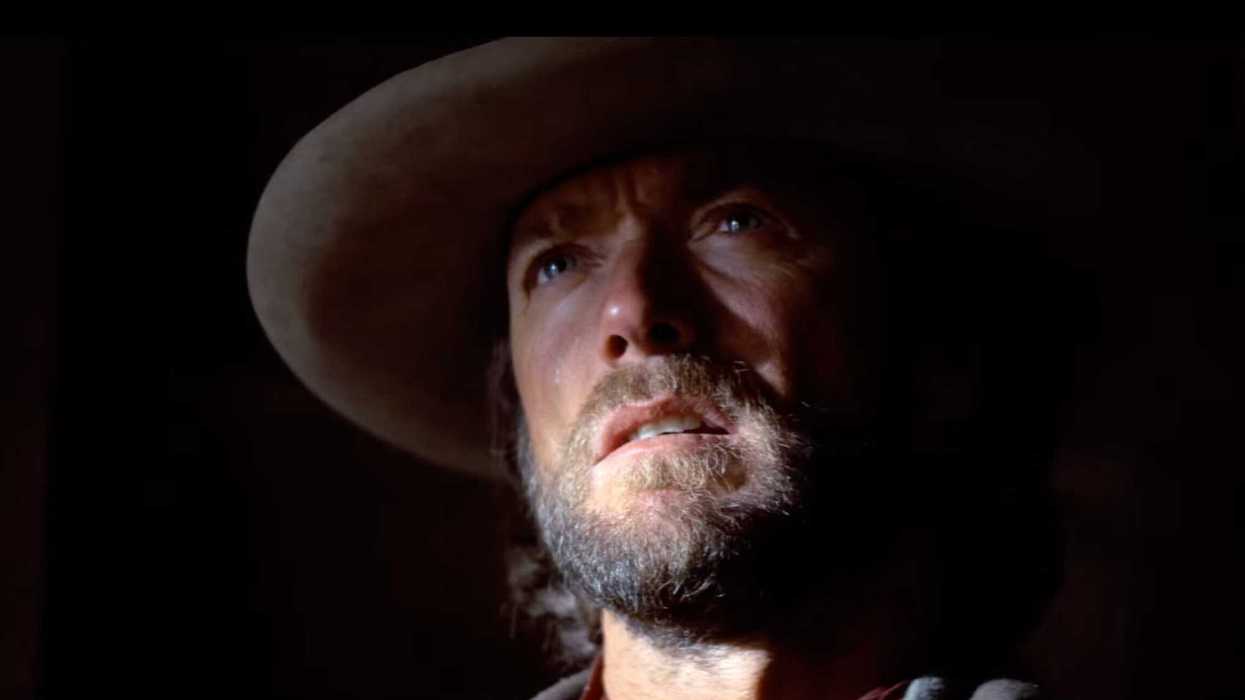
‘The Outlaw Josey Wales’ (1976)
Clint Eastwood’s Western hero has never been verbose. He depends more on his agency than his words. And when he has to use words, they are minimal, but loaded and accurately pointed—just like his guns. That resolute image has become synonymous with the image of the Western hero.
That representative trait is most evident in The Outlaw Josey Wales (1976), where he navigates the world of bullets and betrayal with a very specific, seemingly casual but brimming with resolve and spirit, verbal tic: “I reckon so.”
If you think that this is the kind of low-effort and high-impact response you reflexively expect from the ultimate Frontier man, then Josey Wales is the face of that expectation. And quite rightfully so, because it moors his character in a way that at the same time appears both grounded and cool.
Whenever Josey Wales utters these words, he looks like a man who has seen stuff. Someone who cannot be taken by surprise. He might as well be shrugging a shoulder while aiming a Colt Army revolver. What’s more, he repeats the phrase often to build a rhythm that defines the film’s pacing and his own mental state.
Let’s call Josey Wales the brand of steady resolve: Western edition.
- YouTube www.youtube.com
The Power of Minimalist Affirmation
Communicating Without the Clutter
Josey Wales (Clint Eastwood) doesn’t “chat.” He will never be your cuddly, hi-fiving buddy. So, when he replies, “I reckon so,” take it as his version of a conversational endcap. No further conversation is necessary.
Now, you might think, what’s the big deal in that? If anything, he sounds like a jerk, full of himself. Probably takes himself too seriously. Well, he does, but not in the way you might think. He isn’t narcissistic or arrogant (at least not in the worldly sense), but he is serious about his survival, his purpose, and the protection of his adopted family. He is stoic, and he believes in action. That will sound like a jerk if you are the villain.
The point is, to have that definitive and conclusive confidence and conviction is possible only if you are entirely comfortable with your decisions. He is. And that’s why his lack of verbal fluff makes him look formidable to his enemies, and at the same time, reliable to his mismatched band of followers.
The Efficiency of a Frontier Mindset
Just like a jungle is no place for sophistication and deep conversation, the harsh environment of the “wild” Old West is no place for wasting breath. And Josey Wales is the last person who will permit himself that luxury. His reactions and emotions are stripped to the bare minimum. Consider them his version of the Gen Z lingo, except less "stressy" and more "solulu" than "delulu."
“I reckon so” is a multipurpose phrase and very adaptable. Wales may use it to express his “total agreement” as well as grim acceptance of something not very nice—the same words, the same tone, the same stoic face. It famously cuts through the drama in the post-Civil War landscape.
Also, if you can see that he (or basically any character played by Eastwood) is an enigma, then consider this habit of curt responses as a major contributing factor to it. This is how he allows his actions to speak. And since he himself speaks very little and only occasionally, his actions really have a resounding effect.
The Western Hero Recalibrated
Conviction Without Speeches
It’s not uncommon to see classic Western heroes declaring their principles, beliefs, and loyalties, even philosophies, out loud. Bret Maverick (James Garner) is a smooth-talking cowpoke, Butch Cassidy (Paul Newman) is a clever, talkative leader, and Gus McCrae (Robert Duvall) is a downright philosopher. James Stewart, especially in the later stages of his career, played complex Western leads who were highly introspective and verbal.
Josey Wales is the polar opposite. Whatever these above-mentioned heroes say, Josey Wales condenses all their speeches into “I reckon so.” Occasionally, “I reckon not” or “I reckon that’s true.” The point is that he replaces grand statements with quiet affirmations. This minimalist approach is indicative of internal certainty. Instead of arguing his moral code, he simply chooses to live by it. This phrase is only to confirm he has made up his mind; take it or leave it.
Control in a Violent Landscape
The world of The Outlaw Josey Wales, much like most other Westerns, is violent and driven by revenge. There is a lot of yo-yoing of loyalties and settlements. And against this chaos, Josey’s “I reckon so” serves as predictability. He doesn’t change the tone much, but his (assured) control keeps his character grounded. And, most important of all, this characteristic separates him from the “angry” antagonists who are keen on talking first and thinking later.
Conclusion
Going against the spirit of “war cries,” Josey Wales proves that you don’t need it to lead or to win a war. His simple, repetitive catchphrase signifies that a character is built through consistency rather than complexity. It’s a very unique brand of American grit, and that’s why it has a prominent place in the audience’s collective psyche.
“I reckon so” is a decisive and authoritative heartbeat of a hero who is remarkably self-aware and also someone who has found peace in the middle of a fight.
- The ‘Dirty Harry’ Line That Made Clint Eastwood Untouchable ›
- The Line That Made Clint Eastwood a Legend ›
- The Coldest Line Clint Eastwood Ever Delivered in ‘A Fistful of Dollars’ ›
- 12 Lines That Made Clint Eastwood a Legend ›
- 14 Iconic Mexican Standoffs in Cinema ›
- Story of the Rise, Fall & Wild Comeback of the Western Genre ›
- 10 Best Westerns of the 1970s: Ranked ›