“How Drunk is Drunk Enough?”: How One Line in 'The Legend of Bagger Vance' Turns Charm Into Tragedy
The deceptively simple line becomes a lens into Junuh’s psyche, exposing vulnerability beneath charm, and the thin line between confidence and self-destruction.
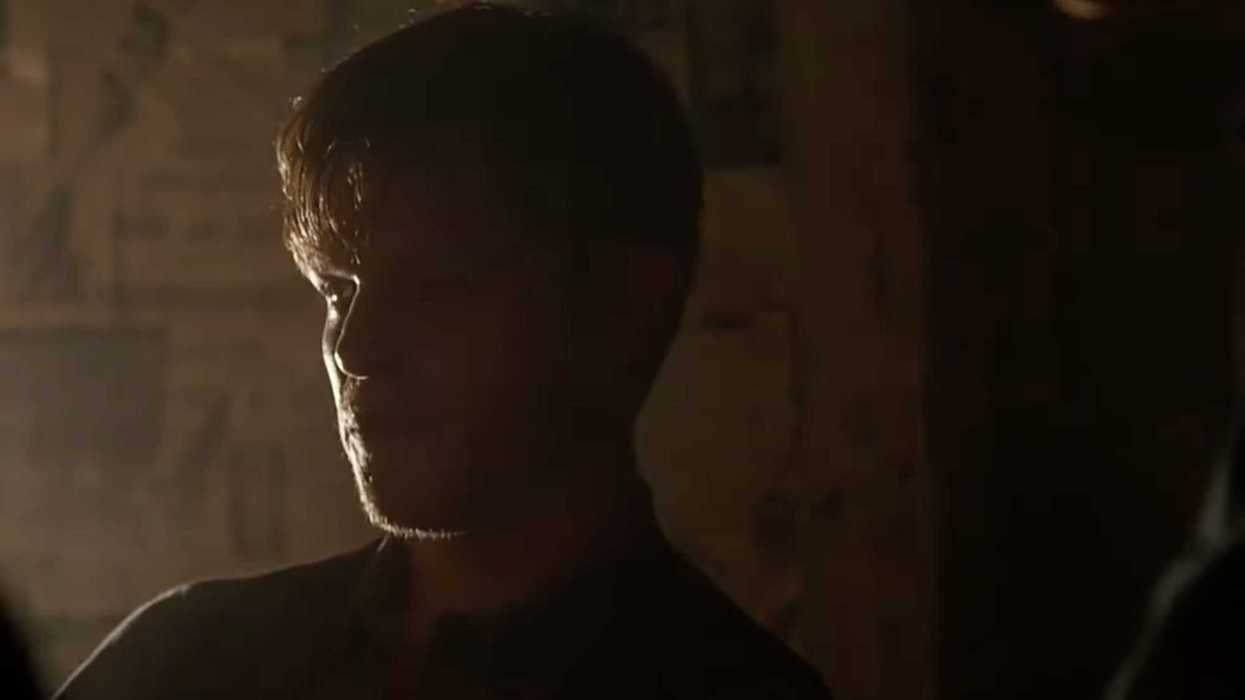
‘The Legend of Bagger Vance’ (2000)
The Legend of Bagger Vance (2000) wasn’t a successful film. It garnered more criticism than appreciation, especially for its slow pace, formulaic plot, and racial stereotypes. Regardless, there were moments when the film would strike a chord.
One such moment was this scene. Here we see a man who is “cool under pressure” until he isn’t. A man grappling with a ghost of his former self while hiding behind a polished veneer of Southern charm and a glass of whiskey.
When a kid catches him in a moment of indulgence and poses a seemingly simple but very painful question, the man doesn’t hide behind excuses. He leans into the awkwardness and turns the child’s question into a philosophical unraveling that, at first, seems funny but turns out to be deeply tragic.
The Scene
Rannulph Junuh (Matt Damon) is the darling of Savannah, Georgia. He is from a wealthy family, has a beautiful girlfriend, is a World War I veteran, and most of all, he is a gifted golfer. However, he is holding a terrible pain: During the war, his entire company was killed, and he was the only one to survive. The weight of this grief has been pushing him down ever since, and he has embraced alcohol to deal with it.
Junuh’s girlfriend, Adele (Charlize Theron), organizes a two-day exhibition match at her family’s golf resort between Bobby Jones and Walter Hagen, the best golfers of the time. A young boy, Hardy Greaves (J. Michael Moncrief), thinks there must be a third, local contender to incite local interest. He idolizes Junuh, so he decides to ask him.
In this scene, when Hardy comes to meet Junuh, he sees that Junuh is playing poker and drinking alcohol with his buddies. When Junuh asks him the purpose of his visit, Hardy suggests that he will come by later when Junuh isn’t so “busy.” Junuh understands that he means to say “drunk.” He jokingly says that he is neither busy nor drunk and that there isn’t enough whiskey in Georgia to get him drunk enough. Hardy asks, “How drunk is drunk enough?”
Understanding the depth of this question, Junuh invites him to the table and explains how alcohol works. He says that alcohol works by killing brain cells—first, the cells of sadness, then the “quiet” cells, then the “stupid” cells, and finally the “memory” cells. Then he insinuates that alcohol doesn’t always succeed at killing the memory cells.
Breaking Down the Moment
The Question: “How Drunk is Drunk Enough?”
When Hardy poses the rhetoric, it sounds like a regular comment (but, frankly, a bit heavy in a child’s mouth); however, it’s anything but a casual comment. It’s loaded. Here, the word “drunk” can be understood as “downfall.” Hardy looks up to Junuh. So, when he sees his idol wasting himself in a glass of booze, he feels the ache. Plus, when Junuh gloats about his huge capacity for handling alcohol (“There isn’t enough whiskey in Georgia to get me drunk enough”), Hardy’s pain multiplies. While he wants to see his idol thrive and conquer, he is instead choosing to drown himself in a “bad thing.” So this question is loaded with heartache. Exactly how far would you let yourself fall? How drunk is drunk enough?
Humor as a Survival Mechanism
Junuh takes up on Hardy’s rhetoric. He explains it to him using a funny image of different kinds of brain cells responsible for different tasks. It’s funny, but it’s also deflection. What he is doing here is inviting the boy into an adult conversation and trivializing his own vices. This is our classic move when we don’t want to face our demons. Like most of us, Junuh also makes self-destruction look like a choice rather than a symptom of his internal struggle.
What the Scene Reveals About Junuh
The Thin Line Between Charm and Collapse
In the film, Junuh presents himself as charming and confident. You can see how he approaches Hardy at first—making jokes, throwing witty comments, and, when he asks that question, he confidently calls him to the table without losing his composure. But all this feisty disposition is a mirage. Of course, one needs a certain level of intelligence to be able to smartly deflect an awkward situation; Junuh definitely has it. But, at the same time, he also has the “need” to deflect. And that hints at instability. He seems to be holding things together, but is he really?
Why the Child Sees Clearly
Hardy, as a kid, isn’t bound by the same expectations as the adults. There is no calculation before he speaks. There is no filter between his heart and his lips. He speaks what he feels. And this honesty is what exposes the gap between reality and performance. While adults have to keep up appearances, a child states what he sees.
Conclusion
For a movie panned for writing, this scene is quite a masterstroke that balances levity with a sobering look at trauma. It’s also a grim reminder that the loudest laughs are usually from those who are irreparably lost. Hardy’s question is not about alcohol; it’s about how much pain a person can mask before they finally break.