Making movies is a wondrous thing. You write something that may feel simple, like a character in a certain type of car pulls up to a stop sign in Beverly Hills, then pulls away. It might not seem like much, but now someone has to source that picture car, secure the location, lock down the street, hire a driver if necessary, and get a whole crew set up for this moment.
It's hard, and it's a miracle, and it happens with every single line of a script.
But now imagine you've written something a little more difficult. Maybe it's someone nearly drowning and needing to be shot underwater. Maybe it's a complex night shot. Maybe it's wild weather like snow or rain or a twister. Now you have a dozen other variables and safety issues. Not to mention location and timing roadblocks.
The answer, as StudioBinder's newest video discusses, is to fake it with movie magic. Let's dive in.
- YouTube www.youtube.com
Sometimes Fake Looks Better
You might be precious about authenticity because it feels like the only way you can put your actors in it, or make it look the best it possibly can. Maybe you think faking it will cheapen your production. But that's simply not true.
Night shoots suck. They just do. They aren't fun, and they're exhausting. StudioBinder uses the night exteriors in Jordan Peele's Nope, many of which were shot in daylight, as an example of another option.
We covered the technique when the film came out. Cinematographer Hoyte van Hoytema paired a Panavision System 65 film camera with an ARRI Alexa 65 shooting in infrared. The infrared camera rendered the sky black while keeping detail in the landscape, and the team combined the two images in post.
He said, "One of the major challenges on Nope was how we were going to shoot the night-time sequences, which were mainly all big set pieces" (via Kodak).
Another reason they opted to do this was to preserve the background. When you shoot exteriors at night, you have to light so much to get separation from the background, which usually shows up as pure black. Shooting at night in that location for Nope would never have shown the scale of the landscape. Faking it was the only way to get the shot. And it looks great.
Sometimes the Budget Dictates Your Choice
You might be James Cameron, and you might have the money to build a scale replica of the Titanic and fill it with water. But chances are, you're not James Cameron, and you can't do anything close to that.
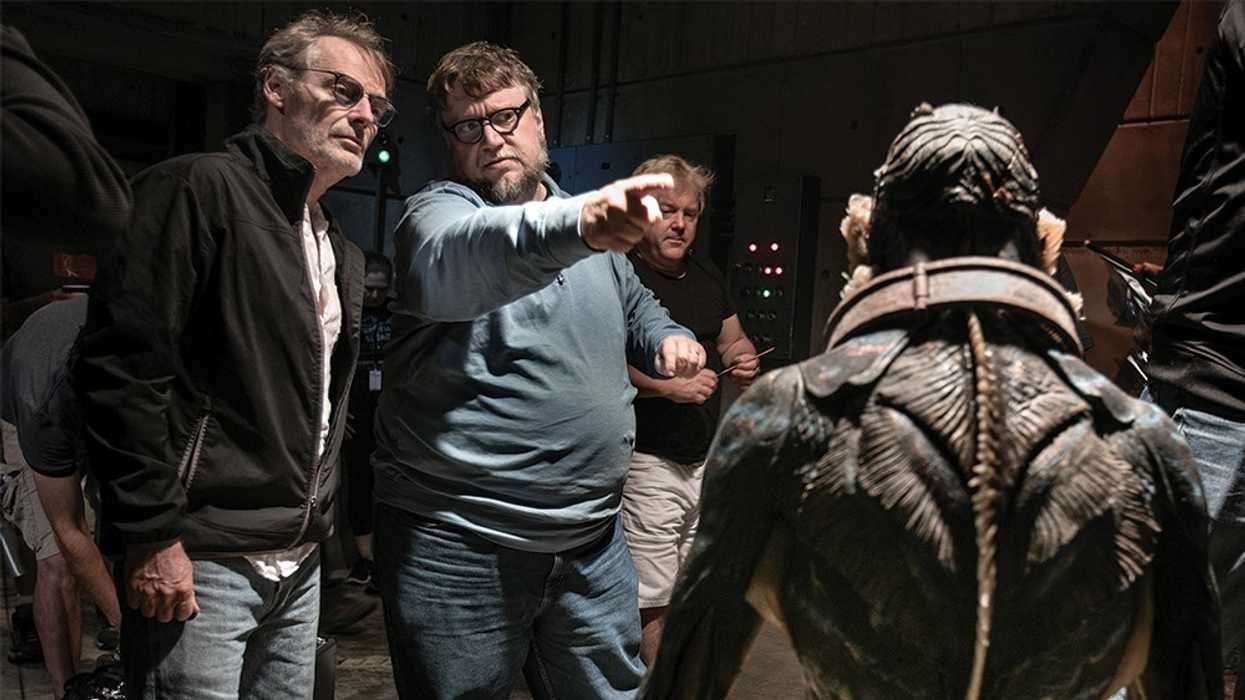
As StudioBinder points out, the opening of The Shape of Water looks like a flooded apartment, but there's no water in it. It was shot on a dry stage, with furniture and actors suspended on wires.
Guillermo del Toro told the Philippine Daily Inquirer:
"I wanted the movie to have big set pieces in the water, but we didn’t have the budget to create tank work. So, for the opening and end sequences, we used an old theatrical technique called 'dry for wet,' in which we shot them on a stage full of smoke, shot at 36 frames or higher speeds to give a sense of floating.
Every object you see onscreen is wired and 'puppeteered.' The camera goes through, and we project the light of the water, which is called costics, then digitally add bubbles in post-production. That allows you complete control and gives you a very operatic effect, almost like a painting."
Del Toro is all about fantastic visuals, and he was clearly going for something a little more dream-like here rather than realistic. But it looks amazing.
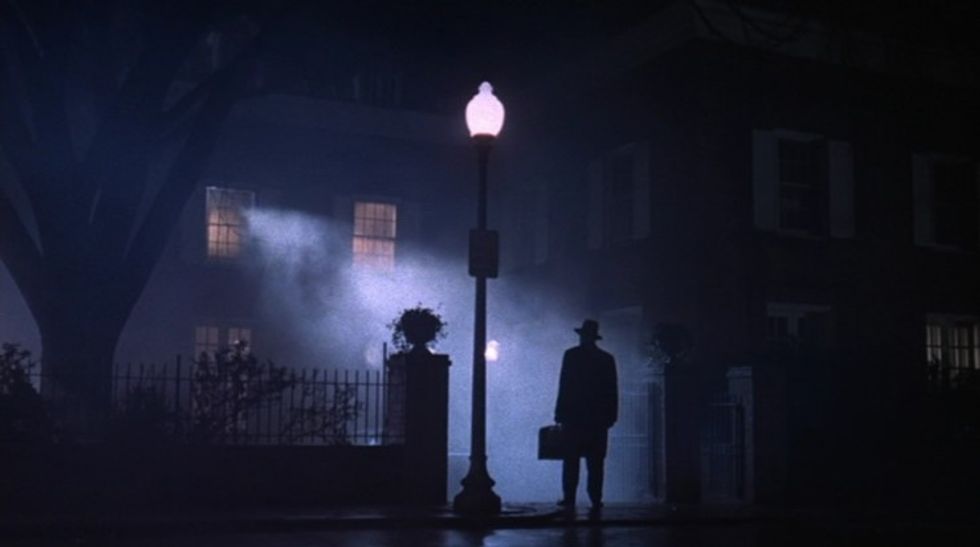 'The Exorcist' Credit: Warner Bros.
Sometimes the Weather Doesn't Cooperate
Oh, is there anything worse than seeing rain on the calendar when you need sun for a shoot? Or you're counting on snow, but the temps are above freezing? Wet Hot American Summer needed a real summer camp, and camps are full of campers in summer, so the production shot in the spring, but that didn't help much.
"I think it was a 28-day shoot, and I think it rained 25 days, something like that. And it [was] hard rain every single day, and freezing cold," director David Wain told The A.V. Club.
Faking it can also give you more control than real weather would. It's a Wonderful Life was shot during a hot Southern California summer, according to Gizmodo. The crew developed a fake snow from foamite, sugar, water, and soap flakes, which they could put exactly where they wanted it without anyone freezing.
You Can Sell It with Less Than You Think
Sometimes these tricks will be obvious, especially to the trained eye. Heck, there are plenty of jokes about the fake snow in Hallmark movies, which is sometimes just a white blanket. But for the most part, audiences want to believe in your world, so small inconsistencies won't break it if they're invested in the story.
Halloween is set in the fall, but the trees are bright green. The AFI Catalog notes that the film was shot in spring. The crew painted paper leaves in fall colors, scattered them before each scene, and collected them afterward to reuse. StudioBinder's point is that nobody watching is looking at the trees, because they're watching for Michael.
Small details can carry a whole season. If actors act cold, we'll believe they're cold. And remember, you only have to fake what the audience will see. If you only have one window that will show the weather, dress that window only. You don't have to go wild with an exterior shot to establish the local storm system. Just show rain falling past that one window.
You can get by quite a bit on sound, too. We don't have to see a raging storm if we can hear the wind and rain. And sound is cheap—just add it in post.
You can't fake everything, we know. So there will be times you either have to spend more, compromise, or just do those dang night shoots. Have fun, no matter what you choose.