8 Movies You Didn’t Realize Were Remakes of Old Classics
These modern films borrow their bones from older classics that time has buried.
The Birdcage (1996)
In filmmaking, a remake has quite a few faces. Sometimes it’s a homage to an old classic, sometimes it’s a snooty aspiration to imply superiority, and sometimes it’s a feather-footed attempt to cash in on a proven success. Some films proudly include their remake status in their marketing campaigns, while some keep their origins tucked away. Be that as it may, remakes have always been a constant stream in the film industry.
Unless you are a movie scholar, you may not always be able to tell a repurposed story from an original. Sometimes, a movie you thought was fresh could have started its journey long ago, maybe in black and white, maybe in the silent era, in a different cultural climate, with different faces, different sensibilities, and different tones. These differences create room for reinvention and individualistic voice. And that’s pretty much the basic idea behind making a remake.
This list looks at eight such movies that tried to reinvent old stories with different voices and different understandings.
8 Remakes of Forgotten Classics
1. Scarface (1983)
Remake of: Scarface (1932) | Directed by: Howard Hawks
Written by: Oliver Stone | Directed by: Brian De Palma
Tony Montana (Al Pacino), a Cuban immigrant, rises in stature in the dark world of Miami’s illicit drug trade. The film chronicles his rise, constant paranoia, and ultimate downfall. With the thematic elements of unbridled ambition and its consequences at the center, we see Montana chasing power faster than he can control it.
For the remake, De Palma takes the central idea from the 1932 original, but he then expands it in every way possible, especially its scope, violence, and cultural connotations. Despite both Tonys (Montana in the remake and Camonte in the original) being based on the 1929 novel Scarface, which is ultimately inspired by Al Capone, Hawks’ adaptation is more literal than De Palma’s. De Palma shifts the story’s context from the Prohibition-era Chicago to 1980s Miami. The 80s sensibilities make the remake sharper and more chaotic. Also, the remake’s harsher intensity and political background push it beyond the original’s limitations.
2. The Birdcage (1996)
Remake of: La Cage aux Folles (1978) | Directed by: Édouard Molinaro
Written by: Elaine May | Directed by: Mike Nichols
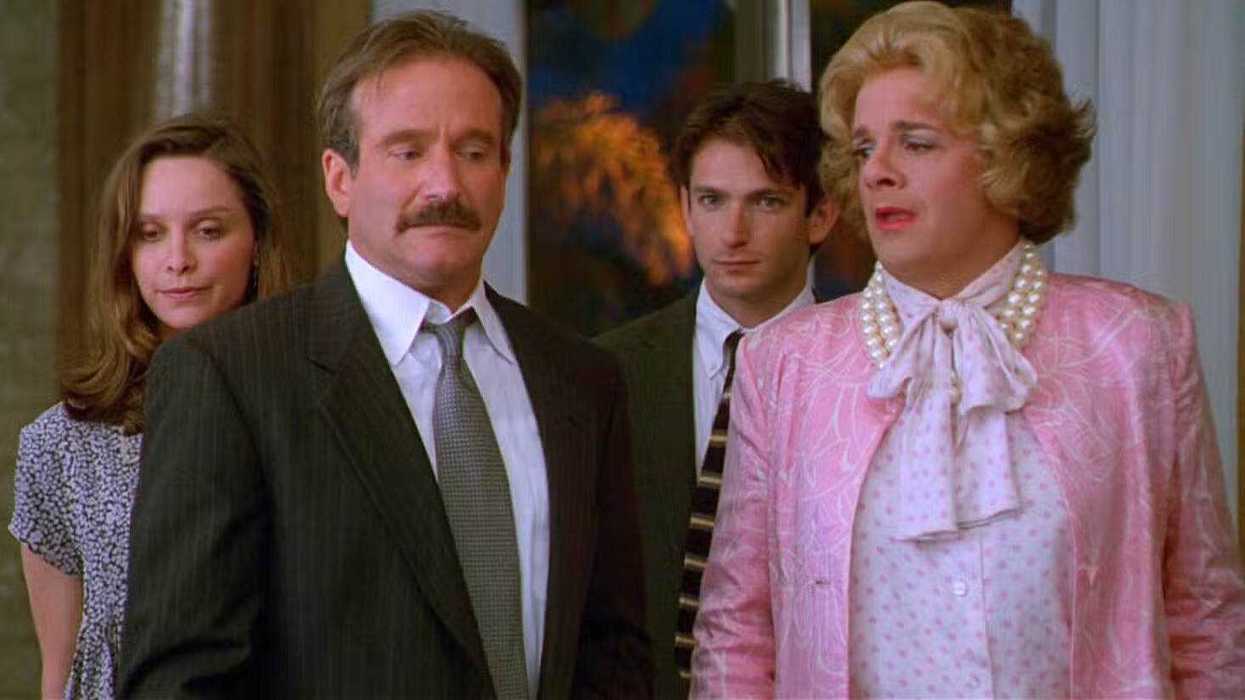
The film follows Armand (Robin Williams) and Albert (Nathan Lane), a middle-aged gay couple running a South Beach drag club in Florida. Their son, Val (Dan Futterman), falls in love with Barbara (Calista Flockhart), the only child of a conservative Republican senator, Kevin Keeley (Gene Hackman). It forces Armand and Albert into a bizarre attempt to present themselves as a traditional, respectable, and straight couple.
Mike Nichols took the inspiration from the 1978 French classic, which had already set the story’s humor, but with French subtlety. Nichols added to his remake the American extravagance and Hollywood zing. The remake also brings a more defined emotional dynamic between the protagonists, along with crisper and punchier dialogue and a faster pace. With its clear undertone of American political satire, The Birdcage feels more familiar and current. It maintains the absurdity but also adds more warmth.
3. A Perfect Murder (1998)
Remake of: Dial M for Murder (1954) | Directed by: Alfred Hitchcock
Written by: Patrick Smith Kelly | Directed by: Andrew Davis
A wealthy man, Steven Taylor (Michael Douglas), finds out his wife, Emily (Gwyneth Paltrow), is having an affair with David Shaw (Viggo Mortensen), an artist. However, David’s reality that Steven knows but Emily doesn’t is that he is a love-trap criminal who cons rich women. This prompts Steven to hire David to murder Emily.
Hitchcock’s original version was already tight and theatrical. Davis makes some changes by updating the setting (making it more contemporary) and adding moral ambiguity. He also expands the character motivations. A Perfect Murder makes them less archetypal and more flawed than downright evil. Along with a few more fresh twists, the movie feels more relatable to the modern audience.
4. Meet Joe Black (1998)
Remake of: Death Takes a Holiday (1934) | Directed by: Mitchell Leisen
Written by: Bo Goldman, Kevin Wade, Ron Osborn, Jeff Reno | Directed by: Martin Brest
Death takes the form of a handsome human called Joe Black (Brad Pitt) and enters the life of a media mogul, Bill Parrish (Anthony Hopkins). His motivation is to understand human emotions, and his medium to do that is Parrish’s daughter, Susan (Claire Forlani).
While Leisen’s original is more fast-paced, brisker, and philosophical, the remake slows down its pace but deepens the emotional intensity. The original feels more literal, simple, and more direct, while the modern audience might favor the more nuanced version that emphasizes relationships and quieter moments. The remake’s meditative atmosphere is also a distinctive element that adds to the story’s emotional weight.
5. You’ve Got Mail (1998)
Remake of: The Shop Around the Corner (1940) | Directed by: Ernst Lubitsch
Written by: Nora Ephron, Delia Ephron | Directed by: Nora Ephron
Joe Fox (Tom Hanks) and Kathleen Kelly (Meg Ryan) are bitter business rivals. Privately, they use their AOL email accounts to exchange online messages. And since they do it anonymously (i.e., using usernames), they remain oblivious to the fact that they are “being friendly” with someone they hate. Since it goes on for a long time without a trace of doubt, they fall in love with each other despite having their respective romantic partners. The movie is a charming digital-age equivalent of online dating that makes its way through misunderstandings and quite Hollywood-ish romantic epiphanies.
The 1940 original obviously relied on physical mail (letters) instead of emails. But that’s not the only aspect that Ephron modernized. She brought a sharper humor and richer character development. She also updated the old-world sweetness to the modern-world warmth. Aside from these changes, both films share the same heart.
6. Ocean’s Eleven (2001)
Remake of: Ocean’s 11 (1960) | Directed by: Lewis Milestone
Written by: Ted Griffin | Directed by: Steven Soderbergh
Danny Ocean (George Clooney) assembles his old friends and associates into a team for a high-tech Las Vegas casino heist. The film chronicles the adventure through slick and clever banter, fast pacing, and problem-solving that is as stylish as it is ingenious.
The motive behind the 1960 original was more to assemble the Rat Pack into a single project than to deliver a smart heist story. The narrative precision took the back seat. Soderbergh’s motive was truer to the craft. Aside from that, he also tightened the plotline, improved the rhythm, and made the narrative cleaner. The remake’s charm lies in its energy, something the original was not even aiming for.
7. The Ladykillers (2004)
Remake of: The Ladykillers (1955) | Directed by: Alexander Mackendrick
Written by: Joel Coen, Ethan Coen | Directed by: Joel Coen, Ethan Coen
A group of musicians, led by a literary scholar, Professor Dorr (Tom Hanks), rents a room and a root cellar in the house of a religious elderly widow, Mrs. Munson (Irma P. Hall). In reality, the renters are a group of criminals who plan to dig a tunnel from the root cellar to break into the underground vault of a nearby casino. However, their comically evil plan begins to fall apart as Mrs. Munson’s kindness, intuition, and sheer luck disrupt everything they set out to do.
While the original is an out-and-out British production set in London, the Coen brothers adapt it as a quaint story taking place in the American South. The Southern accent replaces its English counterpart, and the louder and stranger offbeat humor takes the place of the dry British wit. Even though the remake experiments with tone to give the story a new, distinct identity, the original has historically been more critically acclaimed. Ultimately, it depends on your choice.
8. The Manchurian Candidate (2004)
Remake of: The Manchurian Candidate (1962) | Directed by: John Frankenheimer
Written by: Daniel Pyne, Dean Georgaris | Directed by: Jonathan Demme
A Gulf War veteran, Major Bennett Marco (Denzel Washington), comes upon a conspiracy that involves political manipulation and, more importantly, brainwashing and mind control techniques. His discovery indicates that he and his Army colleague, Raymond Shaw (Liev Schreiber), now a vice-presidential nominee, might have unwittingly carried out the killings of their own soldiers.
While the original political thriller dealt with the Cold War, Demme updates the political context by setting the story around the Iraq War. The remake also updates the depiction of technology, along with the changing climate of global politics. Even though the original is a timeless classic, the 2004 movie may sound more relevant to the modern audience because of its shift of fear towards contemporary systems of power.
- What Are the 5 Best Black and White Movies Ever Made? ›
- Watch: 5 Modern Horror Staples Established by Classic Slasher Flicks ›
- 11 Box Office Bombs That Became Cult Hits ›
- 9 Romantic Comedy Tropes That Never Get Old | No Film School ›
- Defining The Thriller Genre in Movies and TV | No Film School ›
- 15 Political Thrillers That Stand the Test of Time ›
- Films From The Last 10 Years That Will Become Classics In The Future ›
- 10 Remakes Better Than Their Original Counterparts ›