8 Movies That Throw You Straight Into the Action With No Explanation
Opening the film in the middle is an explosive way to hook the audience.
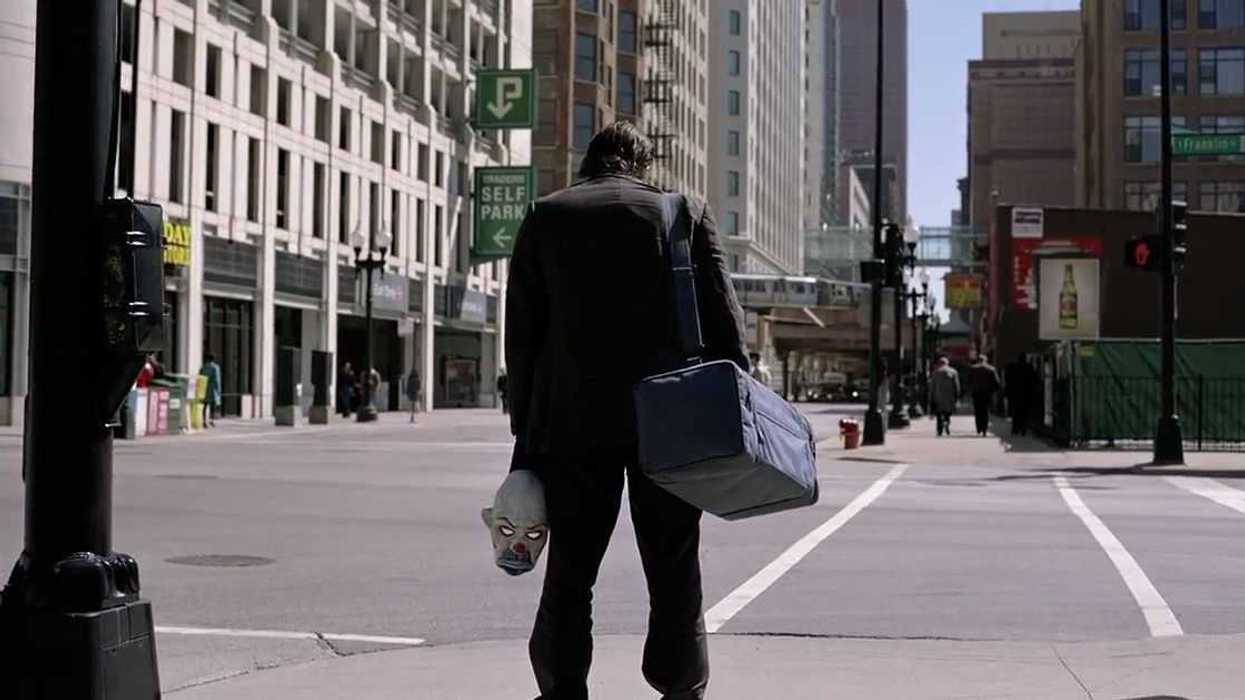
'The Dark Knight' (2008)
I hate it when movies show me their first act, which really could have been summed up and told in a five-minute scene. Now I always wish the movie had started five minutes later. Surprise me, make me think, and get me engaged from the start.
Before we get right into the movie examples that start in the middle, let’s get you familiarized with the trope itself—in medias res.
What Does “in medias res” Mean?
“In medias res” is a Latin phrase for “in the midst of things.” Dropping your audience right in the middle of high-tension action is one of the most common ways to open a movie. This literary device helps craft a dynamic opening that sets the plot in motion right from the start—no exposition or character introductions for the audience, because we have plenty of time for that in the next two hours of a complex plot.
Starting right in the middle of the action is a little jarring, which compels the viewer to pay attention and catch up. Moreover, it creates momentum right from the beginning. Here is a list of movies with in medias res openings.
8 Movies That Drop You Right in the Middle of Action
1. The Dark Knight (2008)
Christopher Nolan extensively employs in medias res openings in his films, such as The Prestige, Tenet, and Insomnia. One of them is his superhero masterpiece, The Dark Knight, which opens with a meticulous heist orchestrated by several Joker-masked criminals.
The scene unfolds as every robber betrays the others until the final boss, The Joker (Heath Ledger), is the last man standing. This scene immediately establishes Joker as a formidable and unpredictable villain who relies on his intelligence and recklessness to attack—the sequence is one of the greatest openings in modern cinema.
2. Saving Private Ryan (1998)
Steven Spielberg’s war epic Saving Private Ryan is a perfect example of in medias res, opening with the somber D-Day landing on Omaha Beach.
We find a bunch of soldiers in the middle of a brutal war, with sheer bloodshed all around. It’s anxious and scary. The audience has no idea who these people are, who are getting shot from every possible direction. It feels like a long horror dream that you can’t escape.
3. Goodfellas (1990)
Martin Scorsese’s legendary gangster film, Goodfellas, opens with Henry (Ray Liotta), James (Robert De Niro), and Tommy (Joe Pesci) in the car at night, when a body in the trunk starts hitting the car from the inside.
After stopping in the middle of nowhere, Tommy proceeds to stab the body, followed by gunshots from Henry. Then he says, “As far back as I could remember, I always wanted to be a gangster.” The frame freezes—one of the coolest openings for sure. It establishes the world we are getting into—the world of gangsters.
4. Inception (2010)
Another high-concept dream-invasion film from Christopher Nolan, Inception, opens with Cobb (Leonardo DiCaprio) and an old Saito (Ken Watanabe) in a dream, followed by yet another dream, where Cobb and his team are working a job that goes wrong.
The opening sequence creates intrigue from the very first seconds, raising questions about the identity of characters and reality itself. The audience is told that they are watching a dream. As the movie progresses and the rules of the dream world are explained bit by bit, we realize the madness of Inception.
5. 28 Days Later (2002)
Danny Boyle's post-apocalyptic zombie horror film opens with Jim (Cillian Murphy) waking up in a deserted hospital, 28 days after a devastating zombie plague in London. Viewers immediately piece together the events that led to the devastation. The quiet, empty streets of London paint a harrowing picture of the city. Moreover, the disorientation and confusion experienced by Jim create a powerful unease among the audience.
6. Mad Max: Fury Road (2015)
George Miller’s Mad Max: Fury Road opens with an intense, chaotic survival action sequence in which Max (Tom Hardy) tries to outrun a mob of strange, pale assailants. But he is caught and taken as a prisoner. He again tries to escape the scavengers of Immortan Joe (Hugh Keays-Byrde), and through his eyes, we get a glimpse into Miller’s post-apocalyptic world.
The very first wide shot from behind, the car rolling into dust, and the scavengers jumping onto Max, everything seems so strange, enticing, and unique.
7. Mission: Impossible - Ghost Protocol (2011)
The film’s first scene begins with pretty standard establishing shots of Budapest. Suddenly, a man pops onto a rooftop being chased by anonymous thugs with guns. The man seems to outrun his enemies by leaping off a building in true Mission: Impossible fashion. Just as we think that the man has escaped, one wrong turn leads him straight into another assassin in no time—he is killed.
We get plunged into a high-octane chase, and we are left with a plethora of questions: “Who was that man?” “What was in the documents the assassin stole?” We're hooked right away.
8. Fight Club (1999)
David Fincher’s bold Fight Club is a narrator-driven “in medias res” example. The film opens with a unique credit sequence, which transitions into Tyler Durden’s (Brad Pitt) perspective, who is holding a gun. Through a rack focus, the gun is revealed to be pointed at the Narrator (Edward Norton), sweating profusely. Then he says, “People are always asking me if I know Tyler Durden,” and the scene continues.
Until the scene ends, no one knows who Tyler is or who the narrator is. The question arises: “How did the narrator end up in this situation?” Then, Fincher takes us by the hand and unfolds events that led up to this moment.
Summing It Up
Beginning a film in medias res is an effective device to immediately hook the audience. Not only do modern filmmakers like Christopher Nolan and Quentin Tarantino use this method in their films, but great authors like Shakespeare also made the most of it in their literary works.
So, in your next screenplay, surprise the readers by dropping them into the middle of the action.