6 Things Every Beginner Should Know About Lighting
Lighting is easy!
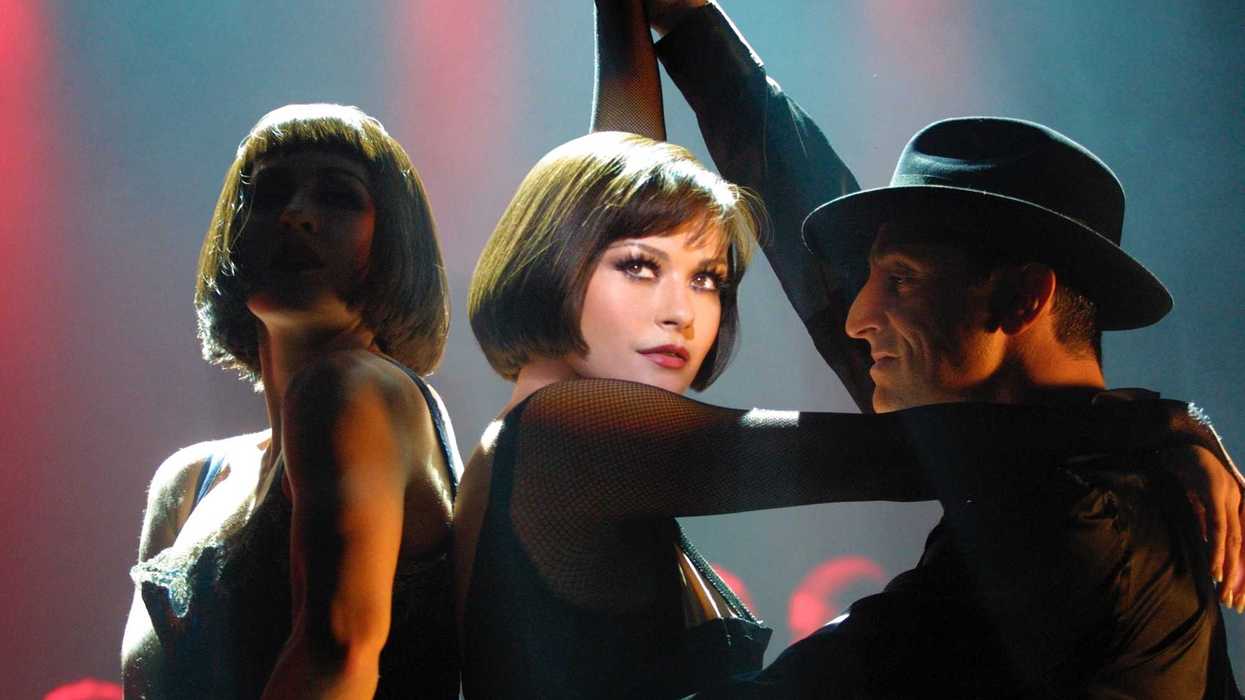
'Chicago'
I'm always trying to absorb as much cinematography knowledge as I can. When I get on set, I want to know what the heck the DP and gaffer are talking about. If I'm directing, I don't want to make impossible requests because I don't know the limitations of our gear or setups.
All that to say, I'm always watching as many cinematography videos as I can find on YouTube, and this lighting primer from earlier this week was exactly the kind of thing I was looking for.
Spenser Sakurai is a commercial cinematographer who's shot for Adidas, T-Mobile, ESPN, and Google. He also runs The DP Mindset, a learning community for cinematographers. In his video on lighting fundamentals, he argues that lighting isn't complicated. It's, like, easy, actually. It's not some mystical craft that requires expensive gear or natural talent. It's a series of variables you can learn to control. It's all about understanding a handful of principles and knowing how to manipulate them.
Check it out.
- YouTube www.youtube.com
Distance Changes Everything
Intensity equals distance. When light is close to your subject, it's bright. When it's far away, it's dim. This explains why you see massive lights on film sets. The size isn't about being extra fancy just for fun. It's about solving a distance problem.
If you want to light a large area—say, through a window across a room—the light has to be far away. And when light travels far, it loses intensity exponentially. This is the inverse square law. The farther away, the more power you need to keep the same exposure.
But you don't always need a giant light. Your other option is to move a smaller one closer instead. The bigger your light source appears to your subject, the softer the light looks. Distance and apparent size work together.
A small light far away is apparently small relative to your subject, creating harsh shadows. Move that same light closer, and it becomes apparently bigger, which softens the shadows (or blows them out).
Hard light adds mood and drama. You see it especially in noir films. Soft light is flattering and natural. Most commercial work uses soft because clients want things (or people) to look good.
Diffusion Is a Main Tool
If you want to soften light, you put something between it and your subject. This could be a silk or diffusion paper or even a shower curtain, whatever you have that scatters the light. The light source becomes apparently bigger, even though the fixture hasn't moved.
Bounce light works the same way. Shine it at a white wall first, and the wall becomes your light source. It makes it much bigger, softer, and more pleasant.
The principle is simple. Put something in front of your light to make the source bigger and the shadows softer.
The inverse is also true. You can make light harder by making the source appear smaller and removing anything from between it and your subject.
You're Controlling Bounce, Not Just Adding Light
Light bounces everywhere in a room. Off walls, off the ground, off your subject. This is one reason you'll usually find crew members wearing all black, so they're not a source of bounce.
If you only light from one direction, all that bounce fills your shadows and flattens the image. But depending on your scene and mood, that flattened effect might actually look fine, even natural and pleasant. So it's a choice. Do you want to block that bounce (with negative fill) to maintain contrast and drama, or let it happen?
Negative fill is how you control unwanted bounce. You put a black flag on the shadow side of your subject to block light from bouncing in there. This increases contrast. You're removing light instead of adding it. Cinematographers obsess over this because they're shaping light strategically to determine what the camera sees.
You can also bounce light where you want it with reflectors. Gold gives warmth. Silver is neutral. You don't need expensive gear. Poster board works. The principle stays the same, and it's controlling where light goes.
Color Matters
Light has color, which is measured in Kelvin. Lower temperatures are warmer. Candlelight is around 1,700 Kelvin, a nice warm orange. Tungsten bulbs sit around 2,800 to 3,200 Kelvin, which gives you that golden-hour warmth. Daylight is 5,600 Kelvin and actually quite blue. Sky alone goes even higher, up to 10,000 Kelvin. The higher you go, the cooler and bluer the light gets.
Cool light feels clinical. Warm light feels intimate.
You can use color temperature to set mood in a way that speaks to the audience, even without dialogue. Modern LEDs let you dial in any temperature. Older tungsten lights are warm by default. Fluorescent sits in the middle around 4,000 Kelvin and tends to cast a green tint, which is its own problem. If you're mixing light sources, you have to account for the mixture, either with gels or by adjusting your white balance.
Modifiers Aren't Magic
Beyond diffusion and bounce, there are tools that shape and focus light.
Flags are solid modifiers that cut light completely. Nets cut one or two stops of light depending on density. Gobos are patterned metal or glass discs that you place inside a fixture to project specific shapes onto your scene, like venetian blinds, windows, or whatever pattern you need.
Spotlights have shutters and barndoors that let you cut light into specific shapes. Hard light pairs incredibly well with these tools because it's sharp enough to cut the shape cleanly.
These are pieces of a puzzle. The shape and intensity depend on what you need for the shot.
Lighting Is a Puzzle
Once you understand distance, apparent size, diffusion, and control, you stop thinking of lighting as mystical. You're thinking about variables. What mood do I need? How far away does the light have to be? Do I need it soft or hard? Do I need to control shadows? What color serves the story?
These are design questions, not magic questions. You solve them like any other creative problem: understand the tools, understand what each does, use them to build the image you want.
The fundamentals matter more than the gear. You could use expensive cinema lights or work with what you have. The principles don't change. Light is light. Distance is distance.
Once you grasp that, the rest is just playing until you figure out what you want.
- The $50 Lighting Kit: What Should Be in a Beginner's Grip Bag? ›
- Do You Know All These Film and TV Lighting Terms? ›
- What is “Netflix Lighting” and Why Do Streaming Shows Look the Way They Do? ›
- 13 Film Lighting Techniques Every Filmmaker Should Know ›
- How to Light a Terrifying Horror Scene on an Indie Budget | No Film School ›