Among filmmakers who treat writing as the heart and soul of their cinema, Francis Ford Coppola tops the list. He believes that long before you frame your first shot of the movie, the story’s power (or the lack thereof) has already started to gather momentum. His filmography is a testament to this idea.
His advice is quite practical. It may sound straightforward, and that’s obvious because it’s coming from surviving decades of creative chaos. You can’t afford to beat around the bush.
His advice holds water not only because he is The Coppola; it’s important because it’s coming from someone who started his career amidst exceptional uncertainty but didn’t let it distract, discourage, or disillusion him. He embraced all hesitancy and doubts and put them in his bold choices—the same choices that made him who he is today.
His writing tips are lived-in and doggedly honest, yet flexible enough to let you trust your own unique instincts. See them as guiding principles, not just to write screenplays, but to find your voice.
13 Screenwriting Tips From Francis Ford Coppola
1. “You can’t make art without risk, any more than you can make babies without sex.”
This advice highlights the inevitability of risk in the creative domains. The risk is pretty much the driving factor behind every great work. Every time you zero in on a decision, you are taking a risk. He also indirectly says that playing it safe equals writing a story that is flat and soulless. He encourages fully accepting the unease that may come from time to time while working on a new idea. That’s the creative adventure. His 1979 movie, Apocalypse Now, is a good example in this context. The project, from conception to production and casting, and in every other sense, was a huge risk and a challenge. But Coppola took the risk and came out with a timeless classic.
2. “Start at the finish and work backward.”
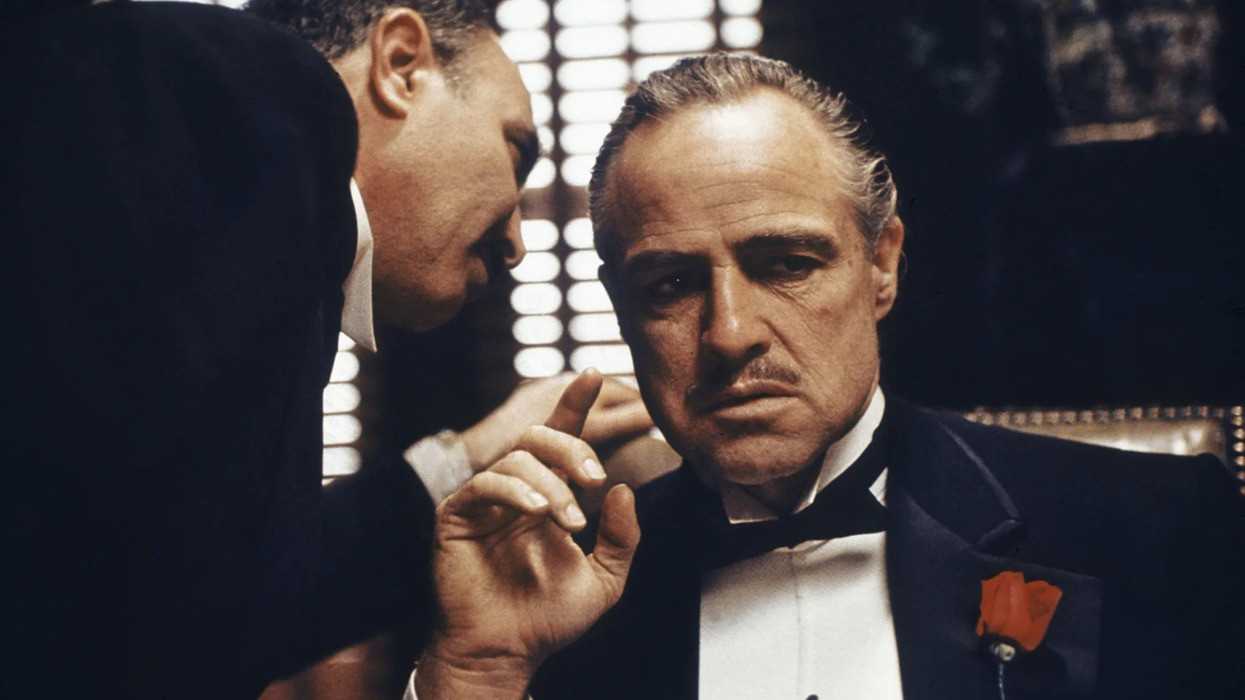
Many filmmakers and writers highlight the importance of a story’s ending. Coppola seconding that thought makes it even more credible. If you know exactly what your ending is going to be, you have figured out the destination of your story, and you know in which direction you must proceed. The ending works like a compass for your entire narrative arc. Also, pre-decided endings give you a clear vision as to how your characters should develop. That’s how their character arc becomes coherent and continuous. You can see how this tip is applied by tracing events of The Godfather (1972) and how they all definitely work towards Michael’s eventual isolation.
3. “You have to really be courageous in your instincts and ideas. Otherwise, you'll just knuckle under and change it.”
Hesitation and uncertainty are intricately woven into any creative process. You can’t escape it. What you can do is decide how much and for how long you will dwell on it. The longer you do it, the shakier your instincts become. It’s quite possible you may not have developed the best creative instincts yet. But unless you start depending on them and giving them something to prove, how can you expect them to work efficiently?
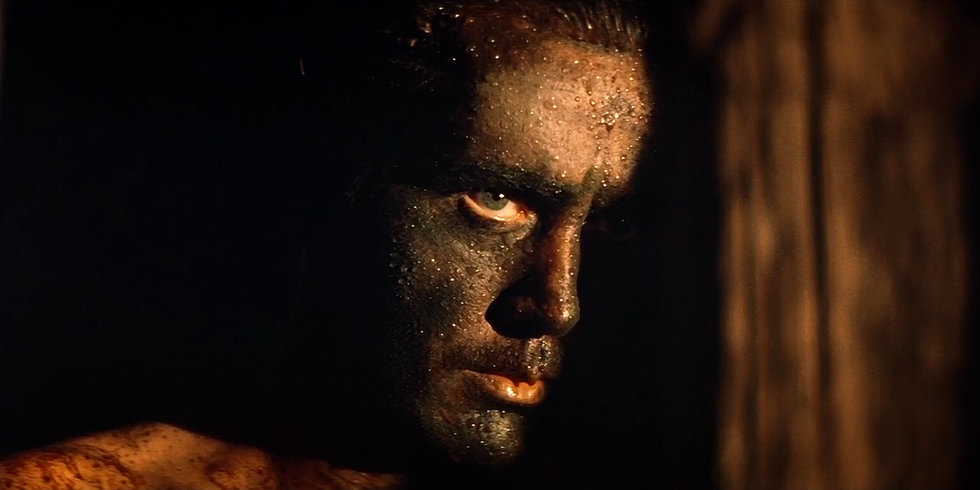 Apocalypse Now Credit: Paramount
4. “In a sense, I think a movie is really a little like a question, and when you make it, that’s when you get the answer.”
Write your screenplay as if you are answering a question that has been swirling around in your mind. Answer it in depth. And while doing so, your motivation shouldn’t be “I want to prove this.” It should be “I want to explore this.” Blank paper is an infinite space for exploration. So use it. Anything is possible. Anything can happen. And that’s how you free your mind and let your curiosity guide you.
5. “Art depends on luck and talent.”
Talent is, by far, the most defining factor that goes into art. There is no doubt. It’s concrete, it’s real. And yet, we shouldn’t trivialise the luck element. Believing in sheer talent is good for confidence building, but sometimes destiny (for all the speculative and philosophical meaning it holds) does matter. Factors like timing, accidents, and opportunities are as real as talent. It’s just a matter of serendipity, nothing more. Permutations and combinations of events that may or may not go in your favor. It may not favor you today, but it just might tomorrow. All you should do is keep working.
6. “It doesn't have to be a whole developed idea. It just has to be like a seed. And then when I'm ready, I'll just work on it every day.”
Filmmaking and a seed growing into a tree aren’t much different. You may be writing an epic film of epic scale, but it still has to start small, as an idea. And it may come to you in the form of a sentence, an image, or even a word. Start building from there, one fragment at a time. Be steady at work. Be consistent and put yourself all in. The idea will surely grow into something fuller and more layered.
7. “After I have, whatever it is, 60 or 70 pages, then I'll read it... what I like to do now is then take it and write it as a short story... because I look at it from another way.”
This is Coppola’s process—changing the medium midway through. Once he has written a few pages of the screenplay, he turns it into a short story. Story writing and screenwriting work differently; each has its own nuances. A narrative story helps find character motivations, and once you remove the cinematic action that comes with the screenplay, it becomes easier to identify thematic threads and weave them together. This technique encourages a deeper understanding of your story.
8. “The way I write is like I have a great, big ball of dough, pasta. And I'm writing... once in a while, I'll take some and make pizza. Or I make a cake. But it's all the pasta of my life.”
Here, he uses metaphors to describe how his ideas connect. Notes, drafts, journals, conversations, and abandoned scenes all become part of the same creative batch. Something discarded in one script may become the missing piece in another. Coppola treats his entire life as one rolling mass of material that is always up for some reshaping.
 'The Conversation' Credit: Paramount Pictures
9. “The same thing you get fired for is what they give you the Lifetime Achievement Award for thirty years later.”
This is where Coppola highlights the whimsical nature of the industry, stating how it may resort to celebrating the same thing it once resisted. The underlying message is that it’s always difficult in the beginning to make your unique voice heard. The money-centric industry always likes to play it safe and bet on tried-and-tested ideas. Anything not heard of sounds dangerous. While this may seem discouraging, one must remember that time has a habit of eventually rewarding bold choices. What was once eccentric becomes visionary. The simple takeaway is: stay weird, stay steady, and let the future catch up.
10. “You oughta love what you're doing. You really have to love the project and love the story because, over time, you'll really start to hate it.”
Writing and marriage are not very different. You gotta invest knowing that once the honeymoon phase is over, it’s all going to start getting old, and you might eventually get tired of it. The key to dealing with this sentiment is reinvention. Just as you spice up your marriage by doing whatever works for you, you gotta reinvent yourself as a writer. And you can do it only if you love what you are doing. Here, he is pointing at revisions, which can be quite monotonous and tedious. This is why a real affection for your project is very important.
11. “I think cinema, movies, and magic have always been closely associated.”
There is a sense of wonder in magic tricks. For filmmakers, that sense of wonder is equally present in filmmaking. And it’s kinda essential that it is so, because only when you tap into that sense of wonder can you create surprise, curiosity, and delight. If you maintain this sense, nurture it, let it blossom, your craft will become playful and innovative rather than technical and superficial.
12. “If you don’t bet, you don’t have a chance to win.”
Gambling is justified when you are betting on your creative instincts. Yes, gambling is part of a creative process. An important one, actually. Pitching an idea, submitting your screenplay, or writing on something unconventional (even controversial); it’s all part of making your own luck. As we saw in the article’s very first point, risk is omnipresent in the creative field. If you think you can go around it every time you come across it, you are kidding yourself. Or at the very least, you are not serious about your craft. You refuse to take risks, you stay stuck in whatever cocoon you’ve created. It’s that simple.
13. “Anything you build on a large scale or with intense passion invites chaos.”
This is not a warning against chaos. This is a motivation to walk towards it. Here, he is implying that chaos is the sign that you are doing something with true substance and meaning. What makes a story or a project big? Big budget? Big stars? That’s just the face value. What truly adds weight to art is its ability to shake things up and break conventions. Others will see it as chaos in a negative sense, but you don’t have to. See it as the necessary disruption that will spark problem-solving and invention. However, it’s also important to have patience and perspective as you lean into it.
- In 1974, Francis Ford Coppola Directed The Two Most Important ... ›
- 9 Essential Films That Made Francis Ford Coppola a Legend ›
- Bask in Francis Ford Coppola's 'Megalopolis' Trailer | No Film School ›
- Francis Ford Coppola's Thoughts on Screenwriting | No Film School ›
- Francis Ford Coppola's 'Godfather Notebook' is the Development ... ›
- Francis Ford Coppola Reflects on His Career and Its Lessons | No ... ›
- Enjoy Francis Ford Coppola and Martin Scorsese Talking About ... ›
- What Does Francis Ford Coppola Think About Rewriting? | No Film ... ›
- Francis Ford Coppola Calls Ryan Coogler's 'Sinners' the "Ultimate ... ›
- 3 Screenwriting Lessons Even Professionals Forget in Their First Drafts ›
- 3 Smart Screenwriting Lessons from the 'Ted Lasso' Season 4 Soft Reboot | No Film School ›