On the one hand, Frank Darabont’s The Shawshank Redemption is a masterpiece of drama, while on the other, it is a profound exploration of hope.
What does “hope” mean to different people?
In this article, we arrive at an answer through Red’s cautionary quip, “Hope is a dangerous thing,” as we analyze how the line serves as an overarching theme in The Shawshank Redemption that unifies the changing forms of hope throughout the narrative.
To Give You a Little Context…
Andy and Red become friends after Andy is moved to Shawshank Penitentiary as a convicted prisoner for killing his wife and her lover.
Over 20 years, their friendship deepens through shared conversations, contraband, bland prison food, parole board meetings, and work. They are different in so many ways, yet share similarities that can be easily unnoticed.
Apart from those two, the penitentiary is full of oddballs from different walks of life, starting with one evil man who sexually assaults Andy in his early days of prison, to the old prison librarian who hasn’t been free for over 40 years, to the manipulative warden, who cloaks his corruption in religious rhetoric. Each one is as different as individual specks of sand on the beach, but they live the same tortured life.
Each represents a distinct form of hope, yet each resonates with Red’s caution of, “Hope is a dangerous thing.”
Let’s dive deeper to understand better.
Painting Hope Through Red’s Wise Words and the Various Characters
Let’s analyze Hope across its entire spectrum through pivotal characters in The Shawshank Redemption.
1. Andy
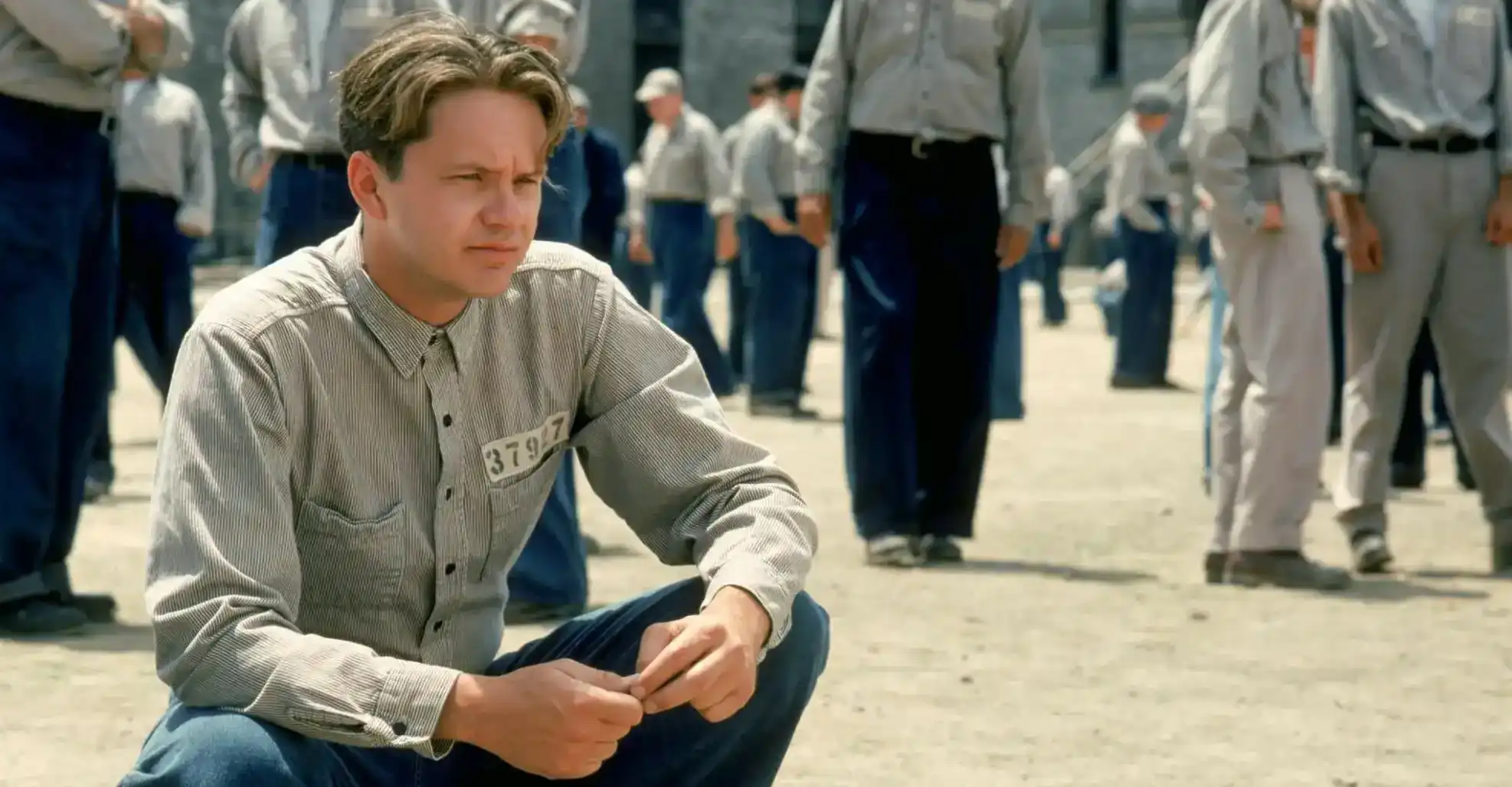 The Shawshank Redemption (1994)Source: Warner Bros., Columbia Pictures
For a white-collar banker like Andy, a murder conviction is a life-changing event, unlike for a seasoned criminal for whom prison is their second home.
Being sentenced for double homicide is Andy’s rock bottom. He is betrayed in marriage, and now, through no fault of his own, faces hell. Andy is innocent, but with no proof, it is a lost cause. The day he lands in prison and is left to spend the night alone in his cell, the realization hits him hard.
He convinces himself that instead of fighting for proof of innocence, he should strive for his freedom, even within the walls. Andy quickly understands that discipline and civility will be the most effective means of mitigating tension. So he turns himself into an anomaly—the embodiment of penance and redemption who focuses all his energy on redirecting the prisoners to have meaningful lives even in captivity.
Keeping hope alive in his heart becomes his biggest challenge. Perhaps being a highly educated man helps him navigate his cloudy mind, but whatever his technique, every time his hope is crushed, he somehow manages to gather more to push through. Unlike most of us, who abandon hope in our lows, Andy embraces it as his ultimate defense against the blows of life.
Each time, he regenerates hope with a new purpose. It begins with the prison library renovation funds and ends with him not only escaping the prison but also delivering divine justice that was long overdue for the corrupt warden.
For Andy, hope is a necessity—his only shield of protection and his show of trust in himself. He never really relies on God, his karma, or the justice system to get him out of prison. He believes in himself and is desperate to hold onto that belief until he is actually free. Without hope, he knows he won’t survive.
2. Red
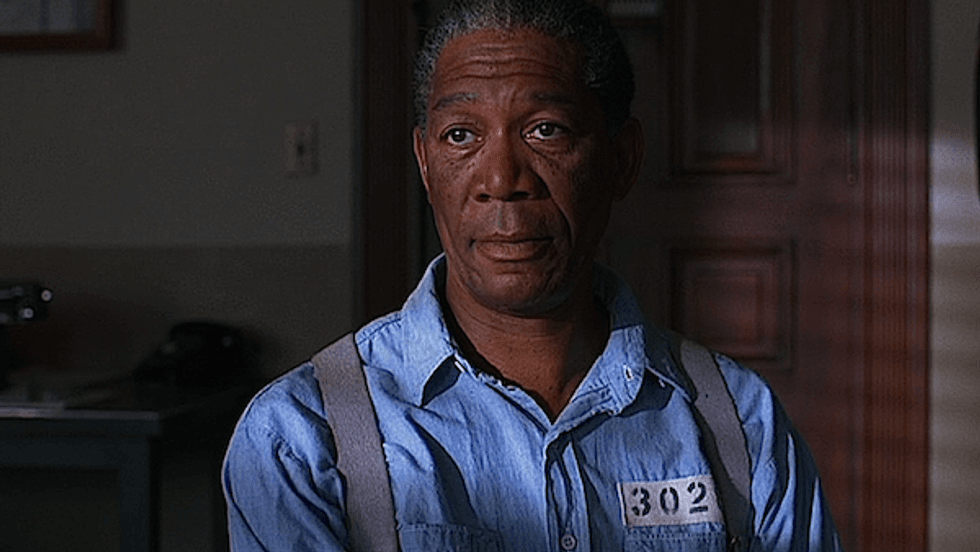 The Shawshank Redemption (1994)Source: Warner Bros., Columbia Pictures
Red is convicted for a murder that he committed in his adolescence, and by the time Andy comes to the prison, Red has lived behind bars long enough to have forgotten the world outside.
However, it doesn’t scare him like it scares the elderly prison librarian. So Red carefully nurtures the hope of walking into the free world someday, without ever letting it carry him away.
But once a year, during every parole board meeting, Red sits there with bated breath, only to be kicked in the shins with straight-faced rejections. No reason, no justification for rejecting his parole. The next few days, Red is miserable.
But even after years of rejection, that one day, moments before his interview with the members, Red feels hope creep into his heart. Over years of failure, even though Red has learned to manage his expectations, his heart never quite learns to manage the hope of being free one day.
When Red says, “Hope is a dangerous thing,” there is an implication of betrayal in that moment. It is as if he chooses hope over and over again, and is back-stabbed, over and over again.
For Red, hope is a choice that always hurts him. So if he could, he would abandon it to save himself from the pain.
Apart from the two leads, there are two other significant characters who examine hope, but in its darker shades.
3. Brooks, the Elderly Librarian
 The Shawshank Redemption (1994)Source: Warner Bros., Columbia Pictures
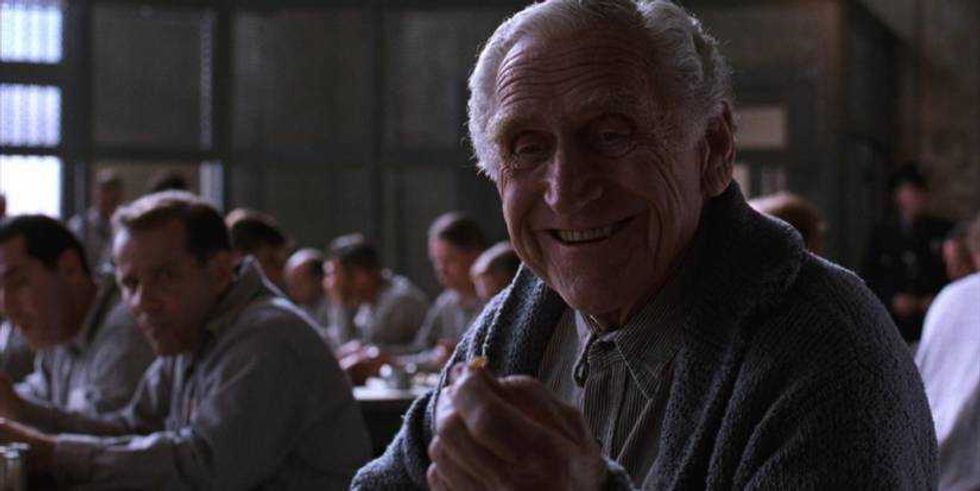
Brooks Hatlen, the elderly and only librarian at Shawshank Penitentiary until the warden assigns Andy as his assistant, brings us face-to-face with the corrosive effects of time on hope.
Not that the man lives without any hope, but he is so used to its fleeting nature that he stops letting it bother him. He replaces hope with acceptance after decades spent within those isolating walls. Brooks fears freedom and the world beyond the prison, fully aware that hope cannot be nurtured without purpose.
Over all those years in prison, he has slowly destroyed all his purpose outside of it, focusing on his contribution to a place he called home for as long as he could remember. He can’t justify his relevance anymore once he is released, and with no hopes of ever returning to where he belonged, he hangs himself.
4. Tommy Williams
 The Shawshank RedemptionSource: Warner Bros., Columbia Pictures
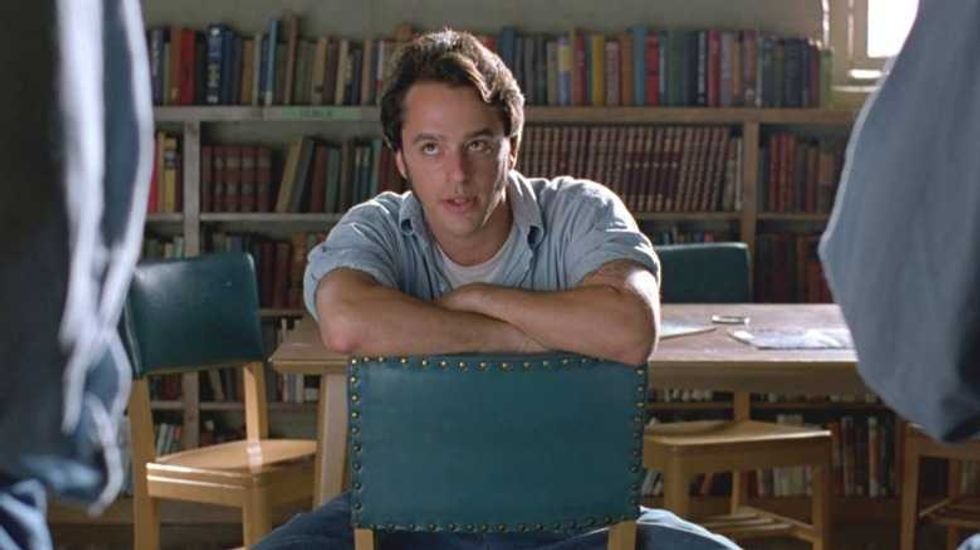
Andy’s protegé, Tommy, is newly married and has a baby on the way when he moves into Shawshank Penitentiary. He isn’t a criminal at heart, but doesn’t know another way to make a living.
Recognizing his potential and the need to redirect his own spiraling mind, Andy takes him under his wing. Tommy represents hope in rehabilitation. His transformation under Andy’s mentorship is evidence of both the hope of a miracle in even a prisoner’s life and of prisons' capacity to change people; however, those who run them do not allow it to happen.
His death marks a tragedy and a turning point in Andy’s life, opening his eyes to how the world is governed by corrupt individuals. His death also marks the death of justice, as it kills Andy's only hope of being proven innocent and reaffirms the influence of power over justice.
Hope also becomes a trigger in the end. Tommy’s death marks the end of an Andy we’ve seen so far. The death of hope at this point in the film gives rise to a corrupt Andy, who’s no longer concerned with integrity.
In the last two cases, hope works in mysterious ways and leads to tragedy. For Red, hope remains a form of suffering until he is granted parole. But for Andy, hope becomes his savior and protector, enabling him not only to survive prison and its brutalities but also to achieve freedom through a prison break that has a legacy of its own.
- Did You Know Tom Cruise Was Originally Set to Star in 'The Shawshank Redemption'? ›
- 2 Ways 'Shawshank Redemption' Can Make You a Better Director ›
- Things That Might Spoil ‘The Shawshank Redemption’ Just a Little Bit for You ›
- The Secret Hero Blueprint Inside 'The Shawshank Redemption' ›
- How ‘The Shawshank Redemption’ Quietly Set Up Its Ending Long Before The Escape ›
- Shawshank's Caged Bird Speech ›