How ‘The Shawshank Redemption’ Quietly Set Up Its Ending Long Before the Escape
A payoff that was masterfully planted early on.
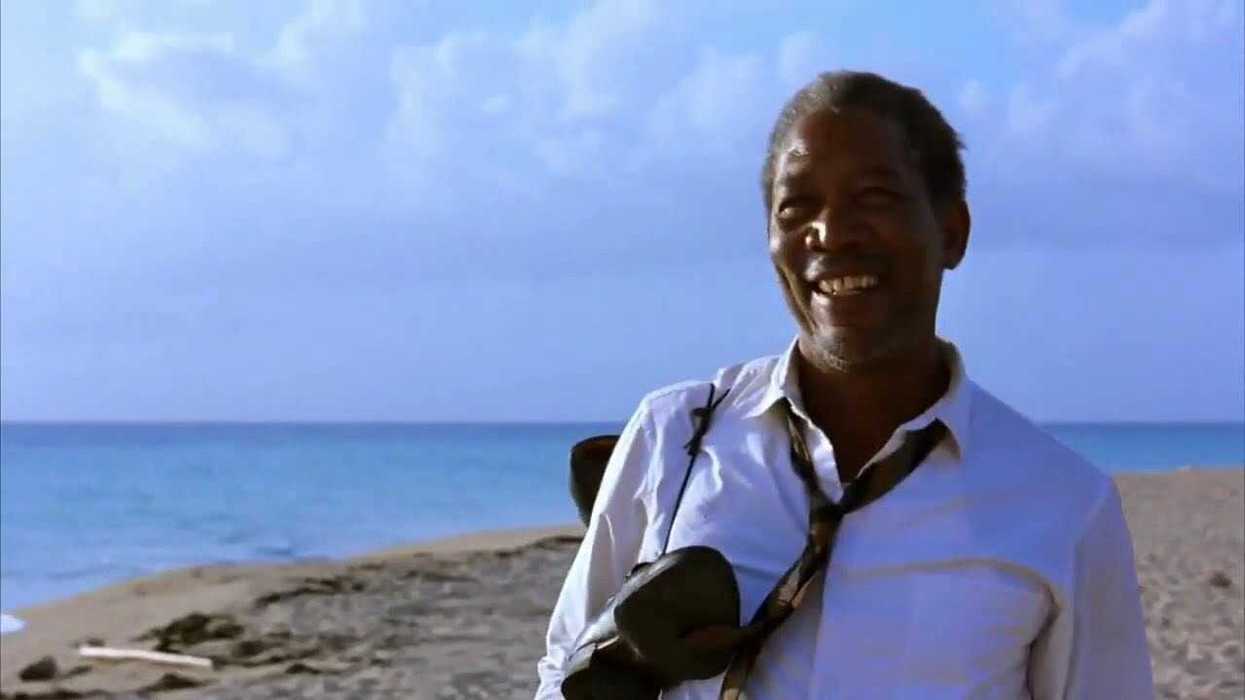
'The Shawshank Redemption' (1994)
The ending of Frank Darabont’s epic prison-break film, The Shawshank Redemption (1994), lands with quiet precision and high emotional resonance because its seeds are planted early on.
Andy Dufresne’s escape isn’t a sudden twist; it’s a payoff to patient, deliberate choices that the film sets up from the beginning. During an intimate conversation with Red, Andy first mentions Zihuatanejo as the place he’d like to go to once he is out of prison.
Dufresne’s words are deeply layered with hope and purpose as he speaks about a life he feels he deserves. While we may wonder how this dream could even become a reality, Dufresne speaks in the most heartfelt manner, with a smile on his face, as if he can already see himself in Mexico.
What we don’t know at this moment is how Darabont quietly sets up the film’s climax through almost every word Dufresne says about Zihuatanejo.
So, how does the film use a distant dream as a survival strategy? What can the film’s ending teach us about patience?
Let’s jump right in and explore.
Zihuatanejo: “A Warm Place With No Memory”
Andy Dufresne, played by Tim Robbins, first tells Morgan Freeman’s Red about Zihuatanejo during an emotional conversation in prison. When Dufresne first mentions the coastal Mexican town, Red has no idea what he is talking about.
This is when Dufresne goes on to describe Zihuatanejo in a dreamlike manner.
“It’s in Mexico, a little place on the Pacific Ocean. You know what the Mexicans say about the Pacific? They say it has no memory. That’s where I want to live for the rest of my life. A warm place with no memory.”
These words paint an exceptional picture on two important levels. First, it sounds like an absolute dream of a place where one would want to spend their lives, especially after a tormenting spell in prison. Second, and more importantly, every word Dufresne uses to describe Zihuatanejo is layered with deep symbolism.
Why does Dufresne emphasize that last bit about memory? Well, because after serving a long spell in prison, mere freedom would not make a person’s life blissful, but a place that literally bears no memory. A place where Dufresne can start a new life, from scratch, without anyone knowing anything about him or where he came from.
You might think that would be the case regardless, since he would move to a quiet fishing village. Yes, but these words are crucial because the symbolism sheds light on Dufresne’s wrongful imprisonment. He knows he is innocent, and the only place that would not judge him is a place with no memory.
This single conversation, tucked midway through the story, elevates the film’s ending with a poetic and unforgettable context.
Hope As A Survival Strategy
Few films have been as successful in exploring “hope” as a theme as Frank Darabont’s The Shawshank Redemption. While the movie’s characters go through their own arcs, hope also goes through its own arc. Let me explain.
At the beginning of the movie, after Andy Dufresne finds himself in prison, hope feels bleak, not just through the story’s developments but through the words characters say. When we see a glimmer of hope, such as when Brooks Hatlen (James Whitmore) gets paroled, we quickly witness how he cannot handle the outside world and tragically takes his own life.
Red, through his repeated failed attempts at freedom, warns Dufresne about hope. Hope is dangerous, and the audience is likely to cling to this opinion. However, as the film nears its end, Darabont masterfully flips the script.
“Hope is a good thing. Maybe the best of things.”
In the bright, sunny outdoors, as Red reads Dufresne’s handwritten note, our perception of hope in the movie begins to shift. Hope, in The Shawshank Redemption, is a survival strategy, a tool used to keep one’s spirits up in the darkest of times, and the film’s ending is an iconic manifestation of precisely this.
What The Ending Reveals About Patience
The ending of The Shawshank Redemption feels like one of the most “earned” endings in film history. Everything that happens between the moment Andy Dufresne crawls out of a wall and escapes through a tunnel, and the closing titles of the movie, is achieved through patience.
It is the result of decades of methodical preparation and planning, which started with a small rock hammer, a few posters, and cinematic perseverance of the highest degree. Darabont does not rush any part of this, and that is a huge reason the eventual reunion between Dufresne and Red works as well as it does.
The final reveal, in Zihuatanejo, isn’t about shock; it’s about hope and patience, and it was planted early on in the story. Let’s go back to that prison conversation just one more time.
After Dufresne describes the Mexican coastal town, Red says, “I don’t think I can make it on the outside, Andy. I’ve been here most of my life. I’m an institutional man now. Just like Brooks was.” Dufresne, not giving up on hope himself, does not wish for his friend to give up either. He insists that Red underestimates himself, and well, he was right.
Andy Dufresne and Red’s reunion at the end was poetically predetermined. What sounded like Andy’s dream was essentially a carefully planted and structured manifestation of hope, patience, and perseverance.
Summing It Up
The Shawshank Redemption earned its status as one of the most beloved films of all time because its remarkable ending perfectly mirrors what hope truly means: self-belief even during the darkest of times. Andy Dufresne and Red’s reunion sounded like a dream, but it was always going to be fulfilled.
Which is your favorite quote by Morgan Freeman? Tell us in the comments below.
- “Hope Is a Dangerous Thing”: The Soul of 'The Shawshank Redemption' in American Cinema ›
- The 'Shawshank Redemption' Line That Changed How We Think About Hope ›
- The Secret Hero Blueprint Inside 'The Shawshank Redemption' ›
- Things That Might Spoil ‘The Shawshank Redemption’ Just a Little Bit for You ›
- Whiplash Ending Explained: Was It a Triumph, a Tragedy or Something In Between? | No Film School ›
- The 'Hamnet' Ending Explained: A Ghostly Reconnection | No Film School ›
- The 4-Part Framework Behind Every Great Movie Ending | No Film School ›
- The 14 Greatest Movie Endings Ever Filmed | No Film School ›
- Shawshank's Caged Bird Speech ›