Why Spock’s Epic ‘Star Trek’ Line is One of Sci-Fi’s Most Powerful Quotes
Spock defined the true meaning of sacrifice.
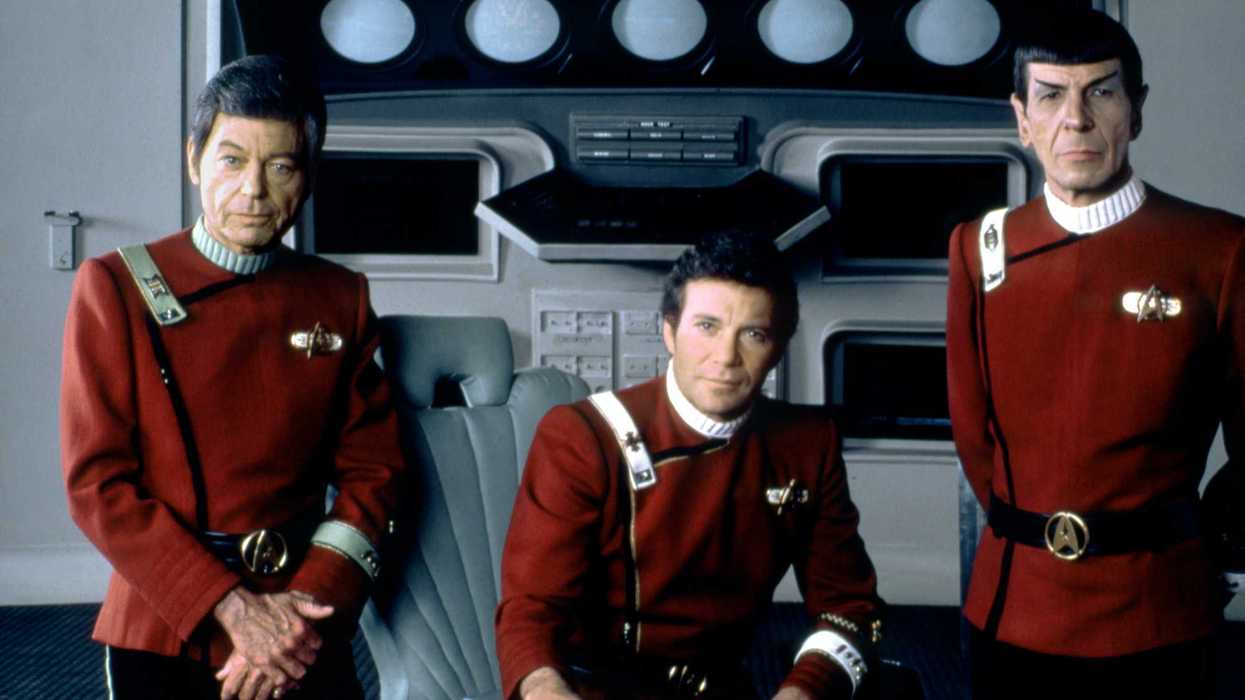
'Star Trek II: The Wrath of Khan' (1982)
Without a doubt, Spock’s line, “The needs of the many outweigh the needs of the few,” from Star Trek II: The Wrath of Khan (1982), is one of the greatest sci-fi quotes of all time. It carries a tremendous amount of emotional weight, of course, but it also highlights the power of selflessness and sacrifice.
Spock’s words have transcended their on-screen presence and have become a defining moment not just for the franchise but for sci-fi movies as a whole. Captured iconically by Leonard Nimoy, every word in this quote is layered with unflinching Vulcan resolve.
However, the greatest lines in film history do not just apply to the movie; they carry a deeper meaning and significance to the outside world and humankind. This Spock line is precisely one of those that works incredibly well in the context of the film, yet it is built on stronger, deeper ideas that serve as a powerful lesson to the audience.
Let’s jump right in and explore the philosophy behind the quote and what writers can learn from it.
The Philosophy Behind The Quote
Before we dive into the quote itself, it’s important to remind ourselves of a crucial word Spock says to William Shatner’s Captain Kirk. That word is “logic.” Spock frames his choice as pure logic by easing into his iconic line with the words, “Were I to invoke logic, logic clearly dictates that the needs of the many outweigh the needs of the few.”
Why is the word logic important here? Well, because Spock wants to make the reasoning behind his line of thinking clear. It’s not about pure emotions or reacting to something. It’s about logic and what it dictates.
Rooted in utilitarian thinking, the quote prioritizes the greater good over individual interests. This forms the philosophical foundation of Spock’s words. Within the context of the movie’s world, it is clear to us that Spock does not act in a blindly emotional manner. In this scene, Captain Kirk represents instinct and individuality, in other words, thinking for one’s own immediate benefit, which is antithetical to Spock’s grounded views.
One of the reasons the line works so well is that it crystallizes a complex political and philosophical idea into a sentence that is both empathetic and unforgettable. By doing so, it doesn’t just operate within the world of Star Trek; it adapts to the real world, where logic-based ideas rooted in utilitarian principles are simple to understand and also admire.
What The Line Reveals About Sacrifice
The sacrificial element of Spock’s words is perhaps their most endearing quality. Spock frames sacrifice as a result of rational, logic-based thinking, not as an emotional crutch. According to him, personal feelings are less important than those whose lives might be threatened. When it comes to rational thinking like this, hierarchy becomes unimportant in favor of the greater good, which in itself is a tremendously sacrificial thought.
It is this restraint that makes the moment all the more powerful. Spock’s words redefine a movie character’s sacrifice in the calmest way one could imagine. For him, sacrifice is about responsibility, not about being the hero.
Character consistency is another important aspect of this line. Spock can say these words because everything the audience knows and understands about him supports his thinking in this scene. His words about sacrifice do not seem uncharacteristic or outlandish for someone like him. This makes his ideas even stronger and more emotionally resonant.
The line teaches us that real sacrifice is not about martyrdom for its own sake. It’s about a clear, logical acceptance that preserving a group of people can require letting go of oneself, and it is moments like these that are remembered generations later and make sci-fi history.
Writing Lessons From A Legendary Line
Spock’s line, “The needs of the many outweigh the needs of the few,” is one of the greatest movie quotes of all time. Here are three writing lessons we can take from it.
Keeping Philosophy Crisp And Functional
It isn’t difficult to put complex philosophical ideas in the form of complex dialogue. What’s hard is putting complex philosophical ideas into simple, crisp, and functional dialogue. This line is a fascinating example of the latter. Spock’s thinking is deeply rooted in powerful political ideas that are relatable even to the modern world, but the way they are said makes them accessible yet symbolic.
Restraint Can Be Impactful
Spock’s ideas of sacrifice are extremely restrained, even though they address his own life. Not only is Leonard Nimoy’s delivery perfectly calm and contained, but the words themselves are almost meditative in nature. Dramatic expression does not always mean intense delivery, and moments like these prove precisely that.
Blending Dialogue With Theme
Without a doubt, this is very hard to do, but when a film pulls it off, the scene becomes all the more admirable. Spock’s words are not specific to this scene in the sense that they tie perfectly into the saga’s themes of sacrifice and logic. His line reinforces the story, its premise, and its emotional core.
Summing It Up
Spock’s calm declaration in Star Trek: The Wrath of Khan continues to resonate with audiences because it captures the timeless debate about collective good and individual worth. The line speaks about complex ideas in a simple, logical manner.
Which is your favorite quote from a Star Trek movie? Tell us in the comments below.- 10 Greatest Sci-Fi Movie Characters to Ever Grace the Screen | No Film School ›
- Who Are The Most Iconic Leading Ladies in Sci-Fi Cinema? | No Film School ›
- Deconstructing the Science Fiction Genre in Movies and TV | No Film School ›
- Star Trek Quote about death ›
- We all lie to ourselves to be happy. ›
- Film Quote of the Day: William Shatner's Captain Kirk Monologue That Defines What 'Star Trek' is All About | No Film School ›
- Film Quote of the Day: The Unexpected Wisdom Hidden in This 'Pulp Fiction' Line | No Film School ›