Stand by Me, the adaptation of the Stephen King short story “The Body” that was directed by the late, great Rob Reiner, debuted in theaters on August 22, 1986. However, even though it turned 40 years old this month, it remains one of the most potent coming-of-age dramas in cinema history.
In honor of its anniversary, let’s break down what makes the movie so very special.
Stand by Me Came in the Middle of the Reiner Run
Right off the bat, one thing that makes Stand by Me special is the fact that it is part of one of the greatest uninterrupted runs of great movies by a single director. The “Reiner Run,” which lasted from the mid-1980s through the early 1990s, saw the director churn out seven towering classics in a row. What makes the run even more impressive is the fact that almost all of those movies occupy entirely different genres.
After kicking off this run with the iconic rock music mockumentary This is Spinal Tap in 1984 (which was his feature debut after establishing himself as an actor, most notably playing Michael "Meathead" Stivic on the smash hit Norman Lear sitcom All in the Family from 1971 through 1979), Rob Reiner helmed the 1985 John Cusack teen comedy The Sure Thing, which he of course followed with Stand by Me.
Next up was 1987’s The Princess Bride, a fantasy romance that contributed innumerable iconic quotes to the lexicon of cinema fans, followed by the seminal 1989 romantic comedy When Harry Met Sally (which remains such a go-to reference that it was quoted in this year’s Ryan Gosling sci-fi hit Project Hail Mary), then the 1990 Kathy Bates horror hit Misery (Reiner’s Stephen King adaptation) and the 1992 legal drama A Few Good Men.
Even among such celebrated contemporaries, Stand by Me stands out as a confident masterwork that taps directly into a universal sense of childhood nostalgia.
What Is It About Stand by Me?
Stand by Me has a deceptively low-key story for a movie that looms so large. In short, it follows the adventures of four friends who embark on a journey to see a dead body. However, it spins this quotidian childhood tale out into an intricately layered odyssey.
It obviously doesn’t hurt that this story is brought to life by an ensemble cast that was a shockingly deep bench of established and rising stars. The four major characters are played by Wil Wheaton (Star Trek: The Next Generation), River Phoenix (My Own Private Idaho), Corey Feldman (The Goonies), and Jerry O’Connell (Scream 2), but the movie also features Kiefer Sutherland (24) as bully Ace Merrill, Richard Dreyfuss (Jaws) as the adult version of Wheaton’s character Gordie, and John Cusack as Gordie’s older brother Denny.
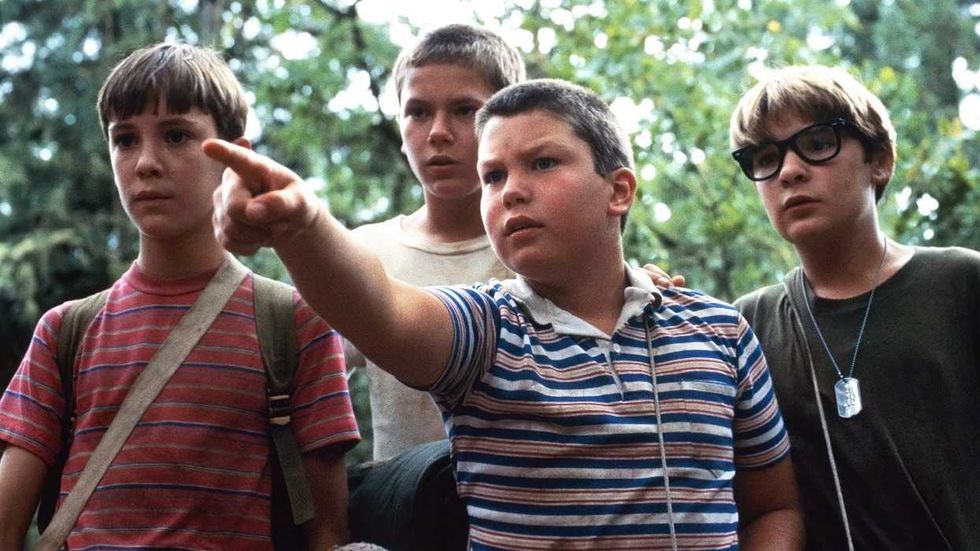 ‘Stand by Me’ (1986)Credit: Columbia Pictures
The story is given depth thanks to the performances and the cast’s chemistry with one another, but it is also imbued with meaning thanks to the many thematic threads that are carefully woven together in the screenplay by Raynold Gideon and Bruce A. Evans (who had previously collaborated on John Carpenter’s Starman).
These themes all revolve around the theme of coming of age and that precarious moment where one is still technically a child, but needs to develop the tools they need in order to handle adult problems (including death and growing apart). This is evoked exquisitely by the fact that the entire story is presented as the bittersweet recollections of the adult Gordie, who is writing a story about his friends.
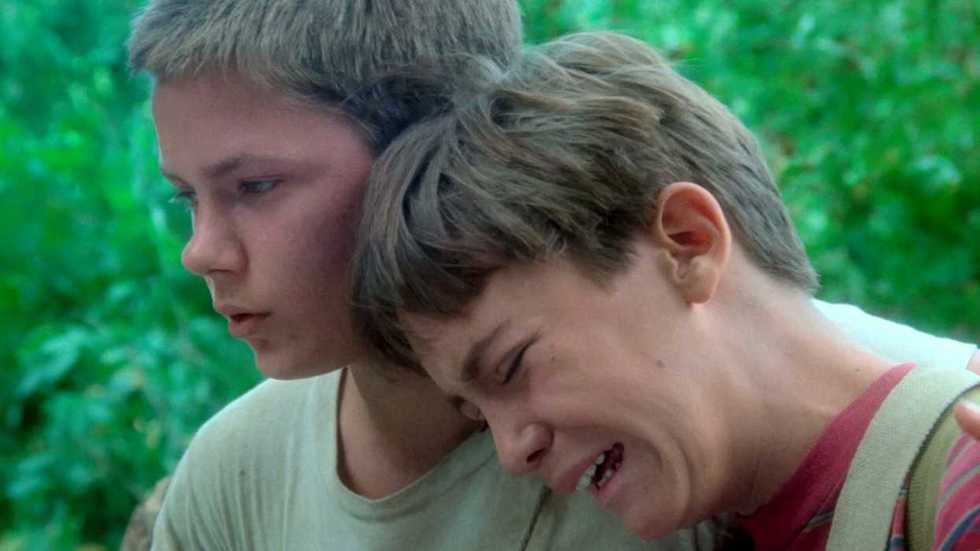
In addition to the thrust of the story quite literally being about looking death in the face, throughout its runtime, the movie examines various forms of masculinity. This includes the vast dynamics between different pairs of the four main boys (most notably the vulnerable moment that Gordie and River Phoenix’s character Chris share) as well as the homosocial dynamics of Ace’s gang, who are shown carving tattoos into one another’s skin during a key moment in the movie.
Rob Reiner could have easily just stayed out of the way of the cast and the screenplay and called it a day, but the director was hardly content to do that ever, let alone when he was at the height of his powers. The work he does in Stand by Me is subtle, but enormously powerful, using every chance he gets to visually distinguish the four protagonists from one another, deepening every dialogue-driven interaction by constantly reinforcing their personas visually.
This is most notable in the sequences where the boys are all shown performing the same action, with the differences in their approach highlighting the ways that each of them approach the world. This happens constantly throughout the film, including the infamous sequence where they boys run away from a speeding train.
In the scene, O’Connell’s character Vern panics while Gordie helps him along, in spite of the fact that he is in the back of the group and therefore in the most danger. Meanwhile, Chris and Feldman’s Teddy Duchamp run for their lives without looking back, with Chris egging Teddy on. Only once they get to safety do they focus on their friends and shout words of encouragement. In one quick, two-minute sequence, the audience learns everything they need to know about the characters and where they stand at that point in the movie, all thanks to Reiner’s masterful staging.
The Legacy of Stand by Me Stands Strong
Stand by Me was a critical and commercial success in its own time, grossing $52.3 million and becoming the 13th highest grossing movie of the year at the domestic box office (above a number of other major titles, including Pretty in Pink, Cobra, Poltergeist II, Peggy Sue Got Married, The Fly, and Friday the 13th Part VI: Jason Lives), going on to be nominated for an Oscar for Best Adapted Screenplay (though it lost to A Room with a View).
It has maintained its momentum more or less consistently in the 40 years since it first burst onto the scene. Even Reiner himself kept the flame alive, naming his production company Castle Rock Entertainment after the fictional town in which the movie takes place.
This means that a title card bearing a reference to Stand by Me has appeared in front of dozens of major releases over the years, including When Harry Met Sally, Before Sunrise, Best in Show, Miss Congeniality, The Bucket List, and numerous other Stephen King movies like The Shawshank Redemption, Dolores Claiborne, and Needful Things.
Stand by Me has also gone on to directly inspire filmmakers throughout the ages, being homaged in everything from Boyz n the Hood (director John Singleton told Vice that it was “the last film I saw before I started college” and that it “affected me emotionally,” inspiring both the general shape of his debut feature as well as directly inspiring a scene where the main characters discover a body) to Netflix’s Stranger Things (according to The Express Tribune, the hit show’s creators, The Duffer Brothers, had the male actors audition with scenes from the Reiner classic) to Pixar’s Luca (per Looper).
So where do you think Stand by Me stands among the other classics from the Reiner Run, and will you be giving it a watch in honor of its anniversary? Sound off in the comments below!