6 Editing Lessons from Stanley Kubrick
Restraint is an editing choice, too.
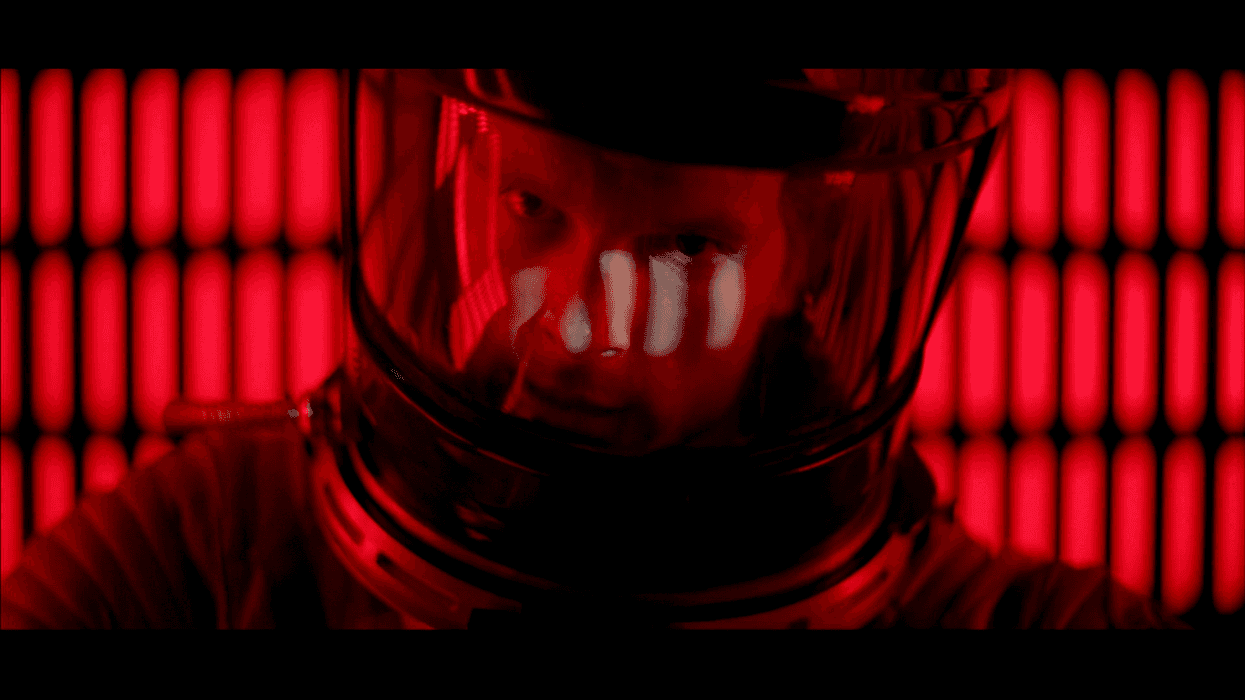
'2001: A Space Odyssey'
There's a famous adage within filmmaking that says you "make" a film three times, most famously attributed to French filmmaker Robert Bresson. The statement essentially means a movie is completely reinvented at different stages of creation—first in writing, then in direction, and again in the edit.
Because of what can change at each stage, some filmmakers prefer to be involved during all three so the creative vision stays consistent across the process. Stanley Kubrick, a notorious perfectionist, was one such filmmaker, who was particularly involved during post.
In a new video essay, Rory Anderson of RorZFilms breaks down Kubrick’s editing across six films.
Kubrick loved the editing room. He told Sight and Sound in 1972 that editing was the only part of the art form that is unique to the process. He liked writing but hated production for the variables that could hinder him (via Far Out Magazine).
"Editing is the only aspect of the cinematic art that is unique," he said. "It shares no connection with any other art form: writing, acting, photography, things that are major aspects of the cinema, are still not unique to it, but editing is."
Check out Anderson's video below for more.
- YouTubewww.youtube.com
Let One Cut Do the Work of a Scene
In 2001, there's a famous match cut in which a falling bone "becomes" a flying spacecraft. It's not exactly clean, especially by modern standards, but it still works. The bone-to-satellite match cut jumps millions of years in one edit by matching the motion and shape of the two objects.
Anderson points out that the cut lands because the film has no dialogue for its first 25 minutes, so the audience is already reading images instead of lines. We don't have to see anything between these moments. We don't need to establish when and where we are. We already know we've jumped forward.
Kubrick thought feature films should learn from the silent era and from TV ads.
"Somewhere, somebody has to be able to take the wonderful economical, structural possibility of a silent movie with the tremendous power that a good TV commercial can generate on a topic in 30 seconds," he said.
He talked about commercials more than once.
"If you could ever tell a story, something with some content, using that kind of visual poetry, you could handle vastly more complex and subtle material," he told Rolling Stone (via Visual Memory).
Break Time to Build Suspense
Kubrick’s 1956 heist film The Killing replays the same racetrack sequence from multiple characters’ points of view. That was unusual for a Hollywood heist movie of the era.
There are a few things working to keep the audience oriented as the timeline loops. There's a documentary-style voiceover, the track announcer, and the shooting of the racehorse Red Lightning as major beats.
Non-linear structure only works if the audience always knows where it is in time, and those anchors do that job.
- YouTube www.youtube.com
Use Crosscutting as a Ticking Clock
In Dr. Strangelove, the film cuts among the War Room, Burpelson Air Force Base, and the B-52 cockpit. The cuts get faster as the bomber nears its target and the film reaches its inevitable end.
The crosscutting that feels so precise on screen came out of a long fight in the edit. Kubrick and editor Anthony Harvey’s first assembly didn’t work.
Author Mick Broderick told TCM’s The Plot Thickens, "When they did their first assembled cut, they were kind of horrified. It wasn’t working. On the page, it worked. They had fantastic material. Everyone was happy with the rushes. It looked beautiful. But it didn’t come together. It didn’t quite gel."
The two spent eight months on the edit, and Harvey nicknamed the edit bay their own personal War Room.
Brian de Palma is really good at this type of crosscutting, too. Just look at the finale of Carrie, which added split-screen to the equation.
Make the Audience Feel It Before They Understand It
The Shining is a masterpiece of unease. You get long, long takes that keep you in the horror longer than is comfortable from the very beginning. But then, as the story progresses, the audience sees flashes of violence. We see brief insert cuts of the twins and the blood elevator that interrupt otherwise smooth Steadicam scenes. It's disorienting.
So much of this film could feel everyday, pedestrian, if not for how subconsciously uncomfortable it is. And a lot of it comes down to how Kubrick pieced the story together. Even Jack Torrance using an axe on the bathroom door feels like forever in those sweeping pan shots.
- YouTubewww.youtube.com
Hold the Shot
This one applies to Barry Lyndon, too. In that period film, Kubrick used long static compositions and slow dissolves that make scenes look like 18th-century paintings. It's discomfort in a different way.
Everyone is still, stiff, rigid in the way of society, and the camera makes you watch the whole ritual of human behavior instead of cutting to close-ups, which are saved for key emotional beats. It's off-putting for an outsider like Lyndon.
The duel is one important exception. The cuts tighten as the tension rises.
Restraint is an editing choice, too!
Cut Without a Bridge
Full Metal Jacket splits in half. Boot camp ends in violence in the latrine, and Kubrick hard-cuts straight to a sunny Saigon street and an upbeat pop song. Anderson argues that the abrupt cut makes the audience feel the same whiplash the recruits feel when they’re deployed overnight.
The film changes pace within each half, too. Kubrick and editor Martin Hunter let boot camp be fast and frenetic, with the recruits’ heads being shaved in a string of quick jump cuts. Weeks of marching, drills, and abuse are compressed by cutting on matching actions.
In the final sniper sequence, the rhythm slows. The cuts stretch out to match how slowly and nervously the squad moves through the ruins.
Your pacing can shift with the story. Cut fast when time should feel compressed, and slow down when you want the audience stuck in the moment with your characters.
- How Stanley Kubrick Recreated New York Without Leaving London ›
- 'Eyes Wide Cut': What Happens When a Filmmaker Reimagines Kubrick's Masterpiece? ›
- What Does Stanley Kubrick's Average Shot Length Say About His Movies? ›
- The Greatest Cut in Cinema: Why the '2001: A Space Odyssey' Bone Cut is Perfection ›